What Are China's Top 10 Wood CNC Machine Brands?
Choosing a wood cnc machine is not just a matter of comparing brand names. Buyers also need to consider the materials they process, workshop space, production volume, and available technical support. A machine that works well for cabinet doors may not suit a small shop making signs or furniture parts. Details matter.
China has a broad CNC manufacturing sector, with brands offering different machine formats, price levels, and service arrangements. This guide introduces ten notable brands and the factors worth checking before you request a quotation. These include frame construction, spindle options, control systems, dust collection, warranty terms, and access to replacement parts. A specification sheet can look impressive, yet daily reliability depends on setup, maintenance, and operator training too.
No ranking can fit every workshop. Product ranges and service quality may change, and dealer support can vary by location. Treat the list as a starting point, not a final verdict. Compare machines against your own jobs, ask for current specifications, and, when possible, inspect a sample cut or speak with existing users. Small details—like how quickly a technician responds—can matter more than a feature that rarely gets used. Some judgments remain uncertain without testing the exact model. That is worth admitting.
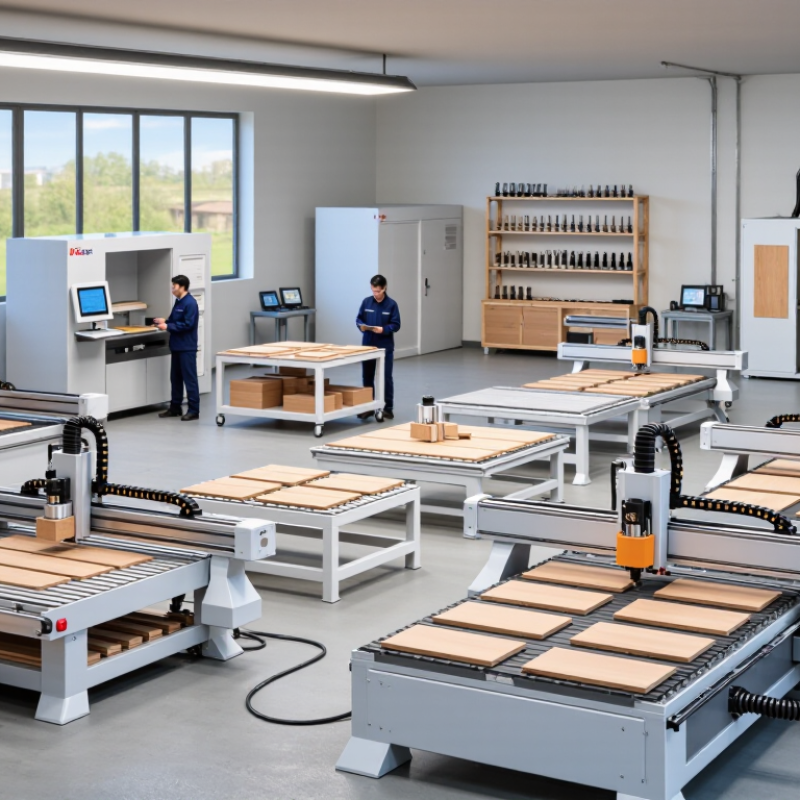
What Defines a Wood CNC Machine Brand in China?
A Chinese wood CNC machine brand is defined by more than its nameplate or spindle speed. It must show repeatable performance on real materials: clean edges in plywood, stable cuts in solid wood, and reliable tool changes across a working shift. Buyers should ask for documented positioning tests, sample parts, and service response times. ISO 230-2 provides methods for testing CNC axis positioning accuracy and repeatability. A credible maker should explain test conditions, not just display a precise-looking number.
Support matters when a machine runs daily. Check spare-part availability, software training, dust extraction design, and the time needed to diagnose faults.
The International Federation of Robotics reported 276,288 industrial robots installed in China in 2023, about 51% of global installations. This shows a strong automation ecosystem, though it is not a wood-CNC sales statistic. That distinction matters.
A brand’s standing is better judged by transparent specifications, traceable quality checks, and help that continues after delivery. Some claims remain hard to compare; even experienced buyers can miss that.
How the Top 10 Brands Are Selected
How the Top 10 Brands Are Selected
A credible top-ten list needs a repeatable scorecard, not a popularity poll. Each candidate should have documented specifications, accessible service information, and verifiable installation examples. The comparison should examine positioning accuracy, repeatability, spindle performance, tool-changing time, and compatibility with common design software. ISO 230-2 offers methods for assessing positioning accuracy and repeatability. For wood-specific equipment, relevant parts of the ISO 19085 series provide additional safety and machine-design context.
Industry data can inform the criteria, but it cannot decide the ranking alone. The International Federation of Robotics reported 541,302 industrial robot installations worldwide in 2023 in its World Robotics 2024 report. That figure reflects broad automation investment, not wood CNC machine sales. It supports checking automation readiness, yet using it as a direct brand-performance measure would be misleading. We should compare machines under similar cutting conditions, such as the same tool, material, feed rate, and test pattern.
Service deserves real weight. Ask whether replacement parts are stocked locally, how quickly technicians respond, and whether training includes hands-on setup. Small details matter: a clean tool-change cycle, stable dust extraction, and a clear controller screen can save hours on a busy shop floor. No scorecard is perfect. Public data varies by region, and advertised accuracy may not match a workshop floor. A ranking should disclose those gaps and explain its weighting.
Profiles of China's Top 10 Wood CNC Machine Brands
China’s wood CNC market includes manufacturers built around different workshop needs. These ten profiles describe common strengths, not a verified ranking. A rigid top-ten list can mislead.
One profile focuses on nesting routers for cabinet panels, with vacuum tables and automatic tool changes. Another serves door makers, offering carving capacity for raised panels and decorative details. A third targets small workshops with compact machines and simpler controls. A fourth builds heavy-duty routers for long production shifts. The categories overlap.
A fifth profile specializes in multi-spindle drilling for cabinet components. A sixth supports furniture makers needing five-axis cutting for curved parts. A seventh offers laser-assisted positioning or cameras to align irregular wood pieces. An eighth emphasizes integrated loading and unloading to reduce manual handling. A ninth supplies machines for solid-wood joinery, where repeatable tenons and mortises matter. A tenth provides configurable systems for factories with varied orders.
Specifications deserve close inspection. Check spindle power, working area, controller compatibility, dust extraction, and local service coverage. Ask for a test cut on material similar to yours. Watch the edges, not only the machine’s speed. Details matter. A polished demonstration may hide setup time, tooling costs, or inconsistent support. The best fit depends on the workpiece, operator skill, and maintenance capacity.
Wood CNC Machine Configurations: 3-, 4-, and 5-Axis Systems
The bars show the number of motion axes in each configuration: 3-axis machines use three axes, while 4- and 5-axis systems add rotary movement. These are general technical configurations, not brand rankings or sales figures.
How the Leading Brands Compare in Machines and Applications
Comparing China’s leading wood CNC machine makers is more useful when machines are matched to workshop needs, not ranked by brochure claims. Grand View Research valued the global woodworking machinery market at about US$4.7 billion in 2023 and projected 5.1% annual growth through 2030. This broader market includes machinery beyond CNC routers, so it is not a direct measure of CNC brand performance.
For cabinet shops, nesting routers with automatic tool changers can cut sheet goods and reduce manual tool swaps. A small workshop may value a compact footprint and straightforward setup more than a high-speed production line. Door and solid-wood makers often need 4- or 5-axis machining for curved edges, while panel factories may prioritize drilling, grooving, and automatic loading. Details matter. Compare working area, spindle power, dust collection, controller compatibility, and local service before comparing quoted prices.
Automation is also changing factory expectations. The International Federation of Robotics reported 276,288 industrial robot installations in China in 2023, about 51% of global installations. That figure covers many industries, not just woodworking, but signals a strong automation environment. A limitation remains: published reports rarely compare wood CNC machines under identical materials, tooling, and shift conditions. Ask suppliers for sample cuts on your own panels, then inspect edge quality, cycle time, and setup effort. A polished demonstration may not reflect a full production day.
What to Consider When Choosing a Chinese Wood CNC Brand
Choosing a Chinese wood CNC brand starts with the work the machine must do. List your materials, sheet sizes, daily cutting hours, and required tolerances. A machine for occasional cabinet panels may not suit a shop cutting dense hardwood every day. Ask for a sample cut using your own file and material. Check the edge for burning, fuzz, and uneven depth. A clean showroom demo is useful, but it cannot replace a test under realistic conditions.
Look closely at the frame, gantry, spindle, and dust collection setup. Ask for the spindle’s rated power and duty cycle, not just its peak figure. Confirm which controller and file formats the machine supports. Then check whether replacement parts are available locally or can be shipped promptly. Small details matter. Request written terms for installation, training, warranty coverage, and technical support. Ask what happens if a component fails during a busy production week. A low quote may still be the right choice, but compare the full cost of tooling, shipping, setup, and downtime. I would not assume the most expensive machine is automatically the best fit. No machine is perfect. A clear service plan can matter as much as cutting speed.