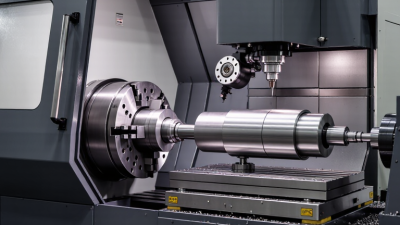
Choosing a milling machine in 2026 is not simply a matter of comparing spindle speed and table size. Global buyers must evaluate accuracy, automation, service access, energy use, software compatibility, and long-term operating cost. A machine that performs well in a showroom may struggle beside a dusty production line or under unstable power conditions.
Industry forecasts show why this decision matters. Grand View Research estimates that the global machine tools market will continue expanding through 2030, supported by automotive, aerospace, medical, and precision engineering demand. MarketsandMarkets also identifies CNC adoption, connected manufacturing, and automated production as major growth drivers. However, these reports use different market definitions and forecasting methods. Numbers can guide a purchase, but they cannot replace a practical factory assessment.
Dr. Yoram Koren, a respected manufacturing systems scholar, wrote, “The factory of the future will be a flexible, reconfigurable system.” That principle applies directly to every milling machine shortlist. Buyers should inspect sample parts, test tool changes, measure thermal drift, and confirm local maintenance capability. Ask difficult questions. Some suppliers avoid them.
This 2026 buying guide compares machine types, control systems, cutting performance, workholding, safety features, installation requirements, and total ownership costs. It also considers regional realities, including import procedures, operator training, spare-part availability, and technical support. The ideal milling machine is not always the most powerful model. It is the machine that remains accurate, serviceable, and profitable after the sales team leaves.
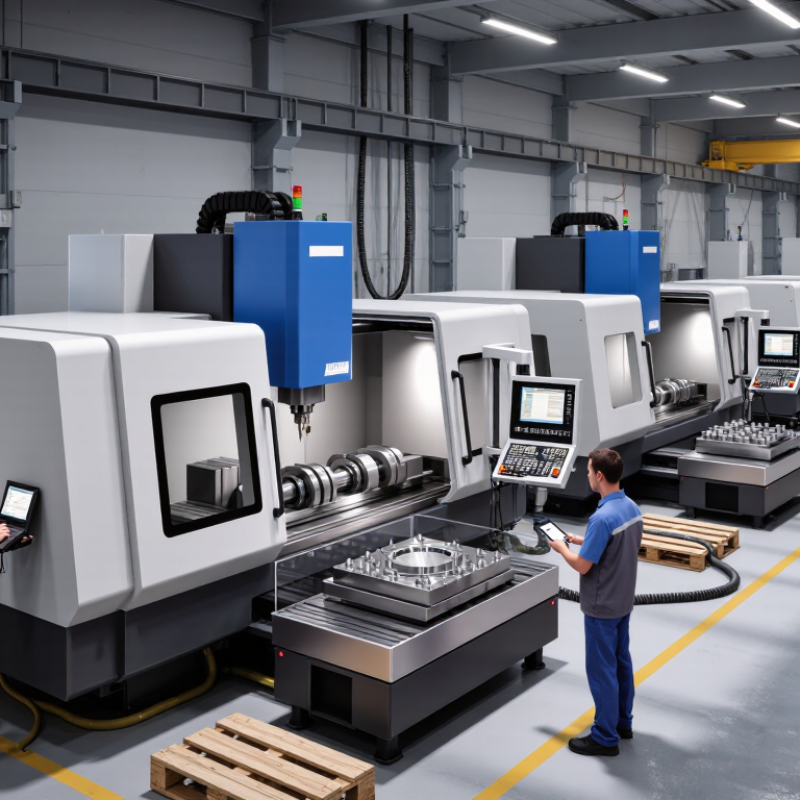
Milling Machine Basics: Types, Functions, and Key Applications
A milling machine removes material with a rotating cutting tool and a controlled workpiece movement. It can create flat surfaces, slots, holes, pockets, and complex contours. In practical workshops, vertical mills handle general fabrication and repair work. Horizontal mills suit heavier cuts and long grooves. CNC mills add programmed movement, repeatability, and detailed three-dimensional machining.
Machine selection should follow the part, not the sales brochure. Check table size, axis travel, spindle speed, motor power, and tool capacity. A small machine may save floor space but limit future work. A large machine may waste energy and require stronger foundations. That matters.
For production parts, CNC control can reduce manual errors and maintain consistent dimensions. Manual mills remain useful for prototypes, maintenance, and operator training. Common applications include automotive components, industrial fixtures, machine frames, medical instruments, and mold components. Aluminum often needs higher cutting speeds, while steel requires suitable rigidity and tooling. Cast iron can produce dust, so extraction and housekeeping deserve attention.
A reliable buying review also examines machine accuracy, service access, training, spare parts, electrical standards, and documentation. Measure the workshop entrance before ordering. It sounds obvious. Many purchasing plans miss it. Buyers should request test-cut records and inspect finished surfaces, not only read specifications. Tolerances also depend on tooling, workholding, operator skill, and maintenance. No machine performs perfectly without a disciplined process.
Milling Machine Basics: Types, Functions, and Key Applications
The chart compares representative maximum spindle speeds commonly specified for major milling machine categories. Manual machines are typically selected for repair, prototyping, and low-volume work, while machining centers provide higher spindle speeds and automation for production milling. Actual specifications vary by machine size, tooling, material, motor power, and application requirements.
Choosing a milling machine should begin with your production needs, not the machine’s largest advertised capacity. Define the materials, part dimensions, tolerances, and monthly workload. Aluminum brackets may need high spindle speed, while steel housings require stronger torque and rigid construction. Check the working envelope carefully. A long table is useless if the spindle cannot reach the workpiece safely. Also compare spindle power, speed range, axis travel, positioning accuracy, and tool capacity. These details affect cycle time and surface quality.
Tips: Create a simple production profile before contacting suppliers. Record your heaviest workpiece, typical batch size, required tolerance, and available floor space. Ask for test cuts using similar material. Review measured results, not only technical brochures. Confirm electrical requirements, coolant handling, operator training, and service response in your region. Hidden installation costs can change the purchasing decision.
Real production is rarely as tidy as a spreadsheet. I have seen buyers choose excessive power and later struggle with maintenance costs and unused capacity. A smaller machine may perform better when its specifications match the actual workload. Leave room for future products, but avoid paying for features your operators will never use. Request clear documentation, acceptance criteria, and operator safety procedures before payment. Independent inspection can also expose alignment errors or unrealistic accuracy claims. Reliability comes from verified performance, practical support, and disciplined daily maintenance.
2026 Best Milling Machine Buying Guide for Global Buyers
Essential Features to Compare Before Buying a Milling Machine
Choosing a milling machine starts with the workpiece, not the machine’s appearance. Compare spindle speed, motor power, table size, and working travel against your daily materials. Steel usually demands more torque than aluminum. Check the machine’s maximum cutting capacity, not only its advertised power. A rigid cast frame can reduce vibration during deep cuts and improve surface quality. Still, heavier does not always mean better. Workspace limits and installation conditions matter.
Accuracy deserves careful attention. Review positioning accuracy, repeatability, backlash control, and the quality of the guideways. Ask for inspection records or sample test results when possible. Digital readouts can improve operation, but they cannot correct poor alignment. Consider tool compatibility, collet sizes, coolant management, and chip removal. For global buyers, verify voltage, frequency, shipping dimensions, spare-part access, and local technical support. These details may seem small until production stops.
Tips: Compare at least three machines using the same requirements. Request a demonstration with your actual material and cutting depth. Inspect emergency stops, guarding, wiring, and user instructions before purchase. Ask how quickly replacement parts can arrive. A low purchase price may hide training, transport, or maintenance costs. I have found that buyers often focus on spindle speed and overlook table rigidity. That mistake can create chatter, uneven surfaces, and wasted material. No machine fits every workshop.
| Comparison Dimension | Benchtop Drill/Mill | Manual Knee Mill | 3-Axis CNC Vertical Machining Center | CNC Horizontal Machining Center | 5-Axis CNC Machining Center |
|---|---|---|---|---|---|
| Typical application | Education, prototyping, light repair, and small non-ferrous parts | Maintenance, toolmaking, repair work, and low-volume production | Production of prismatic parts, molds, fixtures, and general components | High-volume production of complex prismatic parts with multiple faces | Complex aerospace, medical, impeller, mold, and precision components |
| Typical work envelope | 300–700 mm table lengthCompact footprint; limited part capacity | 800–1,300 mm table lengthSuitable for medium-sized workpieces | 500–1,200 mm X-axis travelCommon choice for general industrial machining | 500–1,000 mm pallet widthDesigned for stable multi-face machining | 300–1,000 mm work zone diameterVaries considerably by machine configuration |
| Spindle speed | 2,000–6,000 rpmBest for smaller cutters and lighter materials | 2,500–6,000 rpmLower-speed operation supports larger tooling | 6,000–18,000 rpmHigh-speed options are available for aluminum and finishing | 4,000–15,000 rpmPrioritizes rigidity and material removal | 8,000–30,000 rpmHigh-speed spindles support small tools and complex surfaces |
| Spindle power | 0.75–2.2 kWLight-duty cutting capacity | 1.5–5.5 kWDepends on motor and spindle taper | 7.5–30 kWSuitable for steel, aluminum, and general production work | 11–45 kWHigher torque is useful for heavy material removal | 10–40 kWPower must be matched to the required tool diameter and material |
| Axis travel capability | Approximately 200–500 mmLimited Z-axis clearance | Approximately 500–900 mm X travelManual positioning limits repeatability | X: 500–1,200 mm Y: 400–700 mm Z: 400–700 mm |
X: 500–1,000 mm Y: 500–1,000 mm Z: 500–1,000 mm |
Linear axes plus two rotary axesTravel depends on table, trunnion, or swivel-head design |
| Positioning accuracy | Typically ±0.05–0.15 mmHighly dependent on setup and operator technique | Typically ±0.03–0.10 mmDRO systems improve positioning but do not create CNC accuracy | Commonly ±0.005–0.02 mmVerify using the machine’s inspection standard and test conditions | Commonly ±0.005–0.02 mmThermal stability and pallet alignment are important | Linear accuracy may reach ±0.005–0.02 mmVolumetric accuracy depends strongly on calibration and rotary-axis performance |
| Repeatability | Approximately ±0.05–0.15 mmManual clamping and measurement affect results | Approximately ±0.03–0.10 mmOperator consistency is a major factor | Commonly ±0.003–0.01 mmActual performance depends on temperature, tooling, and maintenance | Commonly ±0.003–0.01 mmPallet and fixture repeatability should be checked | Commonly ±0.005–0.02 mmRotary-axis backlash and calibration are critical |
| Tool changer | Usually manual; optional quick-change tooling may be available | Usually manual | Automatic tool changer, commonly 12–40 tools | Automatic tool changer, commonly 24–80 tools | Automatic tool changer, commonly 20–60 tools |
| Control system | Manual handwheels; optional digital readout | Manual handwheels with optional digital readout or power feeds | G-code CNC control with 3-axis interpolation and probing options | G-code CNC control with pallet management and multi-face machining functions | Advanced CNC control with simultaneous or indexed 5-axis programming |
| Workholding requirements | Vice, clamps, or small fixture plates | Precision vice, rotary table, angle plate, and clamps | Vice, zero-point system, fixture plate, or custom fixtures | Dedicated fixtures, pallets, tombstones, and multi-part workholding | Trunnion table, rotary table, specialized fixture, or custom modular workholding |
| Material suitability | Plastics, aluminum, brass, and light cuts in mild steel | Aluminum, steel, cast iron, brass, and engineering plastics | Aluminum, steel, stainless steel, cast iron, titanium, and engineering plastics | Steel, cast iron, stainless steel, aluminum, and difficult alloys | Aluminum, titanium, stainless steel, nickel alloys, composites, and hardened materials with suitable tooling |
| Automation potential | Low; mostly operator-controlled | Low to medium; power feeds and basic digital aids may be added | Medium to high; probing, barcoding, pallet systems, and robotic loading are possible | High; pallet changers, automated loading, and production monitoring are common | Medium to high; automation depends on part mix, fixturing, and programming complexity |
| Operator skill requirement | Basic machining knowledge and safe setup practices | Strong manual machining, measurement, and setup skills | CNC programming, tooling, workholding, inspection, and process planning | Advanced CNC programming, fixture planning, and production process control | Advanced CAM, post-processing, simulation, collision avoidance, and inspection skills |
| Floor-space requirement | Approximately 1–3 m²May fit on a reinforced workbench | Approximately 3–7 m²Allow additional space for material handling | Approximately 8–25 m²Include chip management, access, and service clearance | Approximately 15–40 m²Pallet systems and workpiece flow require extra space | Approximately 10–35 m²Space varies with enclosure, automation, and work envelope |
| Electrical and utility considerations | Often single-phase power; compressed air may be optional | Single- or three-phase power depending on motor size; coolant may be optional | Usually three-phase power, coolant, chip removal, and compressed air | Three-phase power, high-capacity coolant, chip evacuation, and compressed air | Three-phase power, controlled coolant delivery, compressed air, and stable temperature conditions |
| Maintenance priorities | Lubrication, belt or gear inspection, spindle bearings, and table cleaning | Lead screws, ways, lubrication, backlash, and spindle condition | Way lubrication, coolant filtration, spindle maintenance, calibration, and software backups | Spindle, pallet changer, chip conveyor, coolant system, lubrication, and alignment | Rotary-axis calibration, spindle condition, thermal compensation, lubrication, and collision inspection |
| Best choice when | Budget, portability, and basic machining are the main priorities | Flexibility, repair work, and low-volume production matter more than automation | Repeatable production and broad part compatibility are required | High throughput, multi-face machining, and reduced repositioning are essential | Complex geometry and fewer setups justify greater programming and investment effort |
Note: The figures shown are typical industry ranges for comparison purposes. Actual performance depends on machine structure, spindle configuration, controller, tooling, workholding, environmental conditions, calibration, and the manufacturer’s published test standard.
A reliable supplier should provide more than attractive machine photos and a low quotation. Ask for factory audit records, production capacity, and recent customer references. Experienced buyers also request videos of test cutting, spindle operation, and dimensional inspection. The details matter. A rough surface on a sample part may reveal weak rigidity or poor calibration.
Check the supplier’s quality system, inspection equipment, and traceability process. ISO 9001 certification can support confidence, but it does not replace machine testing. Request inspection reports for spindle runout, positioning accuracy, repeatability, and electrical safety. Confirm whether the machine meets destination-market requirements, including relevant conformity documents and voltage specifications. Some suppliers answer quickly but avoid technical questions. That is a warning sign.
Shipping needs equal attention. Compare container loading, reinforced wooden crating, moisture protection, and shock indicators. Ask who handles export documents, customs classification, and port charges. Clarify Incoterms, insurance coverage, spare parts, and installation support before payment. Sea freight may reduce cost, while air freight suits urgent components but can become expensive. In my experience, delivery estimates are sometimes too optimistic. Weather delays, port congestion, and missing paperwork can extend arrival by weeks. A practical purchase plan includes buffer time, written acceptance criteria, and photographs taken before loading.
A milling machine’s lifetime cost begins before the first cut.
Installation needs a level foundation, stable power, clean coolant lines, and enough service space. Poor leveling can create vibration, tapered walls, and early spindle wear.
Check hoses and fittings before production starts. Measure actual power use during cutting, idling, and warm-up. These readings often challenge the supplier’s estimated consumption.
Operation affects ownership costs more than many buyers expect.
Use correct feeds, speeds, tool balance, and coolant concentration. Operators should record spindle load, surface finish, tool life, and alarm frequency. A simple log can reveal expensive habits.
That range is useful, but not guaranteed. Workpiece material, shift length, and local electricity prices change the result.
Tips:
Reserve budget for training, calibration, filters, tooling, coolant disposal, software updates, and emergency repairs.
Schedule thermal checks and geometry verification at planned intervals. Do not postpone small leaks.
I have seen minor coolant contamination become a major service interruption.
Still, maintenance plans are not perfect; unexpected failures happen. Include downtime and technician travel in the five-year cost model, not only the purchase price.