Blog
Why Choose LED EM Lights for Your Business?
When a power interruption dims a corridor, reception area, or workshop, reliable emergency lighting matters immediately. LED EM Lights can provide clear illumination while using less energy than many conventional options. They also tend to last longer, which may reduce replacement work in hard-to-reach locations. Less maintenance helps. Still, the right choice depends on the building, operating hours, and the people who use each space.
Lighting researcher Dr. John Bullough’s work can be paraphrased as a practical reminder: “Choose lighting for the task and setting, not just the fixture.” That principle is useful when comparing LED EM Lights. Check expected runtime, battery type, light output, installation needs, and test features. A bright unit is not automatically the best one for a narrow stairwell or a large open room. Ask suppliers for clear product specifications, and have a qualified professional assess site requirements. Details count.
There is a less convenient truth, too: newer technology does not remove the need for routine checks. Batteries age. Test records can be missed. A sensible plan assigns responsibility and records inspections, rather than assuming the lights will work when needed. This is not glamorous, but it matters. Compare total ownership costs, not only the purchase price, and confirm that selected equipment suits the building’s applicable safety requirements. Well-chosen LED EM Lights can support dependable operations; careful selection and upkeep make that benefit more credible.
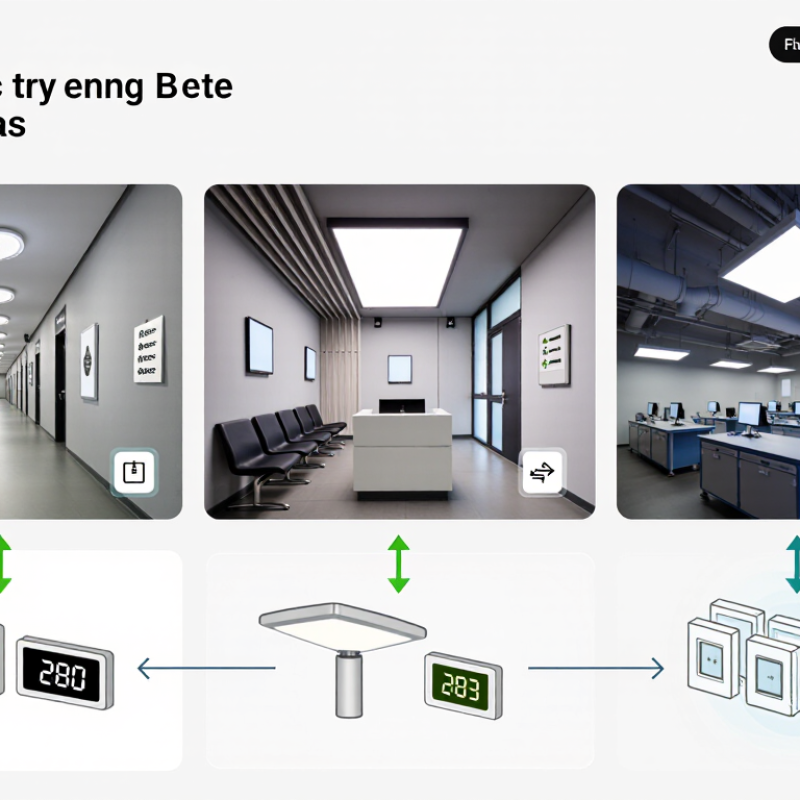
What LED EM Lights Are and How They Work
LED EM lights are emergency luminaires that provide illumination when normal power fails. In everyday use, they run from the building’s electrical supply while an internal battery stays charged. Small green indicator lights often show that power is available. Simple, but important.
When the supply is interrupted, a control circuit switches the light to battery power, and the LED driver regulates current to the light source. The LEDs then illuminate corridors, stairwells, or exit routes without waiting for a generator to start. A test button can help staff check operation, though it does not replace scheduled inspection. Battery age, heat, and loose connections can affect performance.
The U.S. Department of Energy reports that LEDs use at least 75% less energy and can last up to 25 times longer than incandescent lighting. Those figures describe LEDs generally, not the complete emergency unit or its battery. That distinction matters when estimating maintenance costs. For a business, check the product’s rated runtime and battery-replacement guidance, then test units under realistic conditions. A bright lamp is not enough if the battery is weak. One overlooked detail: dust on a lens can also reduce useful light.
Why Choose LED EM Lights for Your Business? - What LED EM Lights Are and How They Work
| Aspect | Typical details | Why it matters for a business |
|---|---|---|
| What LED EM lights are | Emergency lights use LED light sources to provide illumination when normal power is interrupted. Units may be self-contained or connected to a central emergency power system. | They can help illuminate escape routes and support safe movement during a power outage. |
| How they work | A self-contained unit typically detects loss of normal AC power, switches to its backup supply, and powers its LED light heads. When normal power returns, the unit generally resumes charging its battery. | Automatic changeover helps provide emergency illumination without requiring staff to switch the lights on manually. |
| Backup power | Self-contained models commonly use rechargeable batteries. Battery chemistry, capacity, charging time, and replacement interval vary by product and operating conditions. | Regular inspection and battery replacement when needed help keep the system ready for an outage. |
| Emergency duration | Many building codes and product standards specify a minimum emergency operating duration; 90 minutes is a common requirement in some jurisdictions. The applicable duration depends on local rules and the installation. | Check local regulations and the unit’s listing and specifications before selecting equipment. |
| Energy use and light source | LEDs produce light using semiconductor components and generally use less energy than many traditional light sources for comparable illumination. Actual power consumption and light output depend on the fixture and mode of operation. | Lower energy demand can reduce normal-operation electricity use and may help extend backup runtime, depending on system design. |
| Testing and maintenance | Many units include a test button or indicator; some systems support automatic self-testing. Inspection and testing schedules should follow local requirements and the manufacturer’s instructions. | Documented checks can help identify failed lamps, batteries, or charging components before an emergency. |
| Common locations | Typical locations include corridors, stairways, exit access routes, and other areas identified by the building’s emergency-lighting design. | A site assessment helps determine suitable placement, coverage, mounting height, and light distribution. |
| Selection considerations | Review required illumination, backup duration, battery type, environmental rating, mounting options, certification, and compatibility with any central power system. | Choosing equipment for the site conditions and applicable code requirements supports reliable operation and easier maintenance. |
Note: Specifications and legal requirements vary by product, building type, and jurisdiction. Confirm requirements with the local authority having jurisdiction and the equipment documentation.