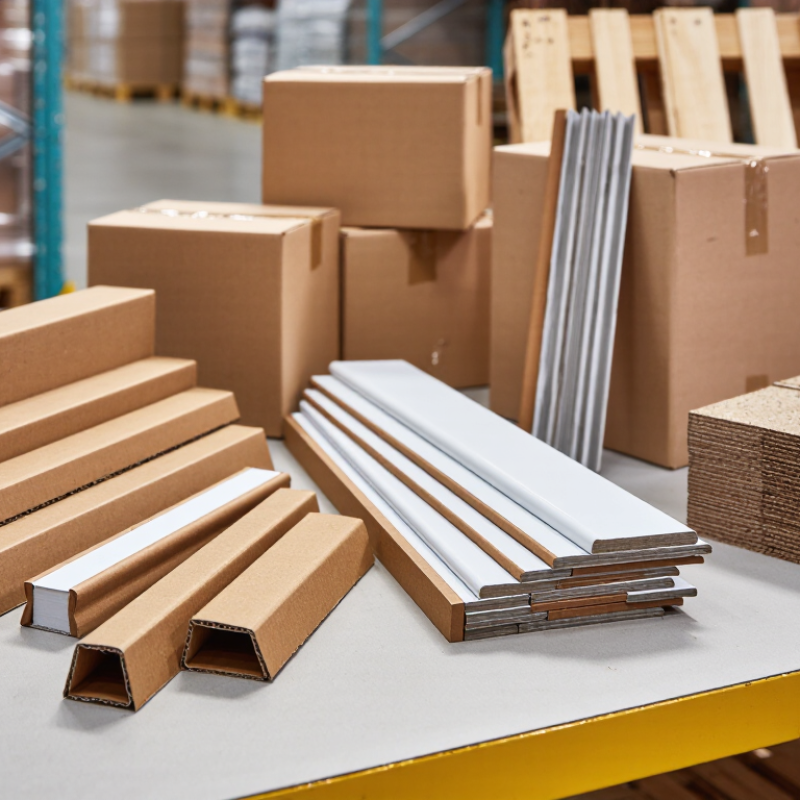
| 1 | Standard Paperboard Edge Protector | Multi-layer kraft paperboard laminated and formed into an L-shaped profile | Commonly 60%–100%, depending on grade and recycled-paper availability | Good compression strength; protects corners from strapping, stacking, impact, and edge crushing | Low to moderate unless treated or wrapped | Palletized cartons, appliances, furniture, building materials, and general industrial shipments | Very High
Broadest use, competitive cost, strong recyclability, and compatibility with automated packing lines |
| 2 | High-Strength Kraft Edge Protector | Dense, high-basis-weight paperboard with strong adhesive bonding between plies | Often 50%–90%; virgin kraft fibers may be used when maximum strength is required | Very high stiffness and stacking support; suitable for heavy or concentrated loads | Low to moderate; performance improves with moisture-resistant coatings | Metal coils, stone, glass, heavy machinery, construction products, and export pallets | High
Supported by heavier goods, longer transport routes, and demand for stronger unit-load protection |
| 3 | Moisture-Resistant Paperboard Edge Protector | Paperboard edge protector with water-resistant treatment, coating, or barrier wrapping | Usually 50%–90%, subject to coating chemistry and end-of-life requirements | Maintains edge strength better than untreated grades during humid or damp handling conditions | Moderate to high, depending on the barrier system and exposure duration | Cold-chain packaging, beverages, food ingredients, outdoor storage, and humid warehouses | High Growth
Increasingly selected where moisture exposure and product-loss prevention justify a higher unit cost |
| 4 | Printed and Customized Edge Protector | Standard or reinforced paperboard profile with printed graphics, handling marks, or identification text | Commonly 60%–100% for paper-based grades | Good structural protection with added visibility for handling, sorting, and product presentation | Low to moderate unless combined with a barrier treatment | Retail-ready packaging, consumer goods, logistics identification, and export packaging | Moderate to High
Benefits from traceability, visual branding requirements, and improved warehouse handling |
| 5 | U-Profile and Multi-Angle Paperboard Protector | U-shaped, V-shaped, or multi-angle laminated paperboard designed to cover exposed edges and surfaces | Typically 60%–100% recycled fiber, depending on strength and forming requirements | Good surface coverage; reduces abrasion and distributes pressure over irregular or sensitive edges | Low to moderate unless treated | Doors, panels, furniture parts, glass, framed products, and irregularly shaped loads | Moderate
Demand remains specialized but benefits from customized packaging and damage-reduction programs |
| 6 | Adhesive or Self-Gripping Edge Protector | Paperboard edge profile with pressure-sensitive adhesive, hot-melt adhesive, or mechanical gripping features | Generally 50%–90%, depending on adhesive and paperboard specification | Good retention during handling; reduces the need for additional tape or strapping in selected applications | Low to moderate; adhesive performance may decline under severe heat, cold, or moisture | E-commerce parcels, small cartons, flat-pack products, and fast assembly operations | Moderate to High Growth
Favored where labor savings, quick application, and reduced secondary packaging are priorities |
| 7 | Lightweight Paperboard Edge Protector | Reduced-material, narrow-profile, or lower-basis-weight paperboard design optimized for lighter loads | Often 70%–100% recycled fiber | Adequate for light and medium loads; lower protection margin than reinforced grades | Low unless specially treated | Parcel shipping, apparel, household goods, lightweight cartons, and low-load palletization | Steady Growth
Supported by material-reduction targets, freight-efficiency goals, and recyclable packaging preferences |