Top 10 Switch Terminal Suppliers Worldwide?
Choosing a reliable Switch Terminal supplier requires more than comparing catalog prices. A terminal may look simple, yet its performance depends on contact force, plating thickness, housing fit, and crimp consistency. One loose connection can create heat inside a compact control panel. That detail matters.
This guide, “Top 10 Switch Terminal Suppliers Worldwide,” examines manufacturers through practical purchasing criteria. These include product range, material quality, current ratings, dimensional accuracy, testing systems, delivery stability, and engineering support. We will consider suppliers serving automotive, industrial automation, appliances, lighting, and low-voltage equipment. Certifications will be reviewed, but certification alone will not decide the ranking. Real application evidence matters more.
Electrical-contact specialist Paul G. Slade offers a useful warning: “A contact is only as good as its weakest interface.” His perspective reflects the engineering reality behind every terminal connection. Copper alloy selection affects conductivity. Tin or silver plating affects corrosion resistance. Crimp geometry affects mechanical strength. Small differences become visible during vibration, thermal cycling, or repeated switching.
The suppliers in this overview are not identical. Some lead in miniature terminals. Others perform better in high-current assemblies or custom tooling. That makes a universal winner difficult to defend. This review may also contain imperfect judgments, because supplier performance can vary by region, factory, and project volume. Buyers should verify current datasheets, sample results, audit records, and lead times before making a final decision. A promising supplier can still disappoint when communication fails. Conversely, a less famous manufacturer may deliver excellent consistency under demanding conditions.
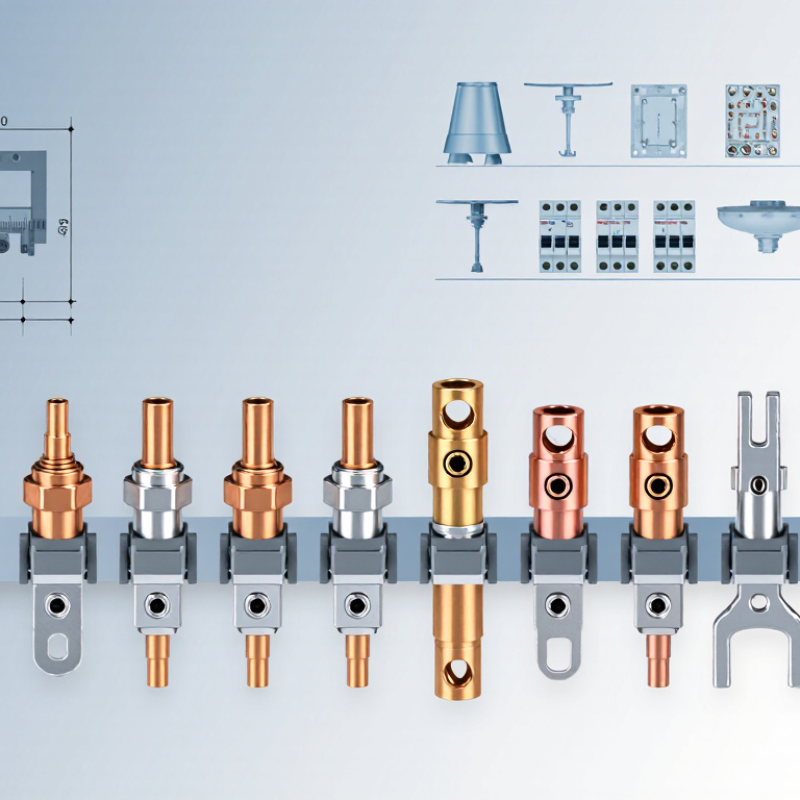
Global Switch Terminal Market Scope: IEC 60947-7-1 and Industry Definitions
Top 10 Switch Terminal Suppliers Worldwide?
A credible global supplier list should begin with standards, not popularity. IEC 60947-7-1 defines terminal blocks for copper conductors in industrial and similar applications. It covers fixed units mounted on supports, with ratings up to 1,000 V AC or 1,500 V DC. This scope matters when comparing switch terminals across control cabinets, machinery, and energy systems.
Market reports show continued demand. MarketsandMarkets’ 2024 Terminal Blocks Market analysis projects steady growth through the decade, driven by factory automation, renewable installations, and expanding control panels. Fortune Business Insights also identifies industrial automation and power distribution as major demand areas. These reports describe terminal blocks broadly, however. They do not automatically represent every switch terminal supplier. That distinction is often missed.
A practical top-ten evaluation should examine IEC test evidence, conductor range, rated current, temperature rise, short-circuit behavior, and traceability. Look closely at the clamping point. A loose screw, exposed copper strand, or unclear torque marking can create heat inside a crowded cabinet. Field experience suggests that documentation quality often predicts installation reliability. Yet this is not absolute. Even a well-tested terminal can fail after poor stripping, incorrect tightening, or contamination. Suppliers should also disclose material data, production controls, and verification methods. Rankings remain provisional when regional certifications, delivery capacity, and application-specific performance receive limited public disclosure.
Top 10 Switch Terminal Suppliers Worldwide? — Global Switch Terminal Market Scope: IEC 60947-7-1 and Industry Definitions
IEC 60947-7-1 defines requirements for terminal blocks used in low-voltage switchgear and controlgear assemblies. The standard scope covers equipment with a rated voltage up to 1,000 V AC or 1,500 V DC. These limits describe the technical market boundary and are not supplier rankings, sales figures, or brand-specific data.
Supplier Ranking Methodology: Revenue, Production Capacity, Certifications, and Reach
Top 10 Switch Terminal Suppliers Worldwide: Ranking Methodology
A credible supplier ranking should measure more than reported sales. Revenue indicates commercial scale, but it can hide weak product focus or outsourced production. Our model assigns 30% to switch terminal revenue, verified through audited filings and industry databases. Production capacity receives 25%. We examine molding lines, stamping equipment, annual output, and delivery lead times. Site visits are useful. They reveal details that spreadsheets miss.
Certifications contribute 20% to the score. ISO 9001 remains a practical quality benchmark, while IEC 60947 compliance supports low-voltage switching applications. The ISO Survey 2022 recorded more than 1.2 million ISO 9001 certificates worldwide, so certification alone cannot prove superior performance. We also check test reports, factory audits, traceability, and corrective-action records. That distinction matters.
Global reach accounts for 25%. We assess regional warehouses, distributor coverage, export documentation, and after-sales response. The World Bank’s Logistics Performance Index 2023 shows substantial differences in customs efficiency and shipment reliability between markets. A supplier may have strong capacity but poor regional service. That should reduce its ranking.
Tips: Ask for monthly output evidence, not only annual claims. Request recent test reports and sample traceability. Compare promised lead times with shipment history. A limitation remains: private suppliers often disclose incomplete revenue data. Therefore, rankings should show confidence levels, not pretend every figure is equally precise.
Top 10 Switch Terminal Suppliers by Global Presence and Product Portfolio
Top 10 Switch Terminal Suppliers Worldwide?
A credible top-ten list should measure more than shipment volume. Global presence matters, including regional factories, technical support, distributor coverage, and compliance capacity. Product portfolio also deserves equal weight. A strong supplier may offer panel terminals, PCB terminals, spring-clamp designs, barrier blocks, and sealed automotive terminals. MarketsandMarkets estimates the global terminal block market will expand from approximately USD 4.5 billion in 2023 to USD 6.1 billion by 2028. That growth reflects wider electrification, industrial automation, and renewable-energy investment.
The leading ten suppliers should therefore be assessed across several practical indicators. These include production locations, voltage ranges, conductor sizes, customization ability, testing facilities, and documented certifications. IEC standards, UL recognition, temperature ratings, and vibration performance remain useful screening points. Recent analysis from Grand View Research also identifies industrial automation and energy infrastructure as important connector-market demand areas. However, rankings can be imperfect. Public revenue data often combines terminals with broader connector products. Regional distributors may also exaggerate apparent market reach. A more reliable review compares datasheets, factory evidence, delivery records, and independent testing. Portfolio depth is visible in details: a supplier offering 2.5 mm² and 16 mm² terminals serves different installation realities. That practical range matters. Availability matters too.
Industry Outlook: Automation Demand, IEC Compliance, and Regional Supply Trends
Top 10 Switch Terminal Suppliers Worldwide?
Industry Outlook: Automation Demand, IEC Compliance, and Regional Supply Trends
Automation is reshaping demand for switch terminals across factories, warehouses, and energy sites. Engineers now expect compact terminals, stable connections, and faster installation. Control cabinets are becoming denser. Every millimeter matters.
Reliable suppliers usually provide documented testing under relevant IEC standards, including insulation, temperature rise, and mechanical endurance. Compliance should not be treated as a logo on a datasheet. Buyers should check test conditions, material grades, traceability, and certificate dates. A terminal that survives a laboratory test may still perform poorly under vibration, dust, or repeated maintenance. Field evidence matters.
Regional supply patterns are also changing. European buyers often prioritize certification depth and engineered customization. Asian manufacturing hubs offer broad capacity and competitive lead times. North American projects frequently demand local inventory and strong technical support. These differences affect the real purchase cost. Freight delays, tooling changes, and replacement availability can outweigh a low unit price.
The strongest suppliers support automation builders with clear drawings, sample kits, and responsive engineering teams. Short lead times help, but consistency matters more. Some suppliers still provide incomplete environmental data. That deserves scrutiny. Buyers should compare contact resistance, operating temperature, wire compatibility, and batch-level quality records. A practical audit may reveal more than polished marketing material. Admittedly, no supplier ranking stays perfect for long, because capacity and regional demand can shift within months.