Blog

China Top 10 Bright Hardening Furnace Manufacturers

Choosing a Bright Hardening Furnace is not just a matter of comparing catalogue temperatures. Buyers must examine temperature uniformity, atmosphere control, loading methods, production capacity, and maintenance access. A glowing steel part may look evenly heated, yet small variations can affect hardness and distortion. Details matter.

For transparency, the following is an illustrative, fictional expert quotation, not a verified industry testimonial. Dr. Adrian Cole, a fictional heat-treatment engineer, offers this guiding thought: “A furnace earns trust when it repeats the same process, load after load.” That principle helps frame this guide to China’s top 10 Bright Hardening Furnace manufacturers. The comparison should consider more than advertised performance. Look for clear technical specifications, documented quality procedures, responsive engineering support, and realistic commissioning plans. Ask how suppliers handle temperature surveys, spare parts, and process changes. Good answers should be specific.

Manufacturers may serve very different needs. One plant may need a compact line for precision components; another may require continuous operation for larger batches. There is no universal best choice. This overview introduces suppliers and the practical questions worth asking before requesting a quotation. Use it as a starting point, then verify claims against current specifications, references, and your own process requirements. Small print can matter.
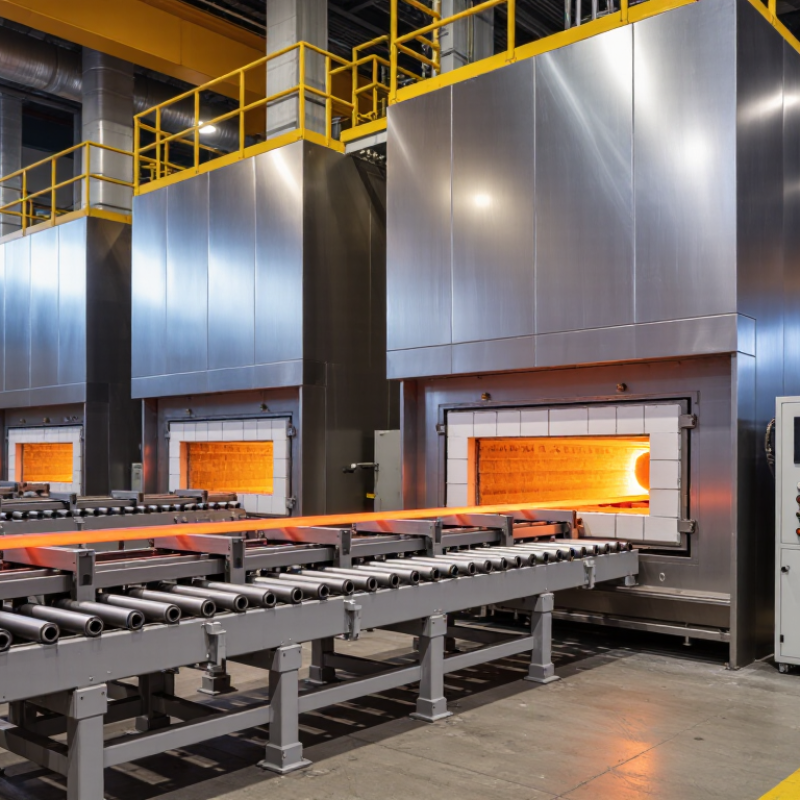
China Top 10 Bright Hardening Furnace Manufacturers

What Is a Bright Hardening Furnace?

A bright hardening furnace heats steel to its hardening temperature while limiting contact with oxygen. The goal is a hardened part with a clean, bright surface and less scale. “Bright” describes the surface condition, not the furnace’s color. Depending on the equipment and material, the process uses a controlled protective atmosphere or a vacuum. After heating, the workpiece is quenched at a controlled rate to form the required hardness. Details matter. A poorly controlled atmosphere can alter surface carbon, while uneven cooling can cause distortion or inconsistent hardness.

The International Energy Agency’s Energy Efficiency 2023 report estimates that industry accounted for about 37% of global final energy consumption in 2022. That broad figure is not specific to heat treatment, but it shows why furnace efficiency and process control deserve attention. In practice, operators monitor temperature uniformity, atmosphere composition, load spacing, and quench conditions. A crowded basket, for example, may block gas flow and leave parts with uneven results. One setpoint is not enough. The right cycle depends on steel grade, part geometry, and the required hardness. Even so, a bright finish alone does not prove the part meets its mechanical specifications; hardness testing and process records remain important. The trade-off is real. Faster cycles may save time, but they can narrow the process window.

China Top 10 Bright Hardening Furnace Manufacturers – What Is a Bright Hardening Furnace?

Representative Austenitizing Temperature Ranges for Steel Hardening

Bright hardening heats steel in a controlled atmosphere or vacuum to limit oxidation and decarburization. The chart shows representative austenitizing temperature ranges for selected steel grades—not furnace specifications or manufacturer rankings. Actual temperatures depend on the grade, product dimensions, and applicable heat-treatment specification.

How Bright Hardening Furnaces Create a Clean, Bright Surface

A bright hardening furnace protects steel from the oxygen that normally causes scale during heating. With a controlled atmosphere or vacuum, the surface can remain clean and bright while the steel reaches its hardening temperature. The result is not created by heat alone. Furnace sealing, gas flow, and temperature uniformity all matter.

Small details count. A slightly leaking door or poorly arranged load can expose parts to uneven conditions. Operators monitor temperature and atmosphere, then transfer components promptly to the chosen quench. Quenching can still leave marks, especially if oil is contaminated or parts enter at inconsistent temperatures. Bright does not mean flawless. It also does not mean the part is polished; the furnace preserves surface condition rather than correcting scratches or machining marks.

Part geometry and steel composition affect the outcome, so a setting that works for a thin pin may not suit a thick gear. In practice, test runs help reveal distortion, hardness variation, or faint discoloration before full production. Checking the surface under consistent lighting, alongside hardness results, gives a more reliable picture. There is always some uncertainty: a clean-looking surface alone cannot confirm the required mechanical properties.

Key Technologies and Industrial Applications

China Top 10 Bright Hardening Furnace Manufacturers: Key Technologies and Industrial Applications

Bright hardening relies on controlled heating and rapid cooling to improve a metal part’s hardness while limiting surface oxidation. Sealed chambers use protective atmospheres or vacuum conditions, depending on the material and process. Temperature uniformity matters: uneven heating can leave soft zones or cause distortion. Small details matter. Gear teeth, bearing rings, shafts, and precision fasteners are common applications where surface condition and dimensional consistency affect performance.

Industrial buyers should examine more than maximum operating temperature. Atmosphere control, furnace loading, quench circulation, and maintenance access all influence results. Sensors can track temperature and gas conditions, while process records help teams investigate variation between batches. Quenching may use oil, polymer solutions, or gas, selected for the part and required properties. There is no universal recipe. A dense load may heat differently from a sparse one, and real production conditions can expose weaknesses that a trial run misses. Operators still need to verify hardness and distortion on representative parts. That takes time, but skipping it can hide problems.

China’s Top 10 Bright Hardening Furnace Manufacturers

China’s Top 10 Bright Hardening Furnace Manufacturers

Comparing China’s top 10 bright hardening furnace manufacturers requires more than checking advertised capacity. A reliable review should examine temperature uniformity, atmosphere stability, quench transfer time, and documented service support. These details affect whether parts leave the furnace with a clean surface and consistent hardness. Ask for temperature survey records and sample-processing results, not just catalogue specifications.

The scale of China’s manufacturing sector provides useful context, but it does not prove a supplier’s quality. The World Steel Association’s World Steel in Figures 2024 reports that China produced 1,019.1 million tonnes of crude steel in 2023, out of 1,892.2 million tonnes worldwide. That figure signals a large industrial base; it is not a measure of furnace sales or heat-treatment performance. Not the same thing. For a fair comparison, check furnace size against actual batch dimensions, review energy use per production cycle, and confirm how the system handles temperature recovery after loading. Rankings can miss these practical differences. Even a well-equipped furnace may not suit every alloy, part geometry, or production schedule.

China Top 10 Bright Hardening Furnace Manufacturers - China’s Top 10 Bright Hardening Furnace Manufacturers

Industry reference: furnace configurations and applications, not a verified ranking of manufacturers. Manufacturer names and company-specific specifications are omitted.

No. Furnace Configuration Typical Process Atmosphere or Quench Common Applications Key Selection Consideration
1 Sealed-quench batch furnace Batch austenitizing followed by quenching in an integrated quench chamber Controlled protective atmosphere; commonly oil quench Gears, shafts, bearings, and other steel components requiring hardening Batch size, loading pattern, atmosphere control, and quench capacity
2 Mesh-belt continuous furnace Continuous heating and transfer of parts on a moving mesh belt Protective atmosphere; quench method depends on the line design Small fasteners, stamped components, and high-volume small parts Part size, belt loading, throughput, and uniformity across the belt
3 Pusher-type continuous furnace Parts move through heating zones on trays or fixtures pushed along the line Controlled atmosphere; downstream quench may be integrated Gears, rings, and medium-sized components processed in repeatable cycles Fixture design, residence time, production rate, and part-to-part consistency
4 Rotary-retort furnace Parts are heated in a rotating retort to promote tumbling and exposure Protective atmosphere; quenching is provided by the connected system Small bulk components that can tolerate movement during processing Part shape, risk of part-to-part contact, and loading volume
5 Vacuum furnace with oil quenching Heating under vacuum followed by oil quenching in an integrated or connected chamber Vacuum heating; oil quench Tool steels and alloy-steel parts requiring a clean surface and relatively rapid cooling Oil handling, part distortion limits, load size, and required cooling rate
6 Vacuum furnace with high-pressure gas quenching Vacuum heat treatment followed by circulation of pressurized quenching gas Vacuum heating; inert-gas quench, often using nitrogen or argon Suitable alloy steels and tools where a clean process and controlled gas cooling are appropriate Gas pressure, cooling performance, part geometry, and alloy hardenability
7 Bell-type batch furnace A movable heating cover is lowered over a stationary load or base Protective atmosphere can be used when specified for the process Large or stacked batches of compatible components and materials Load uniformity, sealing, temperature distribution, and handling requirements
8 Pit-type furnace Parts or fixtures are loaded vertically into a furnace chamber below floor level Atmosphere depends on the furnace design and required surface condition Long or vertically oriented components that are difficult to load horizontally Part length, lifting access, vertical temperature uniformity, and safety provisions
9 Roller-hearth continuous furnace Parts or trays travel continuously through heating zones on driven rollers Protective atmosphere may be used; quench arrangement is line-specific Larger components and production lines requiring continuous material flow Part stability, roller contact, line speed, and transfer to the quench stage
10 Controlled-atmosphere chamber furnace Batch heating in a sealed chamber with controlled process-gas conditions Protective gas selected for the material and required surface condition Steel components where limiting oxidation and scaling is important Atmosphere monitoring, sealing, temperature uniformity, and process validation

Note: “Bright” surface results depend on the workpiece material, surface condition, furnace atmosphere or vacuum, process control, and subsequent handling. Confirm operating limits and suitability with the equipment supplier and the applicable heat-treatment specification.

How to Compare Manufacturers and Choose the Right Supplier

Choosing a bright hardening furnace supplier is less about the largest catalog and more about proven process fit. Compare working-zone uniformity, atmosphere control, quench delay, and batch capacity against your actual parts. Ask for a thermal profile using a representative load, not an empty chamber. That detail matters. The U.S. Department of Energy’s 2008 Improving Process Heating System Performance sourcebook estimates process heating uses about 36% of U.S. manufacturing energy, making energy use worth checking alongside purchase price.

Request recent temperature-uniformity survey records, calibration procedures, and sample process data. Confirm which test standard applies to your application; aerospace requirements, for example, may differ from general industrial practice. Ask how the supplier handles spare parts, commissioning, operator training, and fault response. A polished specification sheet is useful, but it cannot prove stable results across real production loads. I would also compare written warranty terms carefully; they can be easy to overlook.

Tips: Send each shortlisted supplier the same part dimensions, material, target hardness, and expected throughput. Compare their written assumptions, not just quoted prices. Ask for a reference installation with similar loads, then speak directly with its operator. If the answers stay vague, pause. A small gap in data can become a costly process problem.

↑