What is a Thermal Paper Roll Manufacturer and Their Role?
The role of a thermal paper roll manufacturer is crucial in today's economy. Thermal paper is widely used in point of sale (POS) systems, providing the foundation for receipts and labels. According to industry reports, the global thermal paper market is expected to reach $5 billion by 2025. This growth highlights the increasing demand for efficient and high-quality printing solutions.
Manufacturers in this sector focus on producing rolls that are durable and reliable. The composition of thermal paper combines a special coating and a base paper, impacting print quality and longevity. However, there is still room for improvement. Some manufacturers struggle with providing consistent quality across batches, leading to issues in production.
In addition, environmental concerns have emerged. Many thermal papers contain harmful chemicals. As the industry evolves, manufacturers must address sustainability. Innovations in eco-friendly materials are underway, yet, they require careful consideration. The path forward is complex, but it is essential for thermal paper roll manufacturers to adapt to market demands and environmental requirements.
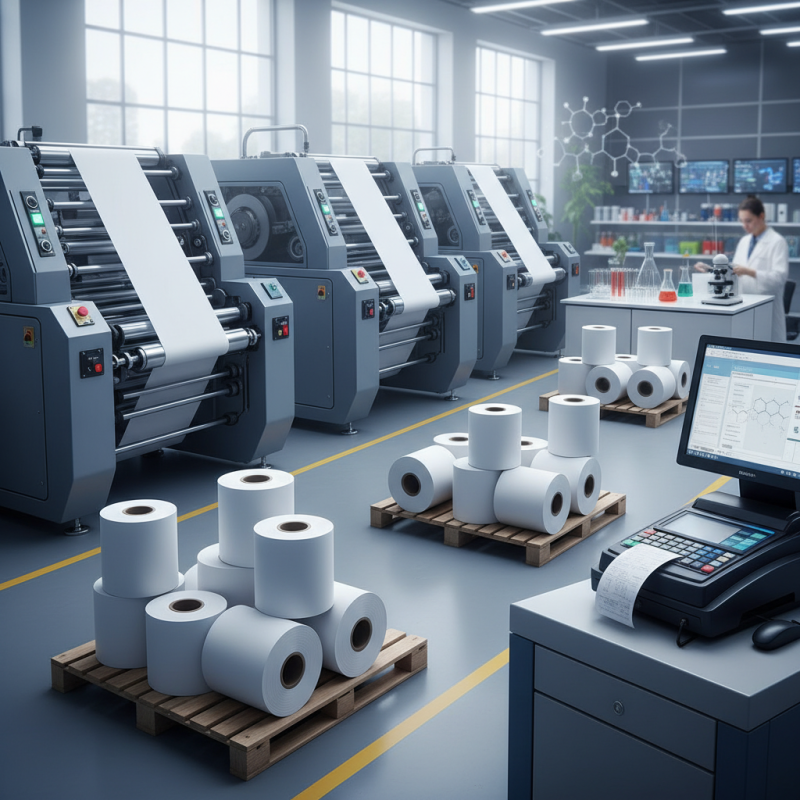
Definition of a Thermal Paper Roll Manufacturer
A thermal paper roll manufacturer specializes in producing rolls of thermal paper used for printing receipts, tickets, and labels. Thermal paper works by applying heat through a printer head, creating images on the paper's surface. The quality of the thermal paper is crucial, as it influences print durability and clarity. Market studies indicate that the thermal paper market is projected to reach $4 billion by 2027, reflecting its importance in various industries, including retail and logistics.
Manufacturers focus on different specifications. The paper must be coated with a thermal layer, which can vary in thickness and composition. Many manufacturers face challenges in maintaining consistent quality. Some batches may have uneven coating, resulting in issues during printing. Research shows that up to 15% of thermal paper produced may not meet industry standards. Consequently, manufacturers must undergo rigorous testing to ensure compliance with safety regulations. Sustainability is another growing concern, as many manufacturers strive to create eco-friendly products. Yet, achieving this balance remains a challenge.
Quality control plays a vital role in the manufacturing process. Each roll must undergo inspections to ensure proper dimensions and coating levels. The need for advanced machinery is evident, yet not all manufacturers can afford high-end technology. This can lead to inconsistent product quality and customer dissatisfaction. Industry data reveals that approximately 30% of customers have reported issues with thermal paper durability. Continuous improvement is essential for manufacturers to meet increasing market demands.
What is a Thermal Paper Roll Manufacturer and Their Role?
| Dimension | Description |
| Material Type | Thermal paper used for printing |
| Roll Width | Common sizes range from 80mm to 110mm |
| Roll Length | Typically from 30 meters to 300 meters |
| Coating Type | Single-layer and multi-layer thermal coating |
| Color Options | White, yellow, blue, and custom colors available |
| Applications | Used in POS systems, medical devices, and mobile printers |
| Environmental Compliance | Production aligns with environmental standards |
| Customization Options | Custom sizes, branding, and packaging available |
Key Processes in Thermal Paper Roll Production
Thermal paper roll production involves several key processes that ensure high-quality output. The first step is the selection of raw materials. Manufacturers choose specific base paper that meets precise specifications. This choice affects the final product's quality.
After this, a thermal coating is applied. This coating consists of heat-sensitive chemicals. It determines how well the paper reacts to heat.
Next, the coated paper is dried. This is a crucial step. Proper drying ensures that the coating adheres correctly. If not dried adequately, the thermal properties can be compromised. Following drying, the paper is cut into rolls. This process requires precision. If the rolls are not uniform, it can lead to issues in printers.
During production, quality checks are necessary. However, inconsistencies might still occur. Sometimes, even minor imperfections can escape detection. This is where manufacturers must reflect on their processes. Continuous improvement is vital. They should strive for better quality control measures. Even small errors can impact the end user’s experience.
Types of Thermal Paper Used in Various Industries
Thermal paper rolls are essential in various industries, from retail to healthcare. These rolls are designed for thermal printing, a process where heat reacts with a special coating on the paper. As a result, it produces clear images without the need for ink. This feature makes thermal paper a popular choice for receipts, labels, and tickets.
Different types of thermal paper are widely used based on industry needs. For instance, in retail, high-quality thermal paper is crucial for printing receipts that are easy to read and long-lasting. On the other hand, medical settings require thermal paper that is resistant to chemicals and moisture. This ensures patient information remains intact, even in challenging environments.
When choosing thermal paper, consider the width and length of the rolls. Not all printers accept every size. Check compatibility to avoid frustrating situations. Maintain a proper storage environment too. Thermal paper can degrade in high humidity or excessive heat. Protecting your supply enhances longevity and performance. Always test different types to find what best suits your specific needs. Different applications may demand varied qualities.
Importance of Quality Control in Thermal Paper Manufacturing
In the thermal paper manufacturing process, quality control plays a crucial role. This ensures that the paper performs well under various conditions. Thermal paper is used in receipt printers and lottery tickets. The quality of the finished product affects readability and longevity.
Manufacturers often face challenges. Variations in temperature or humidity can affect the paper’s coating. A small defect can lead to poor prints. Regular testing helps identify issues early. Standards are set to minimize these flaws. For instance, manufacturers should check the thermal response of the product.
Quality control is not just about avoiding defects. It also builds trust with customers. When consumers use reliable thermal paper, they expect consistent results. A lack of quality can lead to complaints. Therefore, manufacturers must invest time and resources. Finding the right balance in quality can be difficult, but it's essential for success.
Future Trends in Thermal Paper Roll Manufacturing Technology
The thermal paper roll manufacturing industry is evolving rapidly. New technologies are emerging, focusing on sustainability. Manufacturers are experimenting with eco-friendly materials. This shift reflects a growing demand for greener products. Consumers are increasingly aware of environmental issues. Hence, manufacturers are motivated to create sustainable solutions.
In addition to eco-conscious options, digital printing advancements are on the rise. These innovations improve print quality and reduce waste. Manufacturers are looking into digital thermal printing methods. This could streamline the production process and cut costs. However, transitioning to new technologies can be challenging. Training staff on new systems may take time and resources.
Another area of development is the integration of smart technology. Smart thermal rolls can provide real-time data on inventory and usage. This data helps businesses optimize their operations. But, the reliance on technology can lead to potential risks. Manufacturers must continuously evaluate security measures. Balancing innovation with practical implementation remains essential for success.