Blog

2026 How to Choose the Right Mechanical Shaft Seal?

Choosing the right Mechanical Shaft Seal in 2026 starts with the operating conditions, not a catalog photo. A seal that performs well on clean water may fail quickly with abrasive slurry, hot oil, or frequent starts. Small details matter. Even a slight change in temperature or shaft movement can affect leakage and service life.

Before comparing designs, record the fluid, pressure, temperature, shaft speed, and expected operating cycles. Check the pump or mixer manual for shaft dimensions, allowable runout, and seal-chamber limits. These details help narrow choices such as single or dual seals, balanced designs, and suitable face materials. Silicon carbide, carbon, and ceramic each behave differently; compatibility depends on the fluid and operating conditions. Ask the supplier for documented material compatibility and performance limits, rather than relying on a broad product description.

Installation matters, too. Poor alignment, contaminated faces, or dry running during startup can damage even a correctly specified seal. There is no perfect choice from a catalog alone. In practice, an initial specification may need revision when field measurements reveal conditions that were missed. Compare the proposed seal with the equipment manufacturer’s requirements, and confirm any assumptions with a qualified seal specialist. This guide explains how to weigh reliability, maintenance needs, and total operating cost, so your selection fits the equipment—not just the purchase price.
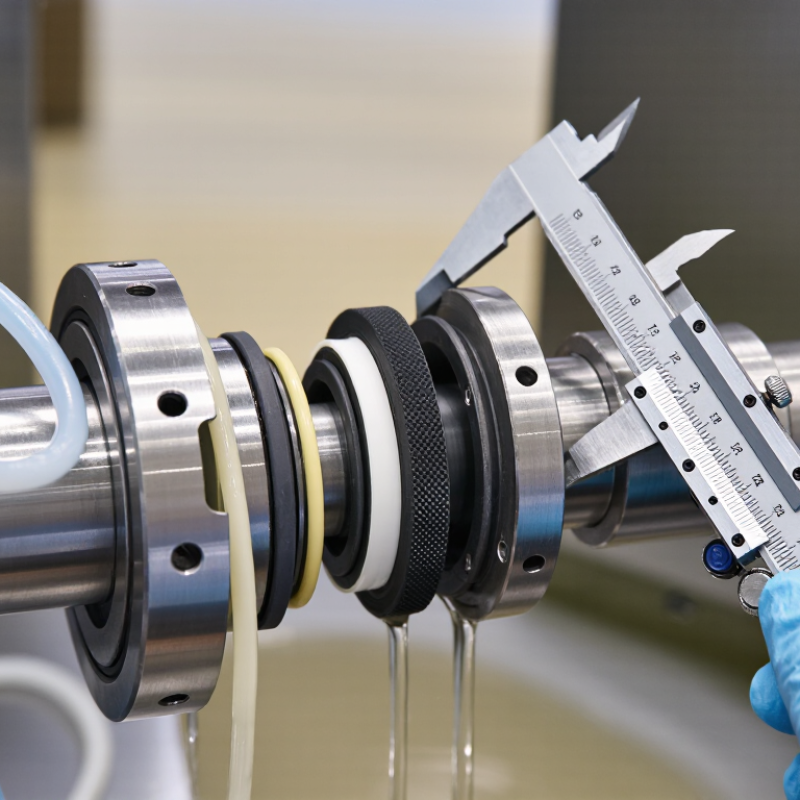
2026 How to Choose the Right Mechanical Shaft Seal?

Assess the Equipment, Fluid, and Operating Conditions

2026 How to Choose the Right Mechanical Shaft Seal?
Assess the Equipment, Fluid, and Operating Conditions

Choosing a mechanical shaft seal starts with the machine, not the catalog. Record the shaft diameter, speed, alignment, and space available around the seal chamber. Check whether the pump runs continuously, starts often, or sits idle between batches. Small details matter. Vibration, bearing wear, or a worn sleeve can shorten seal life even when the seal type seems suitable.

Next, identify the fluid as it actually reaches the seal. Note its temperature, pressure, viscosity, solids, and tendency to crystallize or change when exposed to air. Water with fine abrasive grit behaves differently from clean water; a sticky process fluid may leave deposits on seal faces. Ask operators about flush plans, cleaning cycles, and brief dry-running events. Those observations help. Fluid names alone can mislead.

Operating conditions complete the picture. Compare normal values with startup peaks and upset conditions, including pressure reversals and temperature swings. Confirm that the seal materials tolerate the fluid and heat, and that face loading suits the pressure and speed. Use equipment drawings and measured data where possible, but question old records; the process may have changed. Measurements are not always tidy. Document assumptions, then review them with maintenance and process staff before specifying a seal.

Select a Seal Design for the Shaft and Application

Selecting a mechanical shaft seal starts with the shaft, not a catalog picture. Confirm shaft diameter, rotational speed, runout, and available installation space. A seal that fits on paper may still struggle if the shaft vibrates or moves off-center. Check the fluid’s temperature, pressure, chemistry, and solids content. A warm water service and a gritty chemical slurry need different face materials and elastomers. Small details matter. Face pairing, such as carbon against a ceramic or harder face, should suit the fluid and operating conditions. The choice is not automatic.

Then match the seal design to the application. A single seal may suit a clean, stable process, while a double seal can provide an added barrier where leakage control is important. Balanced designs can help manage pressure, but the actual pressure range and startup conditions still matter. Dry running is easy to overlook; even brief operation without adequate lubrication can damage the faces. Review the equipment manual and ask the seal supplier or a qualified engineer to check compatibility and installation requirements. A common mistake is choosing by price or shaft size alone. I would revisit that choice whenever the duty cycle changes, because real operating conditions rarely stay perfectly tidy.

2026 How to Choose the Right Mechanical Shaft Seal? - Select a Seal Design for the Shaft and Application

Service conditions Seal design to consider Why it may fit Checks before selection
Clean, lubricating liquid; moderate operating conditions Single, unbalanced pusher seal A common, straightforward arrangement for many general-purpose pumps when pressure, speed, temperature, and fluid properties are within the seal’s limits. Confirm pressure at the seal chamber, shaft speed, face lubrication, fluid compatibility, and whether the pump can run dry during start-up or upset conditions.
Higher seal-chamber pressure or pressure fluctuations Balanced mechanical seal Balancing reduces the hydraulic closing force on the seal faces, which can help limit face loading and heat generation in suitable higher-pressure services. Use the actual pressure at the seal, including transient conditions. Verify the seal’s pressure and speed limits, balance ratio, face materials, and required support system.
Elevated temperature or fluid that may attack elastomers Metal bellows seal, where compatible with the duty A metal bellows can provide the secondary sealing element without a dynamic elastomer sliding along the shaft. It may suit some hot-fluid services. Check bellows alloy compatibility, corrosion and fatigue conditions, temperature limits, face materials, and the seal manufacturer’s operating envelope.
Corrosive liquid or a fluid with uncertain material compatibility Seal with wetted materials selected for the specific chemistry; consider a dual seal if leakage containment is required Seal performance depends on the compatibility of all wetted parts, including faces, springs, bellows, and secondary seals—not just the main seal body. Check concentration, temperature, impurities, and cleaning chemicals. Select elastomers and metals from verified chemical-compatibility data; define the dual-seal support arrangement if used.
Abrasive solids, crystals, or suspended particles Seal and support arrangement designed for solids service; consider a suitable flush or other solids-control plan Particles can damage faces, obstruct springs, or accumulate around moving components. A suitable design and controlled seal environment can reduce these risks. Provide particle size, concentration, hardness, settling behavior, and fluid properties. Confirm flush compatibility, flow, pressure, and environmental or process requirements.
Limited installation access or a retrofit where accurate setting is difficult Cartridge seal, in a suitable single- or dual-seal arrangement A cartridge is pre-assembled and set as a unit, which can simplify installation and reduce errors in setting the seal working length. It describes the assembly, not the face-seal mechanism. Check shaft and chamber dimensions, gland fit, available space, alignment, and compatibility with the pump. Confirm that installation instructions and support connections can be followed.
Equipment must be sealed without removing the shaft or major components Split mechanical seal, if available and approved for the operating conditions A split design can allow installation around an existing shaft, potentially reducing disassembly and downtime. Verify shaft condition and runout, installation space, alignment requirements, pressure and speed limits, and suitability for the fluid and equipment.

Selection note: Operating limits vary by seal construction, materials, equipment, and support system. Confirm the complete duty data—including fluid, pressure at the seal chamber, temperature, shaft speed, and transient conditions—with the seal supplier before specifying a design.

Match Seal Materials to the Process Fluid and Temperature

Choosing seal materials starts with the fluid, not a generic temperature rating. Check the fluid’s chemistry, concentration, and any cleaning agents that contact the seal. A mild-looking mixture can still swell an elastomer or corrode metal parts. Small details matter.

Temperature changes the choice. Confirm the temperature at the seal chamber, including startup and cleaning cycles; it may differ from the tank reading. Heat can harden or soften elastomers, while sudden temperature swings can stress brittle components. For example, a seal exposed to hot wash water may need different elastomer limits than one handling the same fluid at room temperature. Check the manufacturer’s compatibility data for the exact fluid and temperature range. Then verify pressure and speed limits. Ratings are not interchangeable.

Face materials need equal care. Carbon against silicon carbide can suit many clean-fluid duties, while harder faces may be considered for abrasive service. But solids can still score surfaces, and poor lubrication can cause rapid wear. Not a simple match. Ask whether particles are suspended, how large they are, and whether the seal chamber receives flushing. A material chart helps, but it cannot account for every startup, idle period, or contamination event. I would treat the first selection as a reasoned estimate, then compare it with operating records and inspection findings. A slightly imperfect assumption, documented early, is safer than treating a catalogue rating as a guarantee.

Check Performance Limits, Standards, and Maintenance Needs

A mechanical shaft seal should be selected against the actual duty, not just the pump’s nameplate. Check pressure, temperature, shaft speed, fluid chemistry, solids, and vapor pressure against the seal’s documented limits. Allow for start-up surges and process changes. A seal that suits clean water may struggle with hot, abrasive slurry. Small details matter.

Use API Standard 682 as a reference for seal arrangements and supporting systems in applicable process-pump service. Then check whether the proposed flush or barrier-fluid plan fits the installation. The U.S. Department of Energy’s Improving Pumping System Performance: A Sourcebook for Industry estimates that pumping systems use nearly 20% of global electricity. That figure is broad, not a seal-specific failure rate, but it underlines why leakage, heat, and avoidable rework deserve attention. This choice is rarely tidy.

Maintenance needs should shape the choice, too. Confirm that technicians can inspect the seal, monitor leakage or temperature, and access replacement parts without major teardown. Set inspection intervals using operating history and the consequences of failure; one schedule does not fit every service. I would still question a selection based only on purchase price. A lower-cost seal may demand more frequent checks, and the trade-off can be easy to miss.

How to Choose the Right Mechanical Shaft Seal: Water Vapor Pressure vs. Temperature

As liquid temperature rises, its saturation vapor pressure increases. Compare this pressure with the pressure at the seal faces: if local pressure approaches the liquid’s vapor pressure, vaporization can contribute to face-film instability, wear, and leakage. Confirm actual operating limits with the seal design, fluid properties, and applicable requirements such as API 682 / ISO 21049. Follow the manufacturer’s inspection and maintenance guidance.

Compare Suppliers, Total Cost, and Installation Requirements

When comparing mechanical shaft seal suppliers, look beyond catalog dimensions. Ask for documented limits on pressure, temperature, shaft speed, and fluid compatibility. A supplier should explain how its recommendation fits your pump’s actual duty, not just send a price. Request material details, lead times, spare-part availability, and clear technical support. Response quality matters.

Compare total cost over the expected service period. A low purchase price can become expensive if the seal needs frequent replacement or causes unplanned downtime. Include installation labor, replacement parts, and the cost of stopping production. The cost sheet is rarely perfect; operating conditions can change, and seal life is not guaranteed. It matters. Ask suppliers to state their assumptions, such as operating hours and fluid temperature, so estimates can be compared fairly.

Installation requirements can also change the best choice. Confirm the seal’s dimensions, shaft condition, and required tools before ordering. Check whether your maintenance team can follow the assembly instructions and achieve the specified alignment. Cleanliness is critical: a small particle on a sealing face can cause leakage soon after startup. Ask about inspection steps and commissioning checks. Small details are easy to miss. A practical choice is one your team can install correctly with the equipment and time available.

↑