2026 How to Choose the Best Horizontal Machining Center for Your Needs?
Choosing the right horizontal machining center can be a daunting task. With numerous options on the market, understanding your specific needs is crucial. According to David Turner, a renowned expert in machining technology, “Picking the right horizontal machining center is about aligning your capabilities with your production demands.” This encapsulates the importance of careful evaluation.
When selecting a horizontal machining center, consider the dimensions and weight of your workpieces. These factors can significantly impact your decision. It's also essential to assess the precision required for your operations. Not all machines can deliver the same level of accuracy. For some manufacturers, overlooking these details can lead to costly mistakes.
Another vital aspect is the software compatibility of the horizontal machining center. Many machines come with proprietary systems that may not integrate easily with your existing processes. Therefore, ensuring seamless integration prevents production delays. Reflecting on these areas can help you make an informed choice, enhancing your operational efficiency.
What is a Horizontal Machining Center and Its Applications?
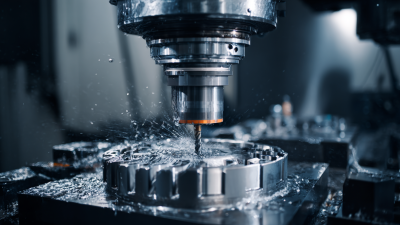
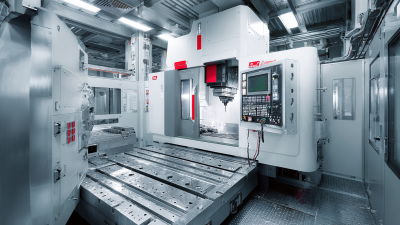
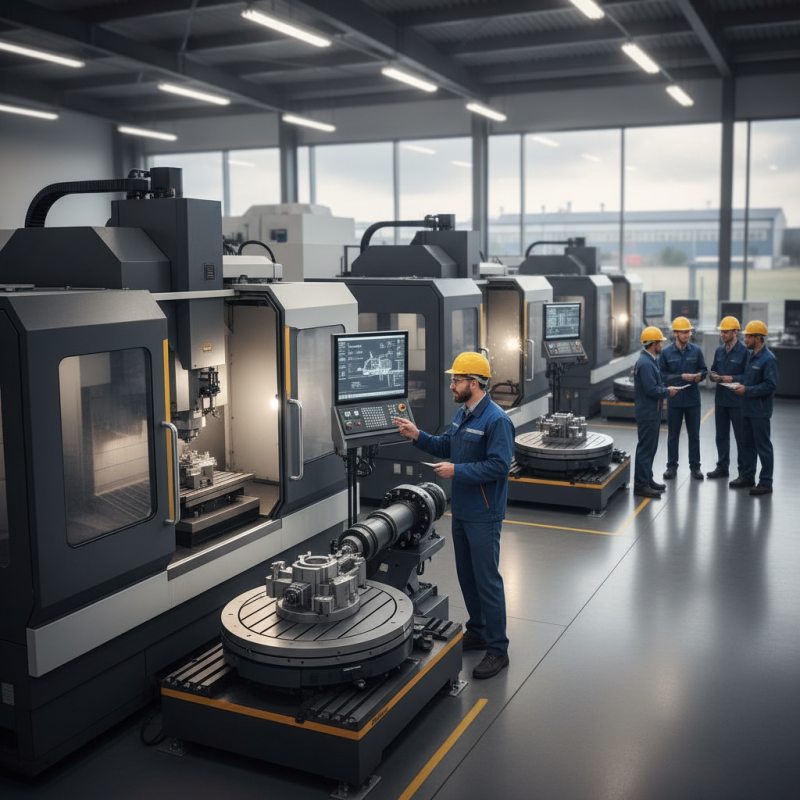
A Horizontal Machining Center (HMC) is a powerful tool used in various manufacturing processes. It operates on a horizontal spindle that provides benefits such as increased cutting speed and better chip removal. This design makes it ideal for heavy-duty machining tasks, especially for complex parts and large workpieces.
HMCs are widely used in industries like aerospace, automotive, and heavy equipment. They can handle materials like aluminum, steel, and titanium with precision. The ability to set up multiple operations simultaneously leads to increased productivity. However, users must consider their specific production needs before investing. Not all parts require the power of an HMC; some simpler jobs may be more efficiently executed on vertical machines.
When selecting a horizontal machining center, users should reflect on their production volumes and part complexity. Understanding the specific applications can make or break efficiency. Poor choices can lead to overinvestment or inadequate performance. It's essential to balance cost with capability. Think through workflows and desired outcomes to ensure the right fit for your needs.
Key Factors to Consider When Choosing a Horizontal Machining Center
Choosing the right horizontal machining center (HMC) can significantly impact your production efficiency. Key factors include machine size and payload capacity. According to industry reports, machines with a larger work envelope can increase productivity by up to 30%. Additionally, consider the maximum weight the machine can handle. Some centers can support loads exceeding 6,000 pounds, making them suitable for larger components.
Another essential aspect is tooling capabilities. Look for machines that offer a variety of tooling options. Advanced HMCs can switch tools in less than 5 seconds, greatly reducing downtime. However, an oversupply of tooling options can complicate operation and maintenance. Users must assess their specific needs to avoid unnecessary complexity.
Lastly, automation features deserve attention. More than 50% of manufacturers are integrating HMCs with robotic systems to improve machining speed. Yet, some find the initial setup and programming challenging. Balancing automation with usability is critical for a successful investment. Each of these considerations contributes to the overall effectiveness of your horizontal machining center.
Key Factors to Consider When Choosing a Horizontal Machining Center
Understanding Different Types of Horizontal Machining Centers
When choosing a horizontal machining center, it's essential to understand the types available. There are several categories, including universal, double-column, and compact models. Each type serves specific needs in manufacturing. Universal centers offer versatility. They handle various machining tasks but may lack speed. Double-column models excel in stability. However, they can be more expensive than other options. Compact machines are ideal for limited spaces but may have smaller working envelopes.
When assessing your needs, consider your production volume. High-volume tasks may benefit from robust machines. Low-volume jobs might require flexibility. The choice depends heavily on your project's nature. It’s vital to evaluate your existing workflow and machinery compatibility.
Tips:
Keep maintenance in mind. Regular check-ups extend the life of your machine. Also, analyze the cost of ownership over time, not just the purchase price. Sometimes, cheaper options can become pricier with repairs. Always test the machine before purchase if possible. Different centers may not always perform as expected. This can lead to misalignment in your production goals.
Evaluating Performance Specifications and Features
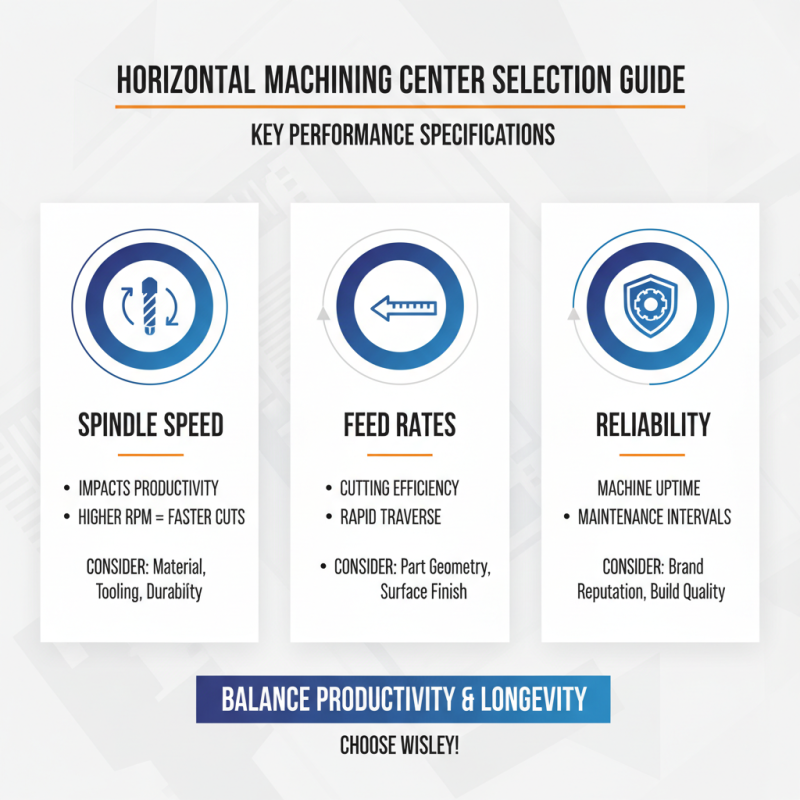
Choosing the right horizontal machining center can be daunting. Performance specifications play a crucial role. You need to consider spindle speed, feed rates, and overall reliability. High spindle speeds improve productivity. But, they may affect durability. Balancing these aspects is vital.
Evaluate the machine's features carefully. Look for stability and precision. Some machines boast advanced control systems, while others focus on simplicity. Depending on your needs, a complex system might become overwhelming. Consider additional features like tool changers. They can save time but may add maintenance challenges.
Material compatibility is another key factor. Not all machines handle every type of material effectively. Assess your typical workload. If you often switch materials, this could impact your choice. Analyze the overall design, too. Some centers are built for heavy-duty use, while others focus on light tasks. Each has its strengths and weaknesses.
Budgeting and Cost Considerations for Horizontal Machining Centers
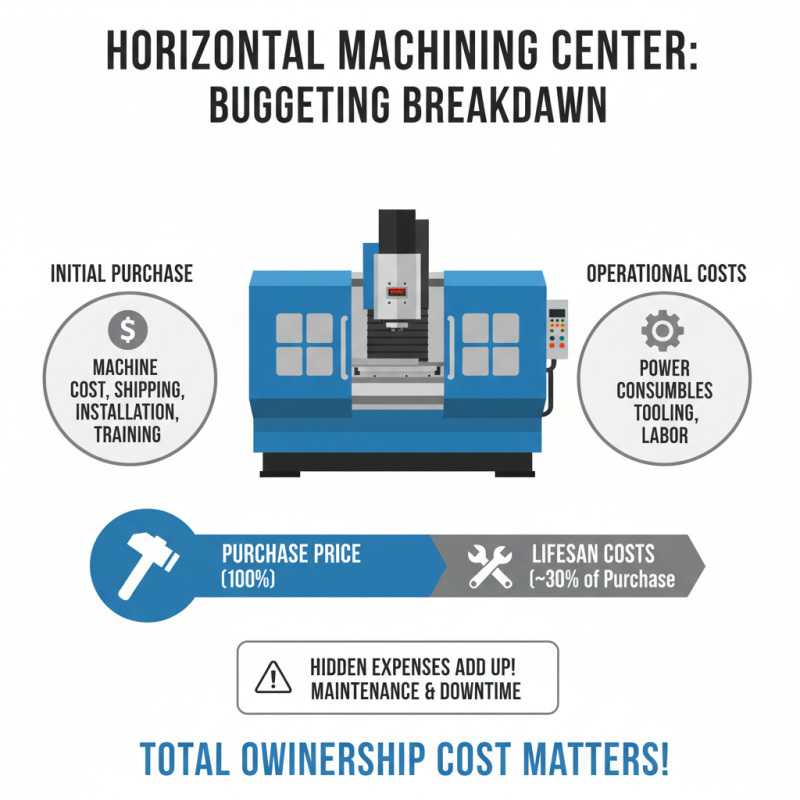
When budgeting for a horizontal machining center, many factors come into play. The initial cost often captures attention, but hidden expenses can add up. According to industry reports, maintenance and operational costs can reach 30% of the purchase price over the machine's lifespan. This figure emphasizes the importance of comprehensive budgeting.
Training staff is another significant expense. This often goes overlooked until the machine arrives. Investors should prepare for training costs, which might represent 5-10% of the initial investment. Moreover, energy consumption is critical. Industry data suggests that machines operating inefficiently can lead to energy costs exceeding initial estimates by as much as 15%.
Beyond purchase and training, consider tooling and fixturing costs for optimal output. These essentials aren't cheap and can vary widely. It's not just about the machine itself; the complete ecosystem matters. Planning for unexpected expenses will help mitigate financial strain. Flexibility in budget allocations can lead to better long-term results.