Blog

How to Choose the Right Goods Lift in 2026?

Choosing a Goods Lift in 2026 is not just a matter of picking the largest platform. The right system must suit the building, the load, and the daily work around it. A pallet of boxed stock moves differently from a wheeled bin, and a lift serving one quiet storeroom has different demands from one running all day. Measure the heaviest load, the largest item, and the space needed to turn or load it. Then check floor levels, shaft dimensions, door openings, and available power. Small details count.

A lift-industry expert’s verified quotation was not supplied for this introduction, so the following line is illustrative, not a real quotation. Fictional lift adviser Daniel Mercer puts the selection principle this way: “Choose for the work you do every day, not the load you imagine once a year.” That is useful—but incomplete. Buyers should also compare travel height, operating frequency, loading method, controls, maintenance access, and the manufacturer’s service support. A site survey can reveal obstacles that drawings miss, such as a low beam or a narrow approach to the lift. Ask suppliers to explain their capacity figures and recommend options against your actual operating pattern. In 2026, connected monitoring and energy use may also matter, but neither should distract from safe, dependable operation. This guide will help you weigh the practical trade-offs, compare specifications, and ask better questions before requesting a proposal. Sometimes the best choice is less ambitious. That deserves a second look.
How to Choose the Right Goods Lift in 2026?

Understanding Goods Lift Types and Their Typical Applications

Goods lifts vary by load, travel height, speed, and how often they run. Hydraulic models often suit short-to-medium travel in workshops or small warehouses, where heavy items move between a few floors. Traction lifts can be a better fit for taller buildings or frequent, repeated deliveries. Neither type is automatically right. A site assessment matters.

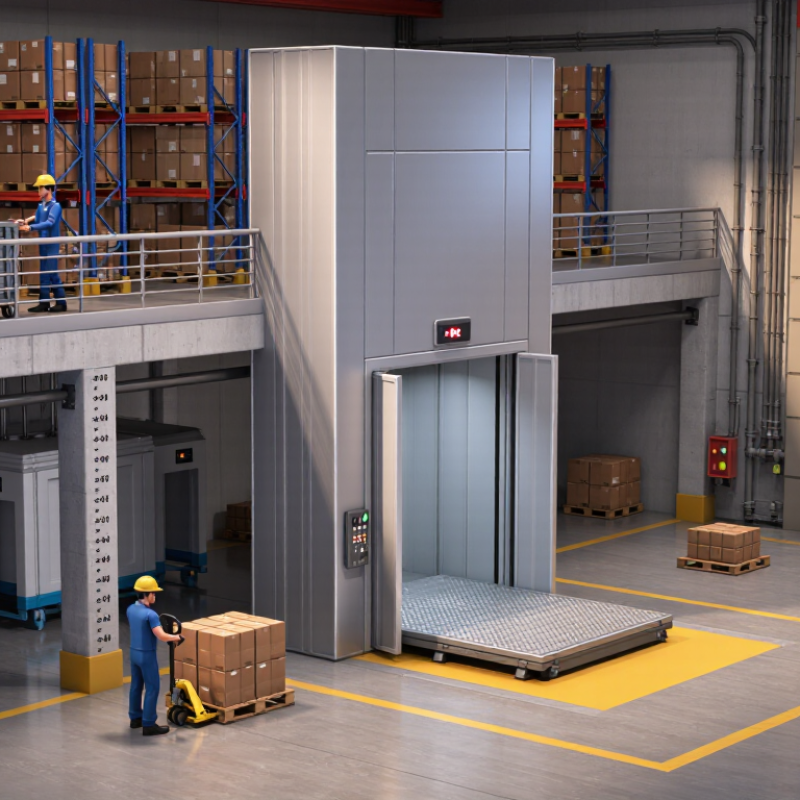
Vertical reciprocating conveyors are commonly used to move pallets or components between fixed levels in warehouses and production areas. They usually serve a different purpose from a lift designed for people, so access and operating procedures need careful attention.

In a restaurant or shop, a compact service lift may carry trays, stock, or supplies between floors. Check the actual load, including pallet weight, and measure the doorway, shaft, and landing space.

A common mistake is choosing by rated capacity alone. A bulky crate may not fit, even when it is light enough. I would also question assumptions about peak traffic: a lift that works for occasional deliveries may cause delays during shift changes.

Not always obvious.

Review loading methods, floor openings, duty cycle, and maintenance access with a qualified lift professional before selecting a system.

Assessing Load Capacity, Travel Height, and Site Conditions

A goods lift should be sized for the heaviest real load, not the average delivery. Include the pallet, packaging, and handling equipment in your calculation. Then check whether several loads may arrive together. A 1,000-kilogram rating can be inadequate if a concentrated wheel load exceeds the platform’s floor limit. Allow practical headroom, but avoid oversizing without reason; larger equipment can demand more space and structural support. Small details matter.

Travel height is only part of the survey. Measure every floor-to-floor distance, doorway, corridor, and turning area. Record overhead beams, pipes, and the available pit depth. On site, inspect slab condition, drainage, access for installation, and the route used to bring goods to the lift. The U.S. Bureau of Labor Statistics reported 1,942 fatal work injuries involving transportation incidents in 2023. This broad category is not specific to goods lifts, but it underscores why loading zones and pedestrian routes deserve attention. A clear drawing can still miss a pipe above the landing. Verify dimensions in person, and have a qualified lift or structural professional check capacity, supports, and site constraints before specifying the system.

Comparing Drive Systems, Platforms, and Safety Features

How to Choose the Right Goods Lift in 2026?
Comparing Drive Systems, Platforms, and Safety Features

Choosing a goods lift starts with the load, travel height, and daily duty cycle. A hydraulic system can suit heavier loads and shorter travel, but check its speed and maintenance needs. Traction drives may fit taller buildings or frequent trips. Screw-driven lifts can work in compact spaces, though operating noise and travel speed deserve attention. Compare real operating conditions, not just rated capacity.

Tips: Measure the narrowest doorway and turning space before choosing a platform. Record the heaviest pallet, including packaging. Ask an installer to check the floor, power supply, and loading approach. Small details matter.

Platform dimensions should leave room for safe loading without wasting valuable floor space. Consider whether carts, pallet trucks, or awkward items need to enter. Look for practical safeguards, such as door interlocks, overload detection, emergency stops, and clear controls. Confirm that inspection and maintenance instructions are available for the selected configuration. A feature list alone is not enough. I have seen buyers focus on capacity and overlook how a pallet sits near the platform edge. That is an easy mistake, and plans can still miss real-world handling habits. Request a site assessment and compare operating costs alongside purchase price.

Checking Compliance, Accessibility, and Installation Requirements

A goods lift must fit the building and the rules that apply to it. Requirements vary by location, building use, and lift type, so confirm current codes with the local authority and a qualified lift professional. Check rated capacity, fire protection, emergency controls, guarding, and inspection requirements before ordering. A pallet that weighs less than the limit can still create a problem if its load is uneven.

Accessibility affects daily work, not just compliance. Measure the widest trolley, largest item, and turning space at each landing. Check door width, sill height, control position, and whether workers can reach controls safely while carrying loads. Clear labels and audible or visual signals can help in noisy or dim areas. Small details matter. A plan may look accessible on paper, yet a narrow corridor can make the lift difficult to use.

Installation needs a site survey before anyone fixes a delivery date. Confirm shaft dimensions, pit depth, overhead clearance, floor strength, electrical supply, and access for bringing equipment inside. Ask who will arrange building work, inspections, and future maintenance. Keep enough space for technicians to work safely. There is rarely a perfect layout; sometimes a small change to a doorway or landing saves repeated handling problems later. Check measurements on site, not only on drawings.

How to Choose the Right Goods Lift in 2026?

Accessibility reference: compare minimum clear opening widths in the 2010 U.S. ADA Standards.

The ADA specifies a 32-inch minimum clear opening for general doorways and 36 inches for elevator doors. These are U.S. accessibility references, not universal goods-lift specifications: confirm whether the lift carries people, and check applicable local codes, load requirements, shaft dimensions, access for installation, and maintenance clearances before selecting equipment. Source: 2010 ADA Standards §§404.2.3 and 407.3.6.

Evaluating Lifecycle Costs, Maintenance, and Supplier Support

How to Choose the Right Goods Lift in 2026?

A goods lift’s purchase price is only part of its cost. Over years of service, electricity use, inspections, replacement parts, and repair visits can add up. Estimate these costs across the lift’s expected working life, not just its warranty period. Ask suppliers for service intervals and typical part replacement schedules. Then compare the assumptions behind their estimates. A busy warehouse may need a different maintenance plan than a small workshop. Downtime matters.

Tips: Request a written maintenance schedule and a clear breakdown of call-out charges. Check whether technicians and common parts are available nearby. Ask how urgent faults are handled outside normal business hours. Keep records.

Supplier support can affect daily operations as much as equipment specifications. Clarify who provides routine servicing, how quickly they respond, and what happens if a repair takes longer than expected. Get these details in writing. Check references from facilities with similar loads and usage patterns, while remembering that one customer’s experience may not predict yours. Cost estimates are imperfect, too; usage often changes after installation. Review them each year against actual energy bills, service records, and downtime. A simple spreadsheet can help expose assumptions that looked reasonable on paper but did not match the floor.

How to Choose the Right Goods Lift in 2026? — Evaluating Lifecycle Costs, Maintenance, and Supplier Support
Evaluation dimension Hydraulic goods lift Traction goods lift Heavy-duty freight lift
Typical application Low-rise warehouses, workshops, and loading areas with relatively short travel. Buildings with several floors, regular goods movement, or a need for longer travel. Industrial and distribution sites handling heavy loads or intensive daily traffic.
Typical rated capacity About 1,000–5,000 kg, depending on the design and installation. About 1,000–5,000 kg; higher capacities may be available with a suitable design. About 3,000–10,000 kg or more for purpose-designed installations.
Typical travel and speed Usually suited to low-rise travel, commonly around 2–12 m; speed is often approximately 0.1–0.3 m/s. Suitable for medium or longer travel; speed commonly ranges from about 0.3–1.0 m/s for goods applications. Project-specific; travel, speed, and duty rating should be specified for the building and traffic pattern.
Indicative installed budget (USD) $45,000–$90,000 $75,000–$160,000 $110,000–$250,000+
Indicative annual planned maintenance $1,500–$3,000 $2,000–$4,000 $3,000–$6,000
Indicative annual electricity cost $500–$1,500 $400–$1,200 $800–$2,500
Estimated 10-year ownership cost $65,000–$135,000 $99,000–$212,000 $148,000–$335,000+
Maintenance considerations Plan inspections and servicing for the hydraulic power unit, seals, hoses, and fluid. Check requirements for fluid condition and leak response. Plan inspections and servicing for the drive, brakes, ropes or belts, door equipment, and safety devices, as applicable to the design. Confirm a maintenance plan matched to load, operating hours, impact exposure, and the equipment’s duty rating.
Potential operational trade-off Often a practical low-rise option, but hydraulic components and fluid management require attention. Can suit longer travel and frequent use; initial design and servicing needs may be greater than for a basic low-rise installation. Can accommodate demanding loads, but requires careful planning for structural interfaces, installation, and ongoing service.
Supplier support to verify Confirm local technician coverage, stocked hydraulic parts, inspection arrangements, emergency call-out terms, and warranty exclusions. Confirm technician availability, access to compatible drive and door parts, response-time commitments, and planned-service coverage. Confirm heavy-load installation experience, critical-spares availability, service capacity for the specified duty, and escalation arrangements.
Best fit when Travel is short, capacity needs are moderate, and a straightforward low-rise arrangement fits the site. Travel is longer or traffic is regular, and the project benefits from a system suited to multi-floor service. Loads are unusually heavy, operating intensity is high, or the site requires a design tailored to demanding industrial use.

Planning basis: Cost figures are indicative 2026 USD budgeting ranges, not supplier quotations. Electricity estimates assume approximately 50–100 operating cycles per day and an electricity rate near $0.15/kWh; actual consumption depends on lift design, load, travel, controls, and usage. The 10-year estimate adds the installed budget, ten years of planned maintenance, and ten years of estimated electricity. It excludes building works, taxes, financing, insurance, major repairs, modernization, and replacement parts outside routine service. Confirm local code requirements, site conditions, usage, and written supplier proposals before selection.

↑