Blog
How to Choose the Right CNC Lathe for Your Business?
Choosing the right cnc lathe can shape your production capacity, product quality, and long-term operating costs. The decision should begin with your actual workpieces, not an attractive machine brochure. Measure typical diameters, lengths, materials, tolerances, and monthly production volume. A small workshop making aluminum shafts needs different capabilities from a factory producing hardened steel components.
Details matter. Check the machine’s swing over bed, spindle bore, chuck size, motor power, and maximum turning length. Confirm whether the control system supports your operators and existing CAD/CAM workflow. Live tooling, bar feeders, automatic tool changers, and chip management can improve productivity, but unnecessary features may increase purchase and maintenance costs. They may look impressive.
Experienced buyers also evaluate accuracy under real working conditions. Ask suppliers for test-cut results, repeatability data, installation requirements, and references from similar businesses. Visit a showroom when possible. Watch how quickly chips clear, how smoothly the turret indexes, and how accessible routine service points are. These small observations often reveal more than specifications.
The purchase price is only one part of the calculation. Include tooling, training, electricity, preventive maintenance, software, downtime, and technical support. A reliable supplier should explain limitations clearly, not promise perfect results. No selection method is flawless. Your forecasts may change, and operators may need time to adapt. Still, a careful comparison of production needs, machine capability, service quality, and total ownership cost will make the final choice more practical and defensible. Begin with evidence.
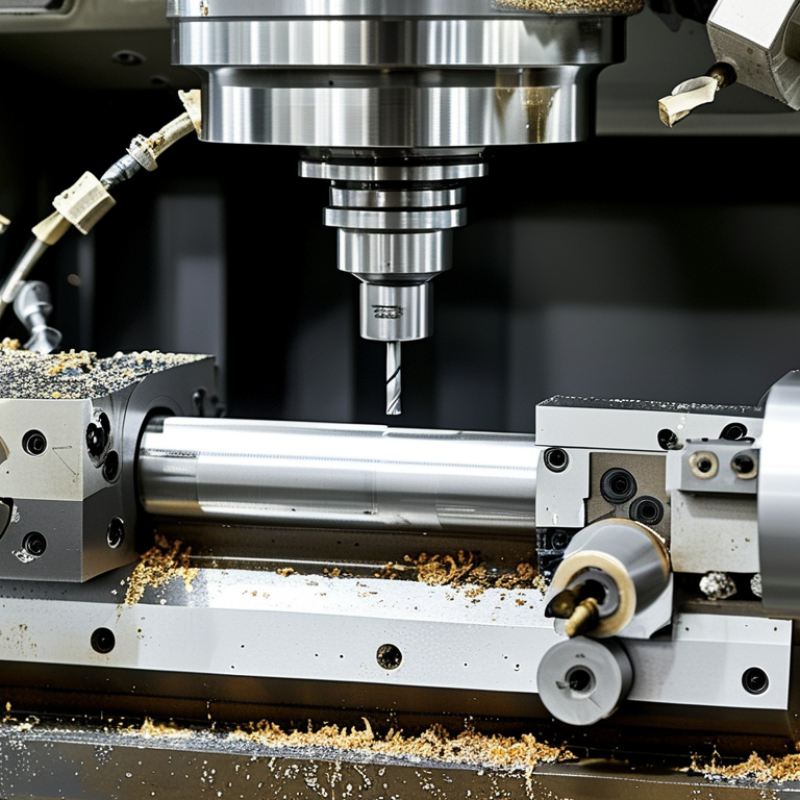
Define Your Production Needs and CNC Lathe Requirements
Choosing a CNC lathe starts with production facts, not catalog dimensions. Record material, bar diameter, part length, tolerance, surface finish, and monthly quantity. Separate repeat orders from prototypes. A 32 mm bar and a 65 mm bar need different spindle capacity, chuck size, and motor torque. Capture cycle time from real toolpaths, not optimistic quotations. The first spreadsheet is rarely right.
Calculate peak demand, then test whether the machine supports future product changes. Grand View Research valued the global CNC machine market at about $83.1 billion in 2023. This indicates strong investment, but market growth does not justify unused capacity. Specify turning diameter, swing, spindle speed range, through-hole, turret stations, live tooling, Y-axis travel, coolant delivery, chip evacuation, and bar-feeder compatibility. For hardened alloys, prioritize rigidity and thermal stability over headline speed. For short aluminum parts, rapid indexing may matter more.
Automation needs an operational reason. The International Federation of Robotics reported 541,302 industrial robots installed worldwide in 2023, with 4.28 million operating globally. That shows wider automation adoption, not proof that every lathe needs a robot. Check loading frequency, labor availability, part variation, and inspection time. Include probing and tool-life monitoring only when they reduce measurable risk. A cheaper machine can become expensive through setup hours, rejected parts, and limited service. Ask for a documented test cut using your material, tooling, tolerance, and cycle target. Leave room for mistakes; chip control can disappoint a clean demonstration.
How to Choose the Right CNC Lathe for Your Business? - Define Your Production Needs and CNC Lathe Requirements
| Production Profile | Typical Annual Volume | Part Diameter | Part Length | Common Materials | Recommended Spindle Bore | Chuck Size | Spindle Speed Range | Motor Power Range | Positioning Accuracy Target | Automation Level | Key CNC Lathe Requirements |
|---|---|---|---|---|---|---|---|---|---|---|---|
| Prototype and Job-Shop Work | Up to 1,000 parts | 10–250 mm | Up to 500 mm | Aluminum, mild steel, stainless steel, brass | 38–52 mm | 160–210 mm | 3,000–6,000 rpm | 7.5–15 kW | Within 0.010 mm | Manual loading with optional bar feeder | Prioritize flexibility, quick programming, a wide tooling range, and easy setup changes. Live tooling is useful when milling features are occasionally required. |
| Small-Batch General Production | 1,000–10,000 parts | 20–300 mm | Up to 600 mm | Steel, stainless steel, aluminum, cast iron | 52–65 mm | 200–250 mm | 2,500–5,000 rpm | 11–22 kW | Within 0.008 mm | Hydraulic chuck with optional bar feeder | Choose a rigid slant-bed machine with a turret of approximately 8–12 stations, automatic tool measurement, and programmable coolant control. |
| Repetitive Medium-Volume Production | 10,000–50,000 parts | 25–350 mm | Up to 750 mm | Carbon steel, alloy steel, stainless steel, brass | 65–80 mm | 250–315 mm | 2,000–4,500 rpm | 18.5–30 kW | Within 0.006 mm | Bar feeder, parts catcher, and chip conveyor | Focus on cycle-time stability, thermal control, automatic tool wear monitoring, high-pressure coolant, and reliable unattended operation. |
| High-Volume Component Manufacturing | More than 50,000 parts | 10–200 mm | Up to 400 mm | Steel, aluminum, brass, engineered alloys | 52–80 mm | 200–315 mm | 3,000–6,000 rpm | 22–45 kW | Within 0.005 mm | Integrated bar feeder, parts catcher, robotic handling, and in-process inspection | Prioritize maximum spindle utilization, fast tool indexing, automatic gauging, chip evacuation, process monitoring, and compatibility with cellular manufacturing. |
| Large-Diameter and Heavy Turning | Up to 5,000 parts | 250–800 mm | Up to 2,000 mm | Alloy steel, stainless steel, cast iron, forgings | 80–160 mm | 315–500 mm | 500–2,500 rpm | 22–55 kW | Within 0.015 mm | Manual or crane-assisted loading | Select a heavy-duty bed, high spindle torque, strong hydraulic clamping, large tool capacity, stable foundation requirements, and effective flood coolant. |
| Complex Turn-Mill Components | 500–20,000 parts | 20–250 mm | Up to 600 mm | Aluminum, steel, stainless steel, titanium alloys | 52–65 mm | 200–250 mm | 3,000–6,000 rpm | 15–30 kW | Within 0.005 mm | Y-axis, live tooling, bar feeder, and automatic part transfer | Use a turn-mill center when eliminating secondary milling setups can reduce handling, improve datum control, and shorten total production time. |
Planning ranges are typical selection guidelines; final specifications should be confirmed against part drawings, material conditions, tolerance requirements, cycle-time studies, available floor space, and electrical capacity.
Related Posts
-
How to Master the Art of CNC Lathe Programming for Precision Machining
-

Transform Your Workshop with High Precision CNC Lathe Technology
-
How to Choose the Best CNC Metal Milling Machine for Your Projects in 2025
-
Trusted Quality: Discover the Best 5 Axis CNC Mill from China for Global Excellence
-

Unveiling the Top 5 Technical Specifications of the Best Machining Center for Optimal Performance
-
What is a Machining Center and How Does It Work?