Choosing a Complete Motor in 2026 is less about chasing the highest headline rating and more about matching a motor to its real duty. The International Energy Agency’s Global EV Outlook 2024 reported nearly 14 million electric-car sales in 2023, about 18% of global car sales. That figure is not a motor specification. It does show how quickly electrification is expanding and why buyers need to assess efficiency, thermal behavior, and serviceability—not just purchase price. A motor that looks excellent on a catalog page can run hot in a dusty workshop, struggle under repeated starts, or waste energy when it is oversized. Small details matter. Fit matters.
Before comparing suppliers, define the load, operating hours, supply voltage, required speed and torque, mounting limits, ambient temperature, and control method. Then review the datasheet, efficiency class, insulation rating, ingress protection, duty cycle, starting current, cooling arrangement, and warranty. For vehicle or equipment projects, confirm compatibility with the drive, gearbox, wiring, and available service parts. Ask for test records tied to the exact model. The U.S. Department of Energy’s Improving Motor and Drive System Performance: A Sourcebook for Industry emphasizes evaluating the driven system, not the motor alone—a useful reminder when comparing efficiency claims. There is no universal best choice. Some specifications remain uncertain until real-world testing. This guide offers a practical way to compare complete assemblies, question vague claims, and choose a Complete Motor that fits the application safely and reliably.
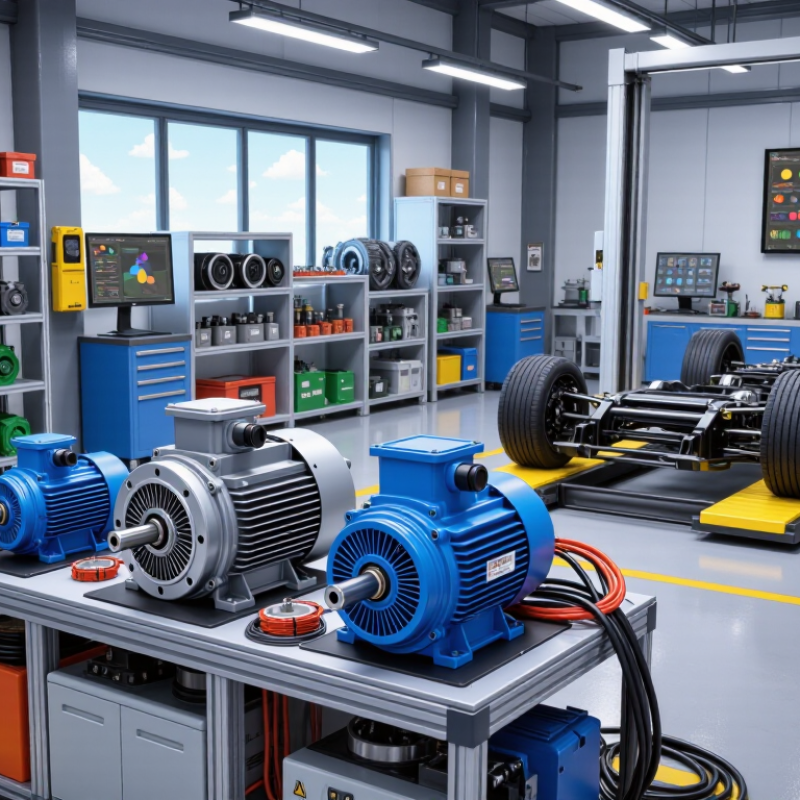
A complete motor is an assembled unit, but the exact contents vary by seller and application. It usually includes the motor housing, rotor, stator, shaft, and bearings. Some assemblies also include wiring, connectors, a mounting plate, or a control module. That distinction matters. Check the listing.
Before choosing one, confirm what “complete” means for that specific unit. A motor may arrive ready to mount but still need a separate controller, pulley, or power cable. Check the voltage, power rating, shaft diameter, mounting-hole pattern, and expected operating speed. A few millimeters can make installation difficult. Match these details to the equipment’s manual, not just the old motor’s label.
Think about how the motor will be used. A unit powering a small conveyor may run for hours, while a door mechanism may start and stop frequently. Those duties create different heat and load demands. Check the rated duty cycle, cooling method, and environmental protection, especially around dust or moisture. In practice, I would also measure the available mounting space before ordering; it is easy to focus on power ratings and overlook the connector’s position. Specifications can still leave questions, so request a component list or clear installation drawing when details are missing.
How to Choose the Right Complete Motor in 2026?
Identifying the Specifications Your Vehicle or Equipment Requires
Choosing a replacement motor starts with the machine’s actual operating demands, not just its advertised horsepower. Record the required voltage, phase, frequency, rated speed, and continuous torque. Then check peak torque and duty cycle: a conveyor running all day needs different thermal capacity than a winch used briefly. Small details matter. The International Energy Agency’s 2011 report, Energy-Efficiency Policy Opportunities for Electric Motor-Driven Systems, estimates that motor-driven systems use about 45% of global electricity. Efficiency and correct sizing therefore affect both energy use and dependable operation.
For vehicles and mobile equipment, verify shaft diameter, rotation direction, mounting pattern, and coupling dimensions against the existing assembly. A motor that fits the bolt holes may still misalign the shaft. Compare its torque-speed curve with the load, especially during startup or uphill operation. Also assess ambient heat, dust, moisture, and vibration. These conditions influence insulation, cooling, and enclosure requirements. I have seen specification sheets omit real-world load changes; that gap deserves a second check.
Tips: Photograph the motor label, measure the shaft and mounting face, and note the machine’s operating cycle before ordering. Confirm controller compatibility and required protection ratings with a qualified technician. If a specification is uncertain, measure it rather than guess.
| Vehicle or Equipment Use | Typical Motor Type | Example Supply | Example Rated Output | Example Rated Speed | Approx. Rated Torque | Duty and Load Considerations | Key Specifications to Confirm |
|---|---|---|---|---|---|---|---|
| Industrial conveyor | Three-phase squirrel-cage induction motor | 400 V, 50 Hz, three-phase | 4 kW | 1,470 rpm | 26.0 N·m | Often runs for long periods; starting torque and frequent starts depend on the conveyor load. | Gearbox ratio, required output-shaft speed, starting method, mounting position, enclosure rating, and continuous-duty rating. |
| Air compressor | Three-phase induction motor | 400 V, 50 Hz, three-phase | 2.2 kW | 1,450 rpm | 14.5 N·m | Compressor starting load can be high, especially if the unit starts under pressure. | Compressor starting torque, duty cycle, pulley or coupling arrangement, supply protection, and required motor protection. |
| Hydraulic power unit on mobile equipment | Permanent-magnet DC motor | 48 V DC | 5 kW | 3,000 rpm | 15.9 N·m | Intermittent operation is common; hydraulic pressure and pump displacement determine the load. | Battery voltage range, peak current, pump coupling, operating duration, cooling, and protection against dust or water. |
| Electric utility vehicle traction | AC traction motor, such as an induction or permanent-magnet motor | High-voltage DC battery system with a compatible inverter | 80 kW example | 3,000 rpm example rated point | 254.6 N·m at the stated rated point | Must handle repeated acceleration, regenerative braking, and a wide operating-speed range. | Battery and inverter compatibility, peak torque and power, cooling method, reduction gearing, and operating temperature limits. |
| Workshop drill press or light machine tool | Single-phase induction motor | 230 V, 50 Hz, single-phase | 0.75 kW | 1,400 rpm | 5.1 N·m | Load varies with the material, tool, and cutting operation; speed adjustment may be needed. | Available supply, starting capacitor arrangement, shaft and pulley dimensions, speed-control method, and mounting footprint. |
| Ventilation fan | Three-phase induction motor | 400 V, 50 Hz, three-phase | 1.5 kW | 1,450 rpm | 9.9 N·m | Fan power demand rises substantially as operating speed increases; verify the fan curve and control range. | Fan operating point, direct-drive or belt-drive arrangement, variable-frequency drive compatibility, noise, and enclosure rating. |
Selection note: These are representative examples, not universal replacement specifications. Approximate torque is calculated from rated power and speed using T (N·m) = 9,550 × P (kW) ÷ n (rpm). Before ordering a complete motor, verify the original nameplate, supply, load profile, shaft dimensions, mounting, cooling, enclosure, and control-system compatibility.
A complete motor may include the motor, controller, feedback sensors, and sometimes a gearbox. The exact package varies, so compare what is included before comparing prices. AC induction motors are proven choices for steady industrial loads, while permanent-magnet and brushless DC designs can offer strong efficiency and precise speed control. Brushed DC motors remain simple to control, but brush wear can mean more frequent service. No type wins every job.
Configuration matters just as much. Check continuous and peak torque, operating speed, supply voltage, mounting dimensions, and cooling method against the real duty cycle. A motor that fits the frame may still overheat during repeated starts. Look closely at encoder resolution and controller compatibility when accurate positioning matters. Small details count.
In 2026, integrated drives, compact sensors, and condition-monitoring features are increasingly common. These can simplify wiring and flag rising temperature or vibration before a stoppage, but they add setup and data-management requirements. Wide-bandgap power electronics may support smaller, efficient drives, though benefits depend on the matched system. Ask for test conditions, efficiency curves, and thermal limits; a headline rating alone is thin evidence. Field results can differ, and that deserves a second look.
A complete motor can save time, but “complete” does not always mean ready to install. Check the vehicle’s year, model, engine code, and drivetrain against the motor’s specifications. Confirm whether essential parts, such as sensors, brackets, and the wiring harness, are included. A matching engine code is a useful clue, not a substitute for checking fitment details with a qualified technician.
Inspect condition before focusing on price. Ask for clear photos of the engine, its identification markings, and any visible damage or corrosion. Request a written account of mileage, storage conditions, and testing performed. Look closely for cracked connectors, damaged threads, or fresh residue around seals. These details cannot prove an engine is sound, but they can prompt better questions. It is easy to overvalue a tidy appearance; I would not rely on photos alone.
Tips: Get the part number and compatibility confirmation in writing. Ask for available service or inspection records, and check that the seller’s warranty states its duration, coverage, and claim process. Clarify who pays for shipping if the motor arrives damaged or does not match the listing. Small print matters. If answers are vague, pause and verify the details before buying.
A complete motor should fit the machine, not just the purchase list. Check rated voltage, power, speed, shaft dimensions, mounting pattern, and expected load against the equipment specifications. Allow for the real operating environment, too: dust, moisture, heat, and limited airflow can affect service life. Small details matter. A shaft that looks close may still cause alignment problems. I would not rely on a product description alone; confirm critical dimensions with a drawing or measurement before installation.
Plan the installation around the manufacturer’s instructions and the machine’s existing setup. Secure the mounting surface, align the coupling, and verify that wiring and protection devices match the motor’s ratings. Keep hands and tools clear during testing. Start with a brief no-load run, if the application allows, and listen for unusual vibration or rubbing. Then test under normal load while monitoring current, temperature, and sound. Record the readings. A quick test can miss a problem, so repeat checks after the motor has warmed up.
Long-term maintenance works best when it is simple and recorded. Set inspection intervals based on operating hours and conditions, not guesswork alone. Check fasteners, ventilation openings, cable connections, and signs of overheating or bearing noise. Keep dust from collecting around cooling surfaces. If readings drift, investigate before the motor stops unexpectedly. Honestly, maintenance schedules are sometimes inconvenient; missed checks happen. A short log beside the machine can make follow-through easier and help technicians spot gradual changes.