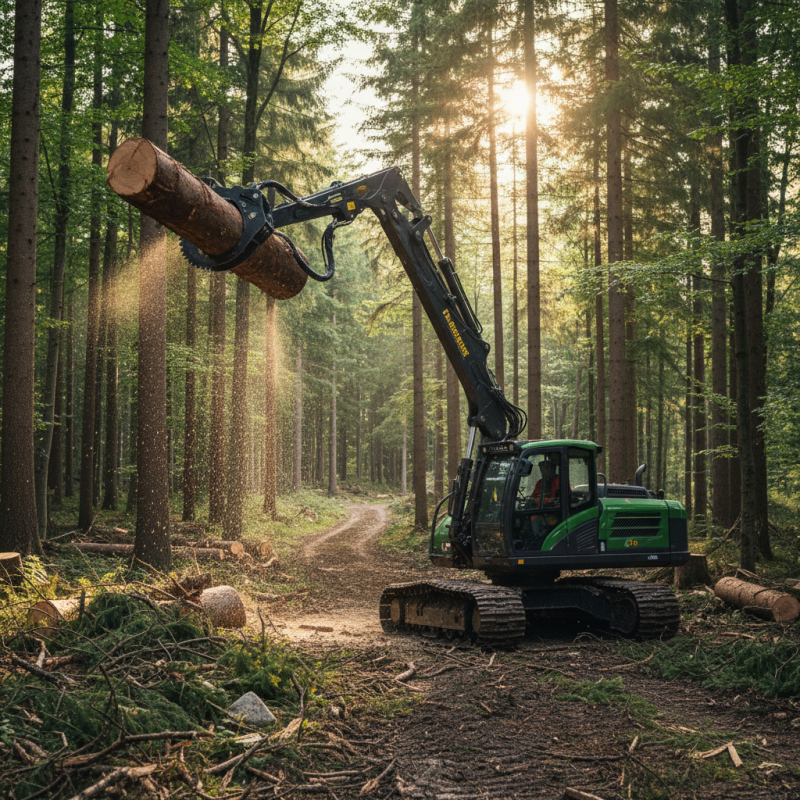
How to Choose the Best Tracked Grapple Saw for Your Needs?
Choosing the best Tracked Grapple Saw can feel overwhelming. With many options available, it’s crucial to understand your specific needs. These machines are designed for efficiency in handling heavy timber and enhancing productivity in forestry and land clearing.
When selecting a Tracked Grapple Saw, consider factors like size, weight, and power. Each feature affects performance and ease of use. A saw that is too heavy may strain your equipment, while a lightweight option may lack the power you need. Think about your typical workload and the terrain you will work on. There is no one-size-fits-all solution.
Moreover, examine your budget and the long-term value of the investment. Cheaper models may save you upfront but could lead to higher maintenance costs later. You may need to reflect on your choice—what works for one operator may not suit another. Prioritizing quality and reliability can save time and frustration down the road.
Understanding the Basics of Tracked Grapple Saws
Tracked grapple saws are essential for various forestry and landscaping tasks. Understanding their basics can help you make an informed decision. A common configuration includes a robust saw mounted on a tracked platform. This setup provides stability and mobility, especially in rough terrains.
According to industry reports, these machines can increase efficiency by up to 30%. They can handle different log sizes, which is crucial for diverse projects. Proper weight distribution ensures that the equipment does not tip over during use, a significant concern for operators. The ideal tracked grapple saw should also have a strong hydraulic system for better operation.
When choosing a tracked grapple saw, consider operator comfort. The control system’s design impacts usability. A poorly designed interface can lead to operator fatigue over time. Safety features should be a priority, as risks are inherent in operating heavy machinery. While performance is vital, it should not overshadow ergonomics and safety. Addressing these factors can ultimately enhance productivity and ensure reliable operation.
Key Features to Consider When Choosing a Tracked Grapple Saw
When selecting a tracked grapple saw, several key features play a significant role in meeting your needs. One of the primary considerations is the saw's power. Industry reports indicate that saws with higher horsepower ensure more efficient cutting, particularly in dense materials like hardwoods. A model with at least 50 HP is often recommended for heavy-duty tasks, while a range of 30-50 HP can handle moderate jobs effectively.
Another critical factor is the weight of the equipment. Lighter models are easier to maneuver, which can save time during operation. However, heavier options often provide better stability and cutting capacity. Many operators prefer a balanced approach, choosing models that weigh between 2,500 to 3,500 pounds. It is essential to match the grapple saw's weight with the terrain and the type of trees involved.
Consider the saw's reach and range of motion as well. Many professionals in the field have noted that a saw with a longer reach allows for greater flexibility. A reach of at least 12 feet is common for those working in expansive areas. Also, a machine's ability to rotate the grapple helps in precise cutting and placement. Evaluating these factors ensures that your tracked grapple saw effectively meets your unique cutting requirements.
Tracked Grapple Saw Features Comparison
Evaluating the Performance Factors of Tracked Grapple Saws
When choosing a tracked grapple saw, evaluating performance is crucial. The power of the engine is a key factor. Most tracked grapple saws operate with engines ranging from 25 to 50 horsepower. This range can significantly affect cutting speed and efficiency. Higher horsepower generally results in faster operation but may lead to increased fuel consumption.
Another critical aspect is the weight and size of the saw. A heavier saw may offer stability but can reduce maneuverability. Performance data suggests that saws weighing over 1,500 pounds can be challenging in tight spaces. It’s essential to balance stability with the needed agility for your specific tasks.
Additionally, cutting capacity and speed need consideration. Typical cutting diameters can vary from 10 to 30 inches, influencing how quickly you can tackle larger trees. Reports show that models with hydraulic systems provide better performance in cutting operations, offering precision and smoother operation. Potential users might need to reflect on their working environments. Heavy-duty tasks might require a robust design, while lighter jobs may benefit from a more flexible option.
Assessing Your Specific Needs for a Tracked Grapple Saw
Choosing the right tracked grapple saw starts with understanding your specific needs. Consider the type of tasks you will encounter. Are you primarily engaging in forestry work, land clearing, or perhaps tree maintenance? Each task can demand different features and specifications from a grapple saw.
Think about the terrain you'll be working on. Steep inclines and uneven ground can affect your choice. The weight and stability of the grapple saw play crucial roles. A lighter unit may struggle on steep slopes, while a heavier model might be unwieldy in dense forests.
Additionally, evaluate how often you expect to use the saw. If it will be a frequent tool, invest in a model that offers durability and reliability. However, if your needs are occasional, opting for a less expensive option might be more practical. Reflect on these considerations carefully. It’s easy to overlook these factors when dazzled by fancy features. Taking the time to assess your specific needs will lead to a more fitting choice.
Comparing Leading Brands and Models of Tracked Grapple Saws
When selecting a tracked grapple saw, examining the top brands and models is crucial. Industry data shows that tracked grapple saws can significantly improve efficiency. According to a 2022 survey by the Equipment Manufacturers Association, 85% of users reported increased productivity when using modern models. Key features such as cutting speed and load capacity play a significant role in effectiveness.
Key performance indicators include weight capacity and mobility. Many models can lift over 1,000 pounds, providing versatility for heavy tasks. However, some users noted limitations in maneuverability in dense woodland areas. This feedback suggests that while some saws excel in open spaces, they may struggle in tighter conditions. Evaluating terrain compatibility is essential for maximizing the saw's potential.
In addition to practicality, user experience suggests that durability matters. A report from the Construction Industry Research Board indicated that 30% of operators experience equipment failures within the first two years of use. Regular maintenance and understanding the operating environments are crucial. The perfect grapple saw may not exist, but informed decisions can lead to satisfactory results.