Blog
China Top UL Listed Three Phase Pad Mounted Transformer
A pad-mounted transformer can look like a simple metal cabinet beside a parking lot, but its role is anything but small. It helps deliver three-phase power to commercial buildings, campuses, and industrial sites. This guide explores what to check when comparing China Top UL Listed Three Phase Pad Mounted Transformer options, including capacity, voltage, enclosure design, and installation requirements. Details matter. A UL mark should be confirmed for the specific model and configuration, not assumed from a product family or sales description.
For buyers searching for an Ul Listed Three Phase Pad Mounted Transformer For Commercial applications, the right choice depends on the actual site load and utility interface. Review the nameplate data, primary and secondary voltages, cooling method, available protection features, and access clearances. A unit serving a retail building may face different operating demands from one supplying refrigeration or production equipment. Ask suppliers for current certification records, dimensional drawings, routine test information, and clearly stated customization limits. Then have qualified electrical professionals verify compatibility with project documents and local utility requirements. No catalog page can replace that review.
Specifications can appear tidy on paper. Site conditions are less tidy. Cable routes, ventilation, service access, and future load growth can change the decision. Even a small mismatch deserves attention before purchase. This introduction sets out the practical checks behind a reliable comparison, while recognizing that supplier claims should be verified rather than simply trusted.
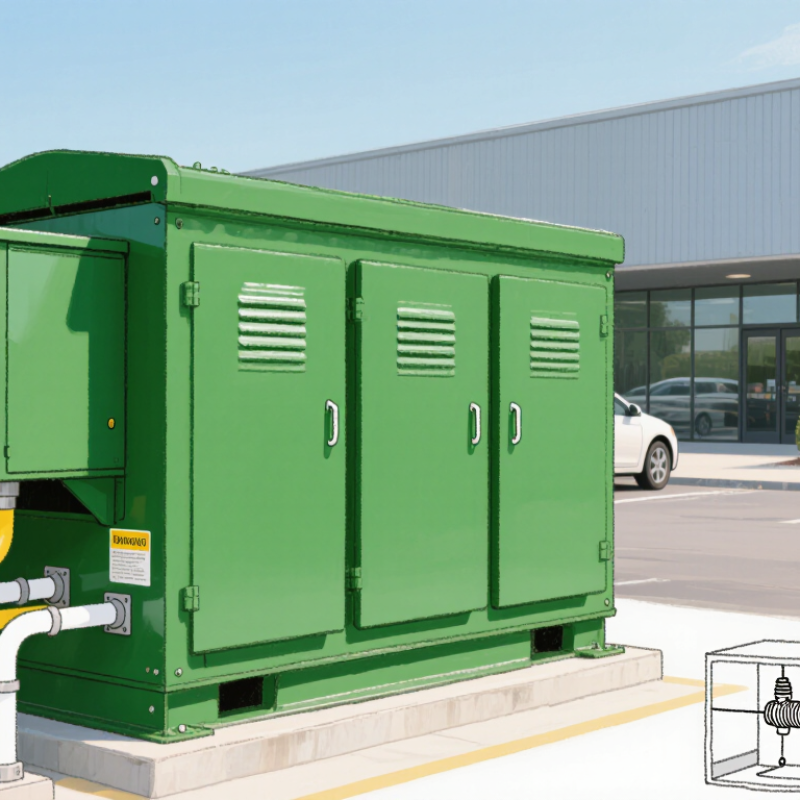
Definition and Application: UL 1562 Liquid-Immersed Three-Phase Units
A three-phase pad-mounted transformer transfers electrical power between voltage levels for commercial sites, apartment complexes, and local distribution networks. Its sealed tank contains an insulating liquid that helps cool the windings and control operating temperature. The compact enclosure sits on a concrete pad, with separate access areas for high-voltage and low-voltage connections. Clear labeling and safe working space matter during inspection and maintenance.
One point needs careful checking. UL 1562 is commonly associated with dry-type distribution transformers, so it should not automatically be presented as the governing standard for liquid-immersed units. The applicable certification depends on the exact transformer design and listing. Buyers should compare the nameplate, product documentation, and certification record rather than relying on a short product description. That detail matters.
In use, engineers match the transformer’s voltage, capacity, impedance, and connection arrangement to the site load. A facility with several large motors may need different starting and load considerations than a small retail building. The insulating liquid, tank construction, protective devices, and installation clearances also affect performance and service access. Real sites are not always tidy; cable routes and future load growth can be overlooked. A careful review of drawings and operating conditions helps avoid those gaps.
China Top UL Listed Three Phase Pad Mounted Transformer - Definition and Application: UL 1562 Liquid-Immersed Three-Phase Units
Standards clarification: UL 1562 is associated with dry-type distribution transformers, not liquid-immersed units. Do not assume that a liquid-immersed transformer is UL Listed to UL 1562. Confirm the applicable standard and the certification status of the exact transformer configuration with the manufacturer and the certification body.
| Data Dimension | Description | Practical Application or Check |
|---|---|---|
| Equipment definition | A three-phase pad-mounted transformer is a ground-level, enclosed distribution transformer designed to connect to underground electrical circuits. | Used where a compact, accessible outdoor transformer installation is preferred over an overhead pole-mounted arrangement. |
| Phase configuration | Three-phase equipment serves three-phase distribution systems; winding connections and vector relationships depend on the system design. | Specify the required primary and secondary connections to match the utility supply and the facility’s loads. |
| Liquid-immersed construction | The core and windings are immersed in an insulating liquid that provides electrical insulation and transfers heat to the tank and cooling surfaces. | Confirm the specified liquid type, environmental requirements, containment provisions, and applicable installation rules. |
| Voltage and capacity | Primary voltage, secondary voltage, and kVA rating are project-specific; no single rating applies to all pad-mounted units. | Select ratings using the available system voltage, load demand, growth allowance, and coordination requirements. |
| Feed arrangement | Common arrangements include radial feed and loop feed, with the internal compartment layout and switching provisions varying by design. | Match the feed arrangement and cable termination provisions to the distribution network and operating plan. |
| Enclosure and access | The enclosure separates high-voltage and low-voltage compartments and is intended for outdoor installation; specific access and security features vary. | Check enclosure construction, access clearances, ventilation, site exposure, and applicable local electrical and environmental requirements. |
| Protection and switching | Depending on the design, protective and switching components may include fuses, a load-break switch, or other specified devices. | Verify the protection scheme, ratings, coordination, and operating sequence against the project documents. |
| Typical applications | Common applications include commercial and industrial sites, campuses, residential developments, and other underground distribution networks. | Suitability depends on load characteristics, utility requirements, site conditions, and the approved electrical design. |
| Standards and certification | A standard’s scope and a product’s certification are separate matters. UL 1562 should not be presented as the applicable standard for a liquid-immersed unit without verification. | Request documentation identifying the exact model, construction, applicable standard, and certification or listing scope. |
| Installation and maintenance | Installation and maintenance requirements depend on the equipment design, site, and governing codes and instructions. | Use qualified personnel and follow the equipment documentation, utility requirements, and applicable regulations. |