Blog

China Top 10 Tyre Spreader Manufacturers in 2026

China’s tyre-service sector is changing quickly. Workshops now expect equipment to deliver steady control, clear operation, and dependable support. A Tyre Spreader may look simple on a factory floor, yet its design affects access, inspection, and daily workflow. Small details matter: arm movement, contact surfaces, adjustment range, and the space needed around a vehicle.

This 2026 guide compares ten Chinese manufacturers through practical purchasing questions. What materials and components do they use? How clearly do they document capacity and operating procedures? Can buyers assess customization, quality checks, spare parts, and after-sales support? These factors deserve attention alongside price. A polished catalogue is not proof of consistent performance. It is only a starting point.

A named expert quotation cannot be verified from the material provided, so this introduction does not invent one. Instead, the guide follows a simple editorial principle: “Judge a Tyre Spreader by its working details, not its brochure alone.” That principle is deliberately cautious. Manufacturer claims still need checking against specifications, product demonstrations, and direct discussions with suppliers. The comparison aims to help distributors, workshop owners, and procurement teams ask better questions—not promise that one factory suits every operation. Real needs differ. A compact service bay may value easy positioning, while a high-volume workshop may focus on repeatability and support. The right shortlist begins with those details.
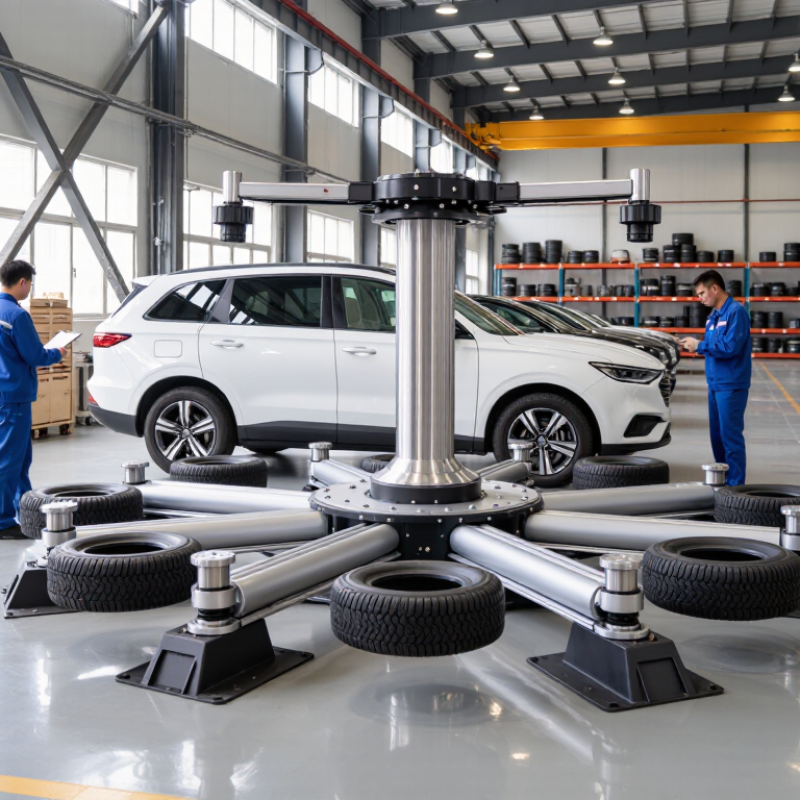
China Top 10 Tyre Spreader Manufacturers in 2026

What Is a Tyre Spreader and How Is It Used?

A tyre spreader is a workshop tool that holds a tyre and opens its sidewalls, giving technicians a clear view of the inner liner and casing. It is commonly used after the tyre has been removed from the wheel and deflated, following the equipment maker’s instructions. The operator can rotate the tyre under a work light and look for embedded objects, cuts, bulges, or damage near the bead. Small details matter. A mark on the outside may hide a larger injury within the casing.

The tool supports inspection; it does not decide whether a tyre is safe to repair. Technicians still need suitable training, good lighting, and a careful assessment of the damage. For context, Grand View Research’s 2023 Global Tire Market report valued the worldwide tyre market at about US$245.53 billion in 2022. That figure describes the broader market, not demand for spreaders, but it signals the scale of tyre servicing work. In practice, a spreader improves access, yet the view is never perfect. Dirt, awkward positioning, or rushed inspection can still conceal damage.

How to Evaluate Tyre Spreader Manufacturers in China

A tyre spreader should match the tyres and rims handled each day, not just the figures on a sales sheet. Check its working range, spreading force, adjustment method, and compatibility with common wheel sizes. Ask how the machine holds a tyre during inspection or repair. In a workshop, loose clamping or awkward controls can slow the job and create avoidable risks. Watch a live demonstration if possible. Look for steady movement, clear guarding, and controls an operator can reach without leaning across the machine. Small details matter.

Evaluate the manufacturer’s engineering process, not only its catalogue. Ask for a user manual, maintenance schedule, spare-parts list, and written warranty terms. Confirm which components need routine replacement and how quickly technical support responds. A brochure can look convincing; it is not proof. Request a factory video or inspect a working unit, paying attention to welds, wiring, finish, and safety checks. No checklist catches everything. A low quote may reflect simpler components, but it may also leave service needs unclear. Compare the full operating cost and record unanswered questions before placing an order.

China Top 10 Tyre Spreader Manufacturers in 2026 — How to Evaluate Tyre Spreader Manufacturers in China

Use these suggested buyer-priority weights to structure a comparison. They are an illustrative starting point, not measured market data or ratings of individual manufacturers; adjust them to your application and verify each item with documented evidence.

Top 10 Tyre Spreader Manufacturers in China in 2026

China’s tyre spreader manufacturers serve repair shops, retreaders, and vehicle workshops that need safe access to a tyre’s inner surface. CAAM reported 31.28 million vehicles produced in China in 2024, while OICA recorded about 92.5 million worldwide. These figures show the scale of the automotive service market, but they do not measure spreader sales. A 2026 top-ten comparison should therefore assess verifiable equipment and factory capabilities, not claim market leadership from vehicle output alone.

For buyers, useful checks include working range, bead clearance, frame stability, and whether the arms hold a tyre evenly without blocking inspection. Ask for load specifications, operating instructions, spare-part availability, and a demonstration using a tyre size close to your daily workload. Fit matters. A compact unit may suit a small workshop, while a retreading line may need a wider opening and sturdier supports. Not just speed.

Manufacturers in China can be compared by documented production capacity, quality-control procedures, export experience, and service response times. Request inspection records and confirm which components are tested before shipment. Public data rarely provides a complete, independent ranking of tyre spreader makers, so any “top 10” list should explain its selection criteria. That caveat matters. A polished catalogue is not proof of long-term durability; weld quality, adjustment smoothness, and access to replacement parts deserve a closer look.

China Top 10 Tyre Spreader Manufacturers in 2026 - Top 10 Tyre Spreader Manufacturers in China in 2026

This company-name-free table is a practical comparison framework, not a verified ranking of individual manufacturers. Tyre spreader specifications vary by model; confirm dimensions, load limits, and compliance directly with each supplier before purchasing.

No. Manufacturer Evaluation Dimension What to Compare Useful Evidence to Request Why It Matters
1 Tyre and wheel compatibility Supported tyre types, wheel sizes, and the intended service applications. Model-specific compatibility chart and operating instructions. A spreader should suit the tyres and repair work handled by the workshop.
2 Spreading range Minimum and maximum opening, adjustment method, and usable working clearance. Dimensioned product drawing and specification sheet. Opening range affects access to the inner tyre surface during inspection and repair.
3 Load rating Rated working load and any stated limits for tyre size or operating position. Published load rating, test documentation, and safe-use guidance. Operators need a clearly stated rating appropriate to the intended workload.
4 Adjustment and locking How the spreader is opened, positioned, and secured while in use. Demonstration video, mechanism description, and maintenance instructions. Stable positioning supports controlled access and helps reduce unintended movement.
5 Contact surfaces Shape and finish of the parts that contact the tyre, plus any protective coverings. Close-up product photographs and care recommendations. Contact design should be appropriate for the tyre surface and intended repair task.
6 Materials and construction Frame material, joint construction, surface treatment, and replaceable components. Bill of materials or material description, product photos, and parts list. Construction details help buyers assess durability and maintenance needs.
7 Operator safety Pinch-point awareness, stability, safe operating steps, and protective measures. Safety labels, user manual, and risk-related product documentation. Clear instructions and suitable safeguards support safer workshop operation.
8 Quality control Incoming-material checks, in-process inspection, and final functional testing. Documented inspection process and sample inspection records. Consistent checks can help reduce variation between production batches.
9 Service and spare parts Availability of replacement parts, warranty terms, and technical support. Written warranty policy, spare-parts list, and support response procedure. After-sales support affects equipment downtime and long-term ownership costs.
10 Export and order readiness Packaging, shipping documentation, lead time, and ability to provide samples or pre-shipment inspection. Packaging specification, quotation, order schedule, and export document checklist. Confirming logistics and documentation early helps avoid delays in international orders.

For an accurate 2026 supplier shortlist, compare current model-level documents and quotations rather than relying on an unverified manufacturer ranking.

Products, Technologies, and Specialties of the Leading Manufacturers

For a 2026 comparison of China’s ten leading tyre spreader manufacturers, examine the working details, not just catalogue claims. Common products include floor-mounted and bench-mounted spreaders, adjustable support arms, bead-opening mechanisms, and models for passenger or commercial tyres. Useful design features include smooth contact pads, stable locking points, guarded pinch areas, and controls reachable without leaning across the wheel. Small details matter. A poorly placed pedal can slow repeated inspections.

Technology varies by workshop need. Pneumatic systems can support quick, repeatable movement; manual designs may suit lower-volume shops with simpler maintenance. Buyers should compare usable opening range, rated load, adjustment steps, spare-part availability, and documented safety testing. The U.S. Tire Manufacturers Association’s 2024 shipment forecast estimated 337.4 million U.S. tyre shipments, compared with 335.2 million in 2023. That signals substantial service demand, but does not measure spreader sales. Public reports rarely isolate this equipment category, so rankings should be treated cautiously. A practical review asks manufacturers for operating tests, maintenance instructions, and clear limits for each model. One weakness remains: published specifications do not always show performance after years of workshop use.

How to Compare Suppliers and Choose the Right Manufacturer

When comparing China’s tyre spreader manufacturers in 2026, start with the job the machine must do. Check wheel-size range, opening width, load capacity, and whether the design suits your workshop’s floor space. A spreader that handles passenger-car tyres may not be suitable for heavier commercial units. Ask suppliers to confirm these limits in writing.

Look beyond catalogue photos. Request clear specifications, inspection records, and a short operating video showing the machine opening and holding a tyre. Ask what steel is used, how moving parts are protected, and which components need routine lubrication. Small details matter. Compare warranty terms, spare-part availability, packaging, and realistic production and shipping times. Vague answers deserve a follow-up.

If possible, arrange a factory video call or use an independent inspection before shipment. Ask the supplier to demonstrate a completed unit and explain how it is tested. Also compare quotations line by line: a lower price may exclude accessories, training, or export packing. That is easy to miss. A neat showroom is reassuring, but it does not prove consistent production. Even detailed checks cannot remove every risk, so keep written records of specifications and agreed changes.

↑