Blog
China Top 10 5 Axis Machining Companies
Choosing among China’s leading 5 axis machining companies takes more than comparing machine counts or polished factory photos. Buyers should examine process capability, inspection methods, engineering support, and experience with similar parts. A titanium aerospace component, for example, demands different controls from an aluminum housing with deep angled pockets. Look for clear evidence: sample inspection reports, equipment details, realistic lead times, and direct answers about tolerances. Those details matter.
Machining researcher Professor Yusuf Altintas is widely known for his work on machining mechanics and machine-tool systems. The following is a paraphrase of a practical principle reflected in that work, not a verbatim quotation: “Five-axis capability creates value when process knowledge, machine control, and part requirements work together.” That distinction is useful. More axes alone do not guarantee better accuracy, shorter cycle times, or lower costs. This guide introduces ten Chinese companies and considers how their capabilities, quality practices, and communication may suit different projects. Company information can change, and supplier claims deserve verification. Ask for a comparable part example. Check the measurement plan. Confirm who reviews the first article and how revisions are handled. A strong shortlist starts with evidence, not promises. Even then, one detail can be easy to miss: a technically capable supplier may not be the right fit for your schedule or level of support.
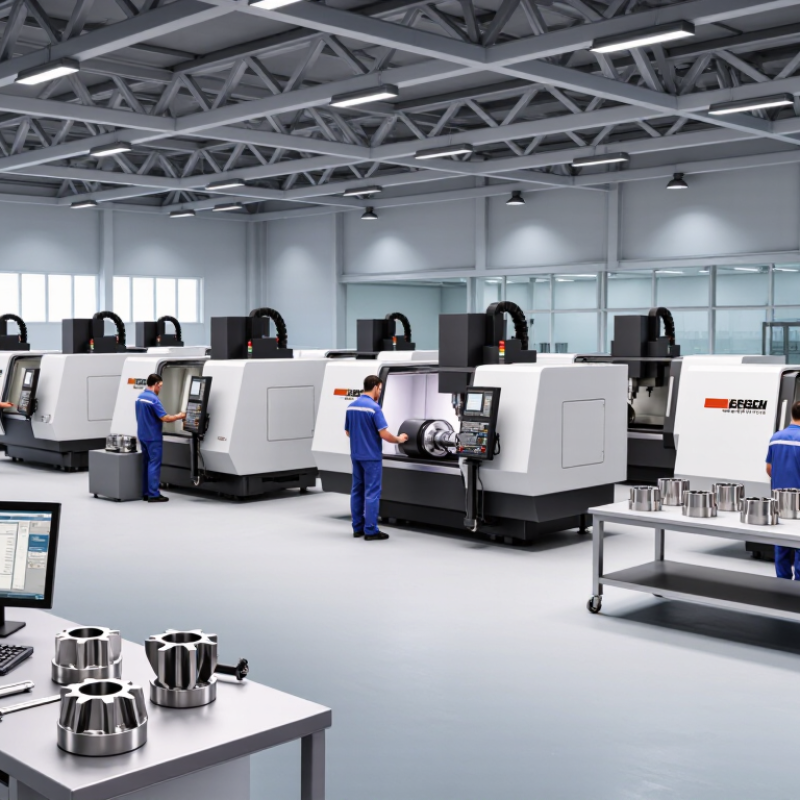
What Five-Axis Machining Means in China’s Manufacturing Sector
Five-axis machining adds two rotary movements to the three linear axes used in conventional CNC cutting. The cutter can reach angled faces and curved surfaces while a part stays clamped. That matters. A turbine blade, impeller, or medical implant may need fewer setups, less handling, and more consistent geometry. A five-axis machine is not automatically more accurate. Poor calibration, tool deflection, or a weak fixture can still leave chatter marks and dimensional errors. In practice, a machining cell may pair CAM simulation with probing, tool checks, and documented offset corrections.
In China’s manufacturing sector, five-axis machining supports a wider shift toward automation and higher-value production. The International Federation of Robotics’ World Robotics 2024 report recorded 276,288 industrial robot installations in China in 2023, about 51% of global installations. This is not a five-axis adoption figure; it shows the scale of the automation ecosystem surrounding precision production. Buyers comparing suppliers should ask how rotary-axis accuracy is verified, first articles inspected, and thermal drift controlled during long cuts. A physical sample can reveal surface finish and edge quality. Still, inspection records need context: the same tolerance may be easy in aluminum and difficult in heat-resistant alloys.
China Top 10 5 Axis Machining Companies - What Five-Axis Machining Means in China’s Manufacturing Sector
Five-axis machining uses three linear axes (X, Y, and Z) and two rotary axes to orient the cutting tool or workpiece. The table below summarizes ten common application areas in China’s manufacturing sector; it is not a ranked list of companies.
| Application Area | Representative Parts | Why Five-Axis Machining Is Used | Common Materials | Typical Quality Focus |
|---|---|---|---|---|
| Aerospace | Structural components, impellers, blisks, and complex housings | Enables access to angled surfaces and complex geometries, often reducing setups and improving tool access. | Aluminum alloys, titanium alloys, and nickel-based alloys | Dimensional accuracy, surface finish, material traceability, and inspection documentation |
| Automotive and Transportation | Prototype components, complex castings, tooling, and selected powertrain parts | Supports multi-sided machining and efficient production of contoured parts and prototypes. | Aluminum alloys, steel, cast iron, and engineering plastics | Repeatability, feature alignment, surface finish, and production consistency |
| Mold and Die Making | Injection molds, die-casting dies, stamping dies, and contoured cavities | Machines curved surfaces and deep or angled features with fewer repositioning operations. | Tool steel, pre-hardened steel, aluminum, and copper alloys | Cavity geometry, surface finish, fit, and tool-life considerations |
| Medical Devices | Orthopedic implants, instrument components, and complex medical-device parts | Allows precise machining of intricate forms and multiple faces from a single workholding setup. | Titanium alloys, stainless steel, cobalt-chromium alloys, and PEEK | Dimensional control, material certification, surface condition, and process documentation |
| Energy Equipment | Turbine components, pump parts, valve bodies, and impellers | Provides access to curved passages, blade surfaces, and angled features used in fluid-flow components. | Stainless steel, nickel-based alloys, carbon steel, and aluminum alloys | Profile accuracy, surface finish, pressure-boundary requirements, and inspection results |
| Marine Engineering | Propeller components, pump housings, and complex marine machinery parts | Helps machine contoured surfaces and multi-sided features on large or complex workpieces. | Aluminum alloys, stainless steel, bronze, and other corrosion-resistant alloys | Geometry, surface quality, corrosion-related material requirements, and fit |
| Electronics and Precision Equipment | Optical mounts, instrument housings, and precision equipment components | Supports accurate machining of small, detailed parts with features on several faces. | Aluminum alloys, stainless steel, copper alloys, and engineering plastics | Feature position, dimensional accuracy, burr control, and surface finish |
| Rail and Heavy Transport | Complex brackets, equipment housings, and specialized vehicle components | Can reduce setup changes when parts contain angled faces, pockets, and multi-sided features. | Steel, aluminum alloys, and cast materials | Fit, repeatability, dimensional inspection, and material specifications |
| Industrial Machinery | Machine-tool components, gear housings, manifolds, and precision fixtures | Combines several machining directions in one workholding arrangement for complex parts. | Steel, cast iron, aluminum alloys, and engineering plastics | Geometric relationships, alignment, surface finish, and assembly fit |
| Consumer and Product Design | Product prototypes, ergonomic forms, and complex small-batch components | Facilitates freeform shapes and multi-sided features during prototype and low-volume production. | Aluminum alloys, stainless steel, plastics, and machinable model materials | Design conformity, appearance, surface finish, and functional fit |
Related Posts
-
Mastering Precision Crafting with the Best CNC Lathe Machine Comprehensive Tutorial for Beginners
-
Understanding the Importance of Best CNC Manufacturing in Global Supply Chains
-
Ultimate Guide to Choosing the Best 5 Axis CNC Milling Machine for Your Manufacturing Needs
-
Unlock Precision: How a Small CNC Mill Transforms Your DIY Projects into Professional Creations
-
Exploring the Advantages of CNC Metal Machining in Modern Manufacturing Processes
-
How to Choose the Right Small CNC Machine for Your Workshop Needs