Blog

China Best Plate Filter Manufacturers for Global Buyers

A Plate Filter can look simple in a catalog: plates, cloth, frame, and hydraulic closure. Real performance depends on the slurry. Fine particles may blind the cloth; a rough gasket can cause leaks. Buyers comparing China’s manufacturers should examine plate materials, sealing design, operating pressure, automation, and spare-parts support. Ask for drawings and test records tied to a similar process, not broad promises. Details matter.

Separation expert Jan Svarovsky’s published work offers a useful principle, paraphrased here rather than quoted verbatim: “Match the filtration equipment to the slurry, not to the strongest claim in a brochure.” That distinction matters across industries and export markets. A supplier’s response to questions can reveal as much as its equipment photos. Can it explain cloth selection? Will it discuss cake release, wash cycles, and cleaning access? Can it document inspection and commissioning support? These are practical checks, not guarantees.

This guide compares manufacturers through those buyer-focused criteria. It also considers customization, communication, production capacity, and after-sales service. A polished factory tour is useful, but it cannot prove consistent quality by itself. Still, no checklist is perfect. Buyers should verify specifications against their own process, request references where appropriate, and clarify responsibilities before ordering. The right Plate Filter is not simply the cheapest or largest model. It is the one that fits the material, duty cycle, and support needs—with evidence to back that fit.
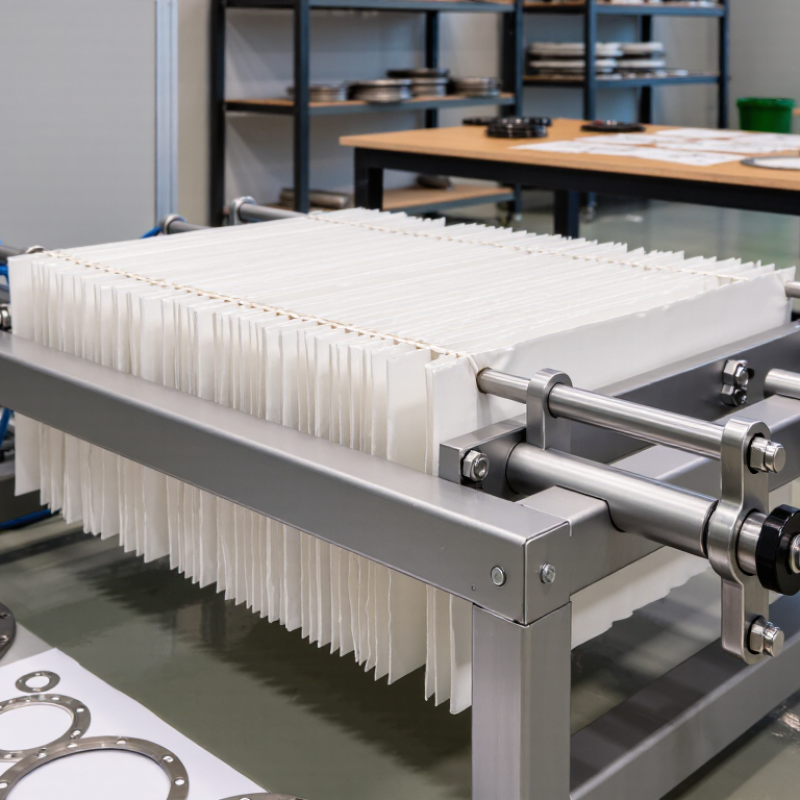
China Best Plate Filter Manufacturers for Global Buyers

Plate Filters: Types, Functions, and Industrial Applications

Plate filters separate suspended solids from liquids by pushing slurry through filter cloth or another porous medium. In a plate-and-frame unit, alternating plates and frames form chambers that hold solids. Recessed-chamber designs provide space for a compact cake, while membrane plates can squeeze the cake after filtration. Small difference, big effect.

The operating cycle is practical: close the plate pack, feed slurry under pressure, collect filtrate, then open the unit and remove the cake. Cloth weave, plate material, pressure rating, and cake release all affect performance. Fine cloth can clarify liquid well, yet clog quickly with sticky solids. That trade-off matters. Operators should test actual slurry, not just clean water, and record cycle time, filtrate clarity, and cake moisture.

Applications include mineral concentrates, industrial wastewater, pigments, food ingredients, and chemical processing. A mine may need durable plates for abrasive slurry; a food plant may prioritize cleanability and compatible materials. Buyers comparing Chinese manufacturers can review technical drawings, pressure-test records, spare-part availability, and sample-trial data. Ask how sealing surfaces resist wear. Ask about cloth replacement, too. Specifications may look complete, while daily maintenance tells a different story. Feed consistency is rarely perfect, which can complicate filter sizing.

China’s Plate Filter Manufacturing Landscape

China’s plate-filter manufacturing landscape benefits from a broad industrial supply base. UNIDO’s International Yearbook of Industrial Statistics places China at roughly 30% of global manufacturing value added. That scale supports access to castings, filter cloth, pumps, and machining services. For buyers, the practical difference is often visible in details: plate flatness, sealing surfaces, cloth fit, and spare-part availability. Small defects matter.

The wider market offers useful context, but not a direct count of Chinese plate-filter factories. MarketsandMarkets estimated the global industrial filtration market at US$33.7 billion in 2023, with a forecast of US$41 billion by 2028. Plate filters represent only part of that market. Public production data rarely isolates them, so supplier comparisons should rely on verifiable specifications and inspection records. The picture is uneven. Ask how manufacturers test leakage, maintain consistent plate dimensions, and document materials for each order. A factory tour can reveal real process control, yet a polished workshop alone proves little. I would also check whether replacement cloth and plates remain available after delivery; this is an easy detail to overlook.

China Best Plate Filter Manufacturers for Global Buyers - China’s Plate Filter Manufacturing Landscape

Landscape Dimension What Buyers May Encounter Practical Evaluation Points
Product scope Manufacturers and suppliers may offer filter plates, filter presses, replacement parts, or combinations of these products. Confirm whether the supplier makes the plates, integrates complete presses, or sources components from other producers.
Recessed-chamber plates Recessed plates form chambers between adjacent plates to hold filter cake during pressure filtration. Check plate dimensions, chamber depth, feed arrangement, sealing details, and compatibility with the existing press.
Membrane plates Membrane plates use a flexible membrane that can be inflated after filtration to squeeze additional liquid from the cake. Ask about membrane material, inflation method, operating limits, and compatibility with the press and process.
Plate-and-frame designs In plate-and-frame arrangements, separate frames create the spaces that hold filter cake between filter plates. Verify the plate-and-frame dimensions, cloth arrangement, feed configuration, and availability of matching replacement components.
Plate materials Polypropylene is widely used for many filter-press applications. Metal plates, including cast-iron or stainless-steel designs, are used for particular process requirements. Match material selection to slurry chemistry, temperature, pressure, cleaning methods, and required mechanical strength.
Filter cloth compatibility Cloth type and weave influence particle retention, cake release, drainage, and cleaning requirements. Specify the process slurry and required separation performance; check cloth dimensions, attachment style, and chemical compatibility.
Application sectors Plate filters are used in applications such as mineral processing, wastewater treatment, chemical production, and food or beverage processing. Evaluate process-specific requirements, including hygiene, corrosion resistance, cake handling, and any applicable industry rules.
Customization Supply options may include different plate sizes, feed and filtrate arrangements, sealing details, and replacement-plate configurations. Provide drawings or a plate sample where possible; confirm measurements and interface details before ordering.
Operating parameters Allowable pressure, temperature, and filtration performance depend on the plate design, material, press, and process conditions. Request documented limits for the exact configuration rather than relying on general figures or ratings for a different model.
Quality documentation Documentation can include drawings, material information, inspection records, and operating or maintenance instructions. Agree on required documents, inspection criteria, traceability, and acceptance procedures in the purchase specification.
Export and delivery International orders may require export packaging, shipping coordination, and replacement-part planning. Confirm packaging protection, lead time, shipping terms, spare-part availability, and the process for handling transit damage.
Supplier comparison Suppliers can differ in product range, engineering support, customization capability, documentation, and after-sales service. Compare offers using the same technical specification and assess verified product compatibility, service arrangements, and total ownership costs.

Buyer note: Filter-press performance depends on the slurry, filter cloth, plate configuration, and operating conditions. Confirm all application limits and compatibility details with the supplier for the specific equipment being purchased.

Key Criteria for Comparing Chinese Plate Filter Manufacturers

When comparing Chinese plate filter manufacturers, match the press to your slurry, not just your target capacity. Ask for the plate material, operating pressure, filtration area, and test results using a representative sample. A quoted cycle time means little if feed solids or cloth differ from your process. Ask for proof.

Review quality controls alongside the machine. Check plate dimensions, hydraulic pressure tests, weld inspection records, and whether replacement cloths and seals are readily available. Request a sample inspection report and clarify what the warranty excludes. MarketsandMarkets’ Filtration Market report estimated the global filtration market at USD 40.8 billion in 2023, with a projected USD 57.5 billion by 2028. This broad market estimate is not specific to plate filters, but it signals a competitive, expanding sector where documented performance matters.

Compare total operating costs, including cloth life, wash-water demand, energy use, and service response time. Ask for references from plants handling similar materials, then verify the duty conditions and performance claims directly. Fit matters. Export experience can help with packing and technical documents, but it does not prove process suitability. I would not choose on price alone; still, a detailed checklist can miss how operators actually clean and maintain the press. Request a factory acceptance test, and agree beforehand on measurable acceptance criteria.

Quality Standards, Customization, and Export Capabilities

For global buyers, evaluating plate filter manufacturers in China starts with quality controls that can be checked, not broad promises. Ask how each unit is inspected: plate dimensions, sealing surfaces, hydraulic pressure, and frame alignment all affect operation. Details matter. Request material specifications and test records that match the intended process, since a certificate alone cannot confirm suitability for every slurry or operating temperature.

Customization should be based on actual site conditions. Share required filtration area, cake thickness, feed characteristics, available floor space, and cloth preferences before approving drawings. A capable supplier can explain how changes affect capacity, maintenance access, and replacement-part needs. Small gaps show. No checklist catches everything; field conditions can still expose a mismatch, so confirm critical dimensions and interfaces before production.

Export capability includes more than arranging transport. Discuss protective packing for plates and controls, clear operating manuals, spare-part lists, delivery milestones, and timely responses across time zones. Ask for a sample document package and references for comparable equipment, where available. Clear communication matters when installation teams need to resolve a technical question quickly. A realistic lead time is more useful than an optimistic estimate that leaves commissioning plans uncertain.

How Global Buyers Evaluate and Select a Reliable Supplier

Global buyers should judge a plate filter manufacturer by verified performance, not catalogue claims. Ask for test data using slurry close to your own feed: particle size, solids concentration, temperature, and chemistry all matter. Record cycle time, filtrate clarity, cake moisture, and leakage. Small details matter. Check whether plates and cloths are compatible with the process, and whether replacement parts can be supplied consistently.

The International Energy Agency’s Global Critical Minerals Outlook 2024 reports that lithium demand tripled between 2017 and 2022, while cobalt demand rose 70%. For mineral processors, that growth makes dependable solid-liquid separation increasingly important. Yet a larger nameplate capacity does not guarantee a dry cake or stable shifts. Request a witnessed factory test, then compare its conditions with your plant’s actual feed. A neat datasheet can still hide a mismatch.

During supplier assessment, inspect machining quality, plate alignment, hydraulic safeguards, and the clarity of operating instructions. Ask who handles commissioning and how quickly critical spares can reach your site. I would not treat a polished factory tour as proof. Put acceptance criteria in writing, including measurable output and remedies if testing falls short. One imperfect point: buyers sometimes focus too heavily on initial price and too little on cloth life, downtime, and service access.

↑