Choosing the best Sodium Hypochlorite Generator in 2026 is less about buying the largest unit and more about matching output to water demand. A system serving a small municipal plant has different needs from one treating a hotel’s cooling water. The practical details matter: steady chlorine production, dependable dosing, manageable brine handling, and clear maintenance instructions. Small details. A scaling cell or inaccurate flow reading can disrupt routine operation.
Water-quality targets provide a useful starting point. The World Health Organization’s Guidelines for Drinking-water Quality (2022) describe a free chlorine residual of at least 0.2 mg/L at delivery; effective disinfection commonly requires 0.5 mg/L after 30 minutes at pH below 8. These figures are treatment benchmarks, not a universal equipment specification. The U.S. Environmental Protection Agency’s 2023 Drinking Water Infrastructure Needs Survey and Assessment estimates $625 billion in drinking-water infrastructure needs over 20 years. That context makes operating costs and serviceability hard to ignore. It does not, by itself, identify a winning generator.
This comparison will examine capacity range, power and salt consumption, cell life, automation, safety features, and support requirements. Buyers should verify vendor claims against site water chemistry, operating records, and a realistic maintenance plan. Published specifications help, but they rarely capture every installation constraint. A confident ranking can still be wrong for a particular plant. That is worth remembering.
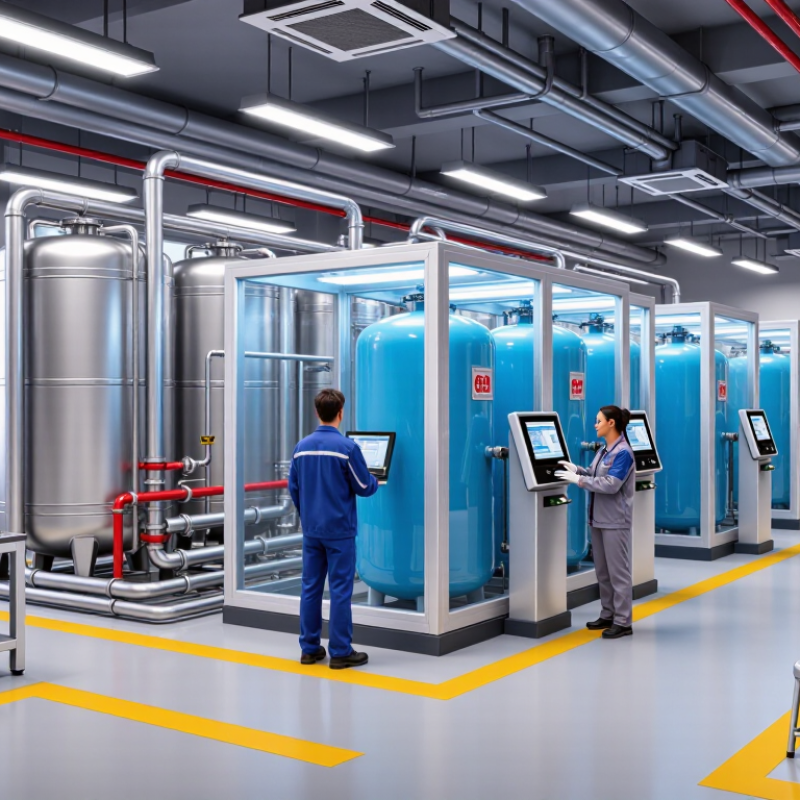
A sodium hypochlorite generator makes disinfectant on site from salt, water, and electricity. In the electrolytic cell, direct current drives a controlled chemical reaction. At the anode, chloride forms chlorine; at the cathode, water forms hydrogen and hydroxide. These products react in the salty solution to create sodium hypochlorite. The process is compact, but not magic.
The resulting solution is usually diluted and stored in a suitable tank before dosing. Its strength can vary with salt quality, water temperature, and cell condition. Hard water may encourage scale, while poor cleaning can reduce output. Operators should verify available chlorine and follow the equipment maker’s procedures. Hydrogen also needs safe ventilation, so installation and maintenance belong with qualified personnel.
Tips: Compare output capacity with actual demand, not just a headline rating. Check water-quality requirements, cleaning needs, and how easily staff can test the solution. Keep records; a small drift in strength can be easy to miss.
The best choice in 2026 depends on the site’s water, workload, and maintenance capacity. A larger generator is not automatically better. Look for clear operating data and practical service access. One detail is easy to overlook: the strongest system on paper may be awkward to run every day.
Sodium hypochlorite generators differ mainly in how they prepare feedwater, how much solution they produce, and how steadily they can run. Brine-based systems dissolve salt in softened water, then use electrolysis to make a dilute disinfectant on site. They often suit buildings, food-processing facilities, and small water-treatment plants with predictable daily demand. Compact skid-mounted units can fit in a service room, but ventilation, salt storage, and routine cell cleaning still need attention. Small plants differ. That matters.
For municipal treatment, cooling towers, and larger industrial sites, continuous-duty systems may be a better fit. They are designed to deliver a steadier output and connect with dosing controls, storage tanks, and existing water lines. A seawater-fed design may suit coastal facilities with suitable intake water, while a brine-fed design gives operators more control over feed concentration. Neither option is automatically best; water chemistry, required output, operating hours, and maintenance staffing all affect the choice.
For temporary or low-demand applications, a smaller batch system can be simpler to operate and easier to install. Its output may be less convenient when demand changes sharply throughout the day. Check the generator’s rated production, solution strength, salt consumption, and cleaning schedule against real operating records—not just peak-flow estimates. I would not assume that the highest-capacity unit is the safest choice. Oversizing can create unnecessary operating and maintenance work, and that trade-off deserves a careful look.
In 2026, judge a sodium hypochlorite generator by verified performance under your actual operating conditions, not its headline capacity. The best fit delivers the required available chlorine output during peak demand without frequent interruptions. Ask how output changes with feedwater temperature, salinity, and flow. Numbers need context.
Check product strength and consistency across a full operating cycle. Request commissioning data, routine test methods, and clear guidance for verifying chlorine concentration on site. Energy, salt, and water use matter too; compare them at the same production rate. A low purchase price can be misleading if scaling, cleaning, or replacement parts add substantial downtime. That matters.
Look closely at materials, alarms, and maintenance access. Operators should be able to inspect cells, identify abnormal readings, and follow documented shutdown procedures without guesswork. Review safeguards for hydrogen management and electrical equipment, and confirm they suit the installation environment. Ask for realistic service intervals, spare-parts availability, and performance records from comparable applications. A tidy specification sheet is useful, but it cannot replace a witnessed acceptance test. Even then, actual site conditions may differ, so keep operating logs and reassess performance over time.
Choosing a sodium hypochlorite generator in 2026 starts with the water system, not the equipment label. Estimate daily chlorine demand from actual flow and treatment targets. Then check peak demand, since a plant treating 500 cubic meters per hour may need more output during seasonal changes. A single average can hide that gap.
Use operating records, including chemical feed rates and hours of operation, to calculate required available chlorine. Compare this figure with the generator’s rated daily capacity, and leave practical headroom for maintenance or demand swings. Not too much. Oversizing can mean unnecessary cost and low-load operation; undersizing may force the site to rely on stored product during busy periods. Confirm the planned output against the required solution strength and the system’s storage and dosing arrangements.
Site conditions matter. Review water quality, salt supply, power availability, ventilation, and operator coverage before settling on capacity. A compact unit may suit a steady, small facility, while a municipal plant with sharp daily peaks may need modular equipment or staged operation. That judgment can be imperfect: demand forecasts are rarely exact. Recheck them against a full year of data, then ask an experienced water-treatment professional to verify the assumptions and commissioning plan.
Which Sodium Hypochlorite Generator Is Best in 2026?
Selection should weigh safety, maintenance, and lifetime cost—not just output capacity. On-site generation reduces dependence on delivered hypochlorite, but the process can release hydrogen. The NIOSH Pocket Guide to Chemical Hazards lists hydrogen’s lower explosive limit as 4% by volume. That is not a safe operating target. Check ventilation, gas detection, and shutdown interlocks against the site’s design requirements. Small rooms deserve extra scrutiny.
Maintenance can shift the economics. Water hardness, salt quality, and operating hours affect cell scaling and cleaning frequency. The U.S. Department of Energy’s life-cycle costing guidance includes purchase, energy, operation, maintenance, and replacement costs. Compare these over the same service period. Track electricity and salt use per unit of available chlorine, plus labor and downtime. A projected cell life is only an estimate; actual conditions may differ.
Tips: Ask suppliers for documented consumption and maintenance assumptions, then compare them with site records. Inspect access to the cell, drains, and ventilation before installation. Keep a simple log of cleaning hours and output. It is not glamorous, but it can expose costs that a neat spreadsheet misses.