Blog

What Is the Best Iron Pipe Bending Machine to Buy?

Choosing the best Iron Pipe Bending Machine starts with your actual workshop demands, not a glossy product photograph. Pipe diameter, wall thickness, material, bend radius, production volume, and available floor space all matter. A compact manual bender may suit occasional repairs. A programmable hydraulic model may be better for repeated structural work.

Metal-fabrication educator Ron Covell offers a useful principle: “Choose the tool that suits the work you actually do.” That advice remains practical. A machine with impressive tonnage can still disappoint when its dies do not match your pipe sizes. The wrong tooling may leave flattened sections, wrinkles, or inconsistent angles. Those defects can appear after several hours of work, when correction becomes expensive.

Look closely at the frame, drive system, die quality, control method, and adjustment range. Feel the machine’s rigidity. Check whether replacement parts are available. Ask how easily operators can repeat a 45-degree or 90-degree bend. Small details matter.

Real production exposes weaknesses.

Your buying decision should also include operator training, maintenance access, warranty support, and electrical requirements. A reliable supplier should provide clear specifications and realistic capacity ratings. Marketing claims need verification through manuals, demonstrations, and customer feedback.

There is no universal winner. The best Iron Pipe Bending Machine is the model that delivers accurate bends, safe operation, and predictable results within your budget. Even experienced buyers can misjudge future workload. Leave room for that uncertainty. A careful comparison now can prevent a costly machine sitting unused beside the workshop wall.
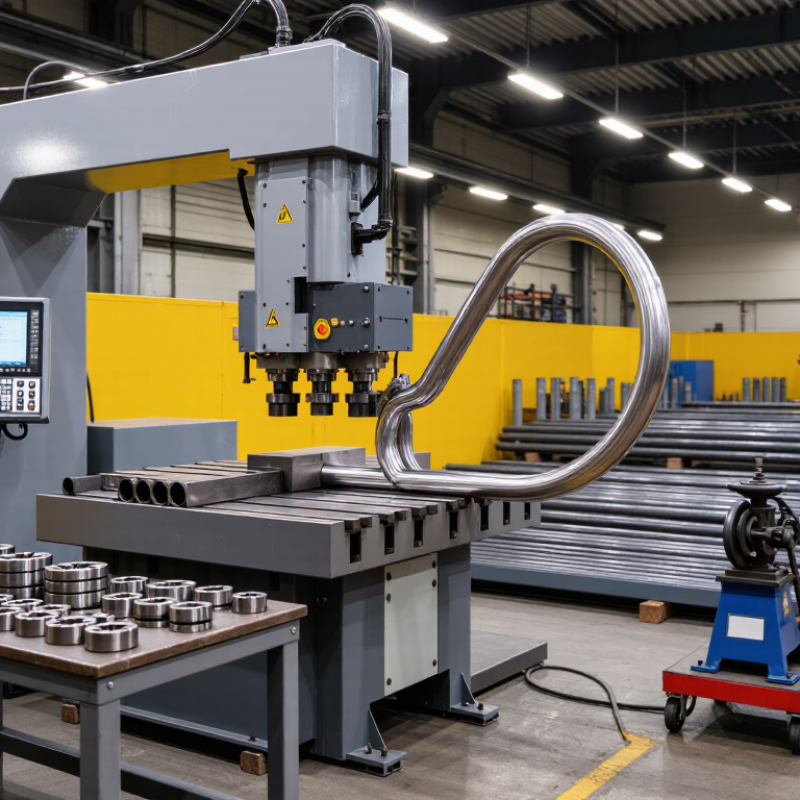
What Is the Best Iron Pipe Bending Machine to Buy?

Identify Pipe OD, Wall Thickness, and 1.5D–3D Bend-Radius Requirements

Choosing the best iron pipe bending machine starts with measurements, not machine price. In shop assessments, I record pipe outside diameter (OD), wall thickness, material, and target bend angle. A tube marked “50 mm” may refer to nominal size, not actual OD. That confusion can lead to the wrong tooling. Measure with calipers when possible, then verify the drawing or material record. Small errors become visible at the bend.

Wall thickness affects clamping pressure, mandrel selection, and wrinkling risk. Thin-wall pipe may need a mandrel, wiper die, or pressure die, especially near tight radii. Thick-wall sections demand enough forming force without crushing the pipe. Check the machine’s rated OD and wall-thickness range, not only its maximum diameter. A machine accepting 60 mm pipe may struggle with a 2 mm wall. Test samples matter. They reveal springback, flattening, and surface marks better than a brochure.

Bend radius is usually expressed as a multiple of OD. A 1.5D radius is tight; a 3D radius is gentler and easier to form. Confirm whether the specification means centerline radius, inside radius, or tooling radius. These terms are sometimes used carelessly. I once approved tooling from an unclear drawing, and the finished elbow missed the fit-up dimension. That was avoidable. Request a trial bend using your actual material and wall thickness. Check ovality, angle accuracy, weld-seam behavior, and repeatability across several pieces.

Choosing a Pipe Bending Machine: OD, Wall Thickness, and Bend Radius

The chart compares calculated centerline bend radii for representative tube outside diameters at 1.5D and 3D requirements. Wall thickness does not change the geometric bend radius, but it directly affects the machine's required bending force, tooling selection, and resistance to flattening or wrinkling.

Before buying a machine, confirm the largest outside diameter, the thickest wall, and whether your parts require tight 1.5D bends or more gradual 3D bends. Values are calculated using centerline radius = outside diameter × bend-radius factor.

Compare Manual, Hydraulic, and CNC Models by ±1° Angle Accuracy

What Is the Best Iron Pipe Bending Machine to Buy?

When ±1° angle accuracy matters, the cheapest machine is rarely the easiest choice. Manual benders depend heavily on operator skill, pipe diameter, wall thickness, and springback. An experienced technician can produce accurate bends after marking the pipe carefully and checking each piece with a digital angle gauge. However, fatigue can create small errors during long production runs. Manual equipment suits repair work, prototypes, and low-volume projects.

Hydraulic models apply steadier force and handle thicker iron pipe with less physical effort. Their accuracy can approach ±1° when the tooling is correctly aligned and the operator controls springback. I have found that a test bend remains essential. The first result may still be wrong. Temperature, material hardness, and pipe condition can change the final angle. A clear scale helps, but it does not replace measurement.

CNC machines offer the strongest repeatability for frequent production. They can store bend sequences, control rotation, and compensate for tested springback. A well-maintained system may hold angles within ±1° across many parts, although setup quality decides the real result. Sensors need calibration. Tool wear needs inspection. CNC is not automatically precise. It can repeat a bad setting perfectly.

For occasional fabrication, a manual machine may provide better value. Hydraulic equipment fits workshops handling varied pipe sizes and moderate volume. CNC becomes practical when identical bends, traceable settings, and reduced operator variation matter more than the initial purchase price. Check the manufacturer’s stated tolerance under real pipe conditions, not only the empty-machine specification.

Verify ASME B16.49, ASTM A53, and ASTM A106 Material Compatibility

Choosing the best iron pipe bending machine starts with material verification, not motor power. ASME B16.49 covers factory-made bends for pipeline transportation systems, including dimensions, pressure design, and testing requirements. It does not certify a bending machine. The machine must produce bends that match the specified outside diameter, wall thickness, bend radius, and angle.

ASTM A53 and ASTM A106 require different purchasing checks. ASTM A53 commonly covers welded or seamless steel pipe for mechanical and pressure applications. ASTM A106 covers seamless carbon steel pipe for high-temperature service. Grade B in both specifications has a minimum tensile strength of 60 ksi and a minimum yield strength of 35 ksi, according to ASTM A53/A53M and ASTM A106/A106M. Those figures alone are not enough. Verify heat numbers, pipe schedules, elongation, and actual mill certificates before programming the machine.

Pipe infrastructure is extensive. The U.S. Energy Information Administration reports more than 3 million miles of natural gas pipelines in the United States, showing why repeatable bending matters. A reliable machine should offer controlled feed speed, accurate radius adjustment, and traceable settings. Mandrel support may reduce ovality and wrinkling, especially with thin-wall A53 pipe. A106 may tolerate demanding service, but careless cold bending can still damage the material.

Test a sample bend first. Measure ovality, wall thinning, angle, and surface cracking. I would not trust a brochure alone. One weak point remains: shop conditions, tooling wear, and operator skill can change results. That reality deserves a written qualification procedure.

What Is the Best Iron Pipe Bending Machine to Buy? - Verify ASME B16.49, ASTM A53, and ASTM A106 Material Compatibility
Machine Selection and Material Compatibility Comparison
Machine Type Bending Method Typical Application ASTM A53 Compatibility ASTM A106 Compatibility ASME B16.49 Suitability Main Advantages Important Limitations Overall Buying Recommendation
CNC Induction Bending Machine Localized heating followed by controlled bending and cooling Large-diameter transmission pipelines, long-radius bends, and engineered directional changes Generally suitable for qualified procedures; welded A53 pipe requires weld-zone and heat-affected-zone review Generally suitable; seamless A106 is commonly selected for elevated-temperature and pressure-service bending Strongest option when bend angle, centerline radius, wall-thickness control, and dimensional inspection are required Handles heavy-wall and large-diameter pipe; reduces cold-work strain; supports repeatable production High capital cost; requires heating controls, cooling control, qualified procedures, and post-bend inspection Best overall choice for pipeline bends intended to meet a documented ASME B16.49 design and inspection program
CNC Cold Rotary Draw Bender Room-temperature bending around a die with clamping and drawing force Fabrication shops, moderate-diameter pipe, tight repeatability, and multi-plane bends Suitable when the selected grade, wall thickness, weld condition, and minimum radius are within the machine procedure Suitable for many seamless pipe applications, subject to ovality, thinning, wrinkling, and strain verification May be suitable for smaller or moderate-diameter bends, but the machine alone does not establish B16.49 compliance High dimensional repeatability; no heating system; efficient for recurring bend programs Greater risk of wall thinning, ovality, springback, and local wrinkling when radius or wall ratio is demanding Best for smaller production batches and moderate pipe sizes after a qualification bend confirms dimensional and mechanical results
CNC Three-Roll or Sectional Bender Progressive cold forming through adjustable rolls Large-radius curves, structural pipe, and low-volume custom fabrication Usually workable for A53 when the pipe is suitable for cold forming and the weld seam is properly controlled Workable for A106 with suitable wall thickness and verified forming limits Limited unless the resulting bend geometry, wall condition, material properties, and inspection requirements are specifically qualified Flexible setup; suitable for broad-radius bends; lower tooling complexity than dedicated draw bending Less suitable for tight radii and high-volume precision work; springback compensation may be substantial Best for broad-radius fabrication when ASME B16.49 is not the sole acceptance requirement or when a special procedure is approved
Hydraulic Push Bender Cold pushing over or around a fixed former Repair work, low-volume fabrication, and simple bends with generous radii Possible for selected A53 pipe, but weld deformation and cross-section distortion must be checked Possible for selected A106 pipe, subject to forming force, radius, and wall-thickness limits Generally not the preferred choice for controlled pipeline bends requiring documented B16.49 compliance Lower purchase cost; simple operation; useful for occasional work Lower repeatability; increased risk of flattening, local buckling, and inconsistent bend radius Choose only for non-critical or low-volume work with clearly defined acceptance criteria
Mandrel Tube and Pipe Bender Cold rotary draw bending with an internal mandrel and wiper tooling Tight-radius bends where internal shape, ovality, and surface quality are critical Suitable for compatible A53 sizes when the pipe wall and weld seam tolerate mandrel forming Suitable for compatible A106 sizes, particularly where internal distortion must be minimized Can support a qualified bend procedure, but B16.49 dimensional and service requirements still require separate verification Improves roundness and controls wrinkling during tight-radius forming Tooling is more complex; mandrel selection, lubrication, and setup are critical Best for tight-radius precision work when the pipe size is within the machine and tooling capacity
Material and Standard Verification Data
Specification Pipe Description Common Grades Minimum Tensile Strength Minimum Yield Strength Bending Considerations
ASTM A53 Carbon steel pipe for mechanical and pressure applications; available as seamless or welded pipe depending on product type Grade A and Grade B Grade A: 48 ksi; Grade B: 60 ksi Grade A: 30 ksi; Grade B: 35 ksi Confirm pipe type, weld-seam location, dimensional tolerance, and suitability for the selected cold or induction bending procedure
ASTM A106 Seamless carbon steel pipe for high-temperature service Grade A, Grade B, and Grade C Grade A: 48 ksi; Grade B: 60 ksi; Grade C: 70 ksi Grade A: 30 ksi; Grade B: 35 ksi; Grade C: 40 ksi Verify heat-treatment condition, wall thickness, forming temperature, post-bend properties, and service-temperature requirements
ASME B16.49 Standard covering factory-made wrought steel bends for pipeline transportation systems Not a material grade specification Not applicable Not applicable Check bend geometry, dimensions, wall-thickness requirements, manufacturing procedure, inspection, testing, and design conditions; machine capability alone does not certify compliance
Purchase checklist: Confirm the pipe outside diameter and wall-thickness range, minimum bend radius, bend angle accuracy, allowable ovality, wall-thickness thinning limits, springback compensation, weld-seam control for welded pipe, heating and cooling control for induction bending, data recording, and the qualification requirements for the applicable project specification.
Note: ASTM A53 and ASTM A106 define pipe material and manufacturing requirements, while ASME B16.49 addresses factory-made steel bends for pipeline transportation systems. Final compatibility must be demonstrated through the pipe material certificate, machine capacity, qualified bending procedure, dimensional inspection, and any required mechanical or non-destructive testing.

Size Tonnage and Motor Power for Target Throughput in Pieces per Hour

Choosing the best iron pipe bending machine depends less on its advertised capacity than on target throughput. A useful starting point is the required pieces per hour. If one bending cycle takes 45 seconds, the theoretical output is 80 pieces per hour. Real production is lower. Setup, loading, inspection, and die changes may reduce utilization to 70–85%.

Pipe size determines machine geometry. Larger diameters require greater bending radius, stronger clamping, and more clearance around the die. Tonnage reflects forming force, but maximum tonnage alone can mislead. A machine rated for 20 tons may struggle with thick-wall pipe if its frame, tooling, or hydraulic system is undersized. Measure outside diameter, wall thickness, material grade, bend radius, and expected springback before comparing quotations.

Motor power should support repeated cycles without overheating. The U.S. Department of Energy reports that motor-driven systems consume roughly 60–70% of industrial electricity, so efficiency affects operating cost, not only speed. World Steel Association data recorded about 1.88 billion tonnes of crude steel production in 2023, showing the scale of metal-processing demand, although it does not predict your workshop’s workload. In practice, I would choose a machine with 15–25% reserve capacity above the calculated force and throughput. That rule is not perfect. Actual results depend on operator skill, lubrication, tooling wear, and material variation. A short production trial is more reliable than a catalog promise.

Rank Tooling Cost, Repeatability, and 5–10-Year Service Value

What Is the Best Iron Pipe Bending Machine to Buy?

The best machine is not always the cheapest machine on the quotation sheet. Compare tooling cost, repeatability, and service value over five to ten years. A basic machine may need inexpensive dies, but poor die alignment can increase scrap and rework. Confirm the tooling range before purchase. Check whether common pipe sizes require separate formers, clamps, or mandrels. These small items can quietly double the original investment.

Repeatability matters when several operators produce the same elbow during a busy shift. Look for stable clamping, clear angle controls, and a rigid frame. Ask for test bends using your actual pipe wall thickness. Measure springback, ovality, and angle variation. One impressive demonstration is not enough. Request repeated samples. Even experienced buyers sometimes trust a smooth first bend too quickly.

Tips: Calculate annual maintenance, calibration, spare tooling, and downtime costs. Ask how replacement parts are supplied after five years. Keep service records beside the machine. A reliable supplier should explain lubrication points and adjustment procedures clearly. Still, no machine stays perfect. Dust, worn dies, and rushed setup can reduce accuracy. Leave room in the budget for training and unexpected repairs. A slightly higher initial cost may deliver better value when it protects production consistency.