Best Forklift Collision Detection System for Safety Compliance?
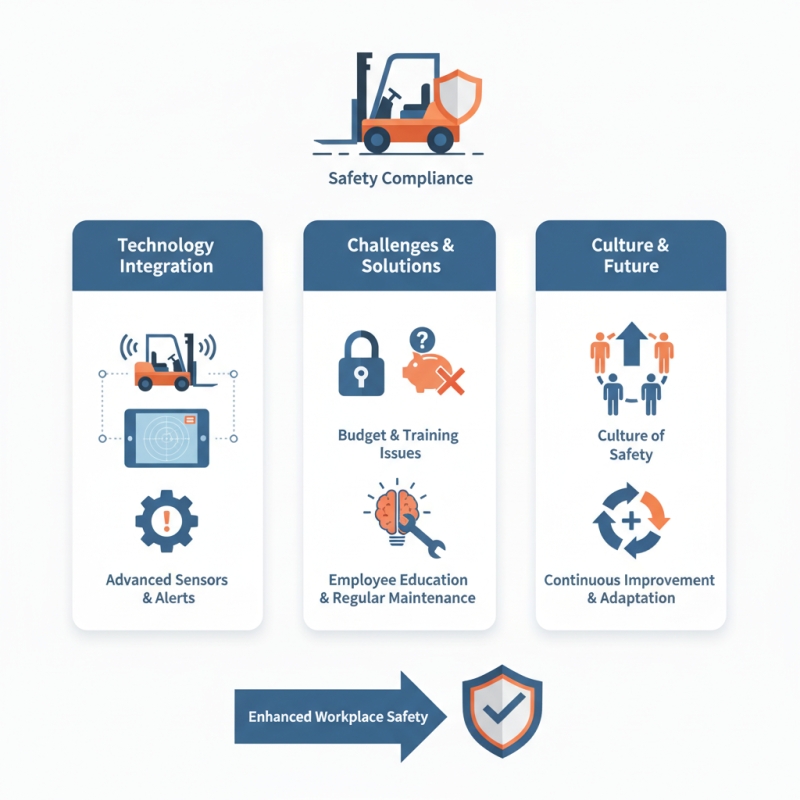
In today's fast-paced warehouses, the importance of a reliable Forklift Collision Detection System cannot be overstated. John Smith, a leading expert in industrial safety technology, emphasizes, “The right systems can save lives and prevent costly accidents.” These systems integrate advanced sensors and alert mechanisms to detect potential collisions, thus enhancing workplace safety.
Even with these technologies, challenges remain. Many businesses struggle to implement effective systems due to budget constraints or lack of training. These issues can create a false sense of security. A dependable Forklift Collision Detection System must be paired with proper employee education and regular maintenance.
Investing in collision detection solutions is essential, yet it goes beyond just technology. Companies must foster a culture of safety, where every employee is aware of their surroundings. In this evolving field, continuous improvement and adaptation are vital for ensuring compliance and safety in the workplace.
Overview of Forklift Collision Detection Systems
Forklift collision detection systems enhance workplace safety by reducing accidents. These systems use various technologies, including sensors and cameras, to monitor the movement of forklifts. They can detect obstacles and alert operators in real time. This technology has become essential in busy warehouses, where foot traffic often intersects with forklift routes.
Many companies are implementing these systems to comply with safety regulations. Regular audits reveal that operational efficiency often increases as well. However, the technology is not flawless. False alarms can occur, leading to operator frustration. Additionally, training employees on how to interpret alerts is crucial. Without proper understanding, the effectiveness of these systems can diminish.
As the industry evolves, so do these detection systems. Continuous advancements in artificial intelligence and machine learning show promise. Some systems can learn from previous collisions and predict potential accidents. Yet, integrating these technologies into existing workflows presents challenges. It requires commitment from all levels of management to realize their full potential.
Forklift Collision Detection Systems Overview
Importance of Safety Compliance in Warehouse Operations
In warehouse operations, safety compliance is crucial. A safe environment ensures the well-being of employees and enhances productivity. Collisions between forklifts and personnel can lead to injuries and costly damages. Implementing effective collision detection systems is essential to minimize these risks.
Proper training plays a vital role in safety compliance. Employees need to understand how to operate forklifts safely. Regular training sessions should address the potential hazards in the warehouse. This reflects a culture of safety and encourages workers to adhere to compliance measures.
Tips for improving safety compliance:
- Regularly conduct safety audits to identify potential hazards.
- Encourage open communication about safety concerns among employees.
- Utilize signage to remind personnel of safe practices in busy areas.
Promoting safety in warehouses requires continuous efforts. It's necessary for businesses to reflect on their procedures and make adjustments where needed. Integrating technology can also enhance detection systems, but human vigilance should never be overlooked.
Key Features of Effective Collision Detection Systems
When looking for a collision detection system for forklifts, understanding key features is essential. Effective systems should prioritize real-time monitoring. This helps prevent accidents by alerting operators to potential hazards immediately. Sensors should be strategically positioned around the forklift to cover all angles. Visibility is vital, ensuring operators can detect nearby personnel and equipment.
Tips: Regularly assess your system's sensitivity. Too high, and false alarms may occur. Too low, and you risk missing critical alerts. Balance is key for optimal performance.
Another important feature is the integration with existing safety protocols. The collision detection system should work seamlessly with other safety measures in place. This ensures a cohesive approach to workplace safety. Additionally, user-friendly interfaces help operators understand alerts quickly. A complex system can lead to confusion and, ultimately, accidents.
Tips: Provide regular training for operators. Familiarity with the system improves response times in emergencies. Encourage open dialogue about system performance. Operators often have valuable insights into what works and what needs improvement. Consistent feedback can enhance safety compliance significantly.
Comparison of Leading Forklift Collision Detection Technologies
The safety of warehouse operations heavily relies on effective forklift collision detection systems. Recent industry reports indicate that nearly 25% of all warehouse accidents involve forklifts. This alarming statistic underscores the critical need for efficient collision detection technologies. Many facilities are now exploring a range of systems—from sensor-based technologies to advanced computer vision.
Sensor-based collision detection utilizes ultrasonic and infrared sensors to identify obstacles. These systems can provide alarms and automatically slow down or stop forklifts, which has shown to reduce incidents by upwards of 40%. On the other hand, camera-based systems leverage artificial intelligence to recognize potential hazards in real-time. Reports suggest that these advanced systems offer even greater accuracy but may require more upfront investment.
Tips: Regular training on collision detection features enhances safety awareness among operators. Routine maintenance of these systems ensures optimal performance. Furthermore, integrating collision detection with overall safety protocols fosters a culture of compliance and vigilance. Ensuring that all employees understand these systems can lead to a dramatic reduction in accidents. Observing how technology evolves in this space shows promise, but it also raises questions about accessibility and standardization across different environments.
Future Trends in Forklift Safety and Collision Prevention Systems
Forklift safety is evolving rapidly. As companies prioritize safety compliance, innovative collision detection systems emerge. These technologies leverage sensors and artificial intelligence to reduce accidents. Real-time monitoring capabilities provide immediate alerts to operators and pedestrians. Enhanced visibility through video feeds and augmented reality is becoming mainstream.
Recent studies indicate that about 80% of forklift accidents occur due to visibility issues. The integration of advanced warning systems is essential. Yet, many organizations struggle with implementation. Training staff to adapt to new technologies is often overlooked. It’s vital to ensure acceptance and understanding of these systems.
Trends also point towards data analytics in collision prevention. Collecting and analyzing incident data could reveal patterns. This insight leads to improved practices and equipment use. However, reliance on data alone risks overlooking human factors. Companies must find a balance between technology and workforce engagement for effective safety management.