Blog
What Are the Best Fin Tube Types for 2026?
Choosing the best Fin Tube for 2026 starts with the job, not a catalogue ranking. A tube beside a coastal air intake faces different demands from one carrying hot process fluid indoors. Temperature, pressure, corrosion risk, cleaning access, and budget all shape the choice. Small details matter. A wet, salty surface can punish a design that looks ideal on paper.
For transparency, this introduction uses an editorial composite, not a sourced quotation. Fin-tube specialist Adrian Cole’s guiding design principle is: “The best fin is the one that transfers heat reliably in its actual operating conditions.” It is a simple line, perhaps too simple. Real projects involve trade-offs, and no fin geometry wins every time.
This guide compares common options, including embedded, L-foot, extruded, and welded fin tubes. It considers how each construction handles heat transfer, mechanical strength, fouling, and maintenance. For example, a plant engineer may value a robust bond, while a compact air cooler may prioritize surface area and airflow. The right answer depends on measured duty and operating conditions. There is no universal winner. Where evidence is limited, the comparison will say so rather than pretend every specification tells the whole story.
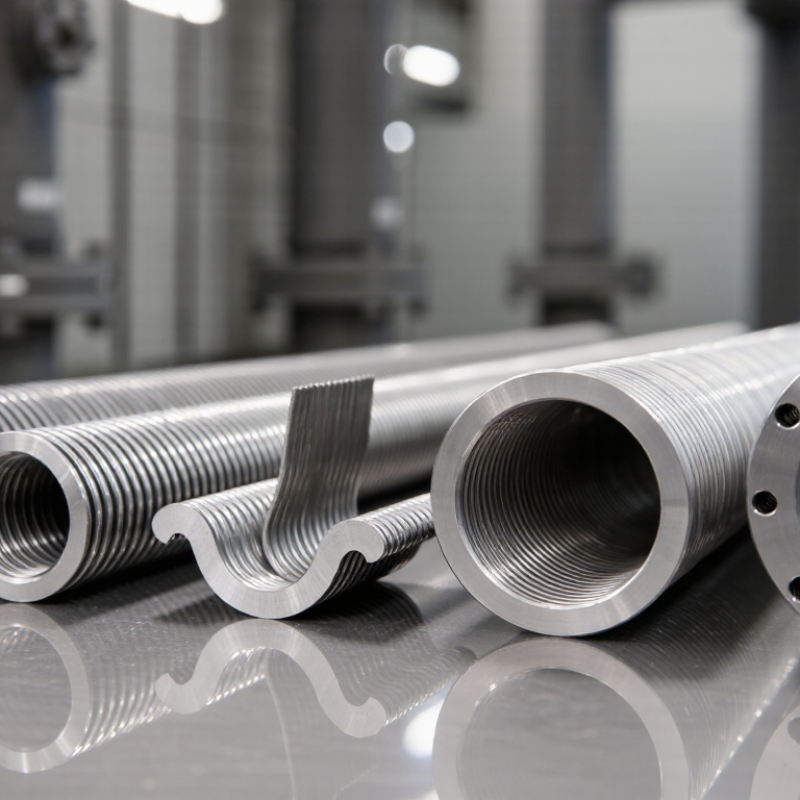
What Fin Tubes Are and How They Improve Heat Transfer
What Are the Best Fin Tube Types for 2026?
What Fin Tubes Are and How They Improve Heat Transfer
A fin tube combines a fluid-carrying tube with thin metal surfaces attached to its outside. These fins expose more area to air or another surrounding fluid. More contact area can help heat move faster, especially when air is the weaker conductor. In a workshop, the difference is visible: a bare tube offers a narrow surface, while rows of fins create many paths for heat to leave. The tube carries heat; the fins spread it outward.
Fin designs include spiral-wound, embedded, extruded, and plate-style fins. Each suits different operating conditions, not a universal “best” choice. Material, temperature, airflow, moisture, and cleaning access all affect performance. A tightly packed fin bundle may transfer heat well, but dust can collect between the narrow gaps. That matters. Engineers also consider how firmly fins connect to the tube, because poor contact adds resistance and limits heat flow. A design that looks efficient on paper may need adjustment after real operating conditions are reviewed. Selection should match the actual duty, not just the largest stated surface area.
What Are the Best Fin Tube Types for 2026? - What Fin Tubes Are and How They Improve Heat Transfer
Fin tubes increase the external surface area available for heat exchange. The best type depends on the fluid, operating temperature, corrosion conditions, fouling risk, and required mechanical strength.
| Fin Tube Type | How It Is Made | Typical Materials | Heat-Transfer and Durability Characteristics | Common Applications | Main Considerations |
|---|---|---|---|---|---|
| Extruded Bimetallic Fin Tube | An aluminum outer sleeve is mechanically extruded into fins around an inner base tube. | Aluminum fins over a carbon-steel, stainless-steel, or other compatible base tube. | Provides close fin-to-tube contact and good heat conduction through the fin layer. The outer aluminum layer also shields much of the base tube from the surrounding environment. | Air-cooled heat exchangers, radiators, and process or HVAC equipment where aluminum fins are suitable. | Check compatibility with the process atmosphere and design temperature. Aluminum fins can be vulnerable to certain corrosive environments and mechanical damage. |
| G-Fin (Embedded Fin Tube) | A helical groove is machined into the tube; the fin root is inserted into the groove and secured by rolling or filling the groove over it. | Commonly aluminum fins with a steel or stainless-steel base tube; other material combinations are possible. | The mechanically secured fin root promotes reliable contact and retention. It is often selected where a stronger fin-to-tube bond is needed than a simple wrapped-foot construction can provide. | Heat exchangers exposed to elevated temperatures or conditions that place greater demands on fin retention. | Performance and maximum service conditions depend on the fin and tube materials, groove design, and manufacturing quality. |
| L-Foot Fin Tube | A thin strip fin is wrapped helically around the tube, with an L-shaped foot resting against the tube surface. | Often aluminum fins on carbon-steel or stainless-steel tubes. | Offers an economical increase in external surface area. The foot creates contact with the tube, while the wrapped fin can be removed or damaged more easily than a fully bonded construction. | General air-heating and air-cooling duties at moderate operating conditions. | Less suited to severe vibration, high temperatures, or aggressive conditions that can loosen or damage the fin. The tube surface remains partly exposed. |
| LL-Foot Fin Tube | Two adjacent L-shaped fin feet overlap around the tube to provide more extensive surface coverage beneath the fin. | Commonly aluminum fins on steel or stainless-steel tubes. | Provides broader coverage of the tube beneath the fin than a standard L-foot design and can improve protection of the covered area. | Air-side heat exchangers where a wrapped-fin construction and increased tube coverage are desired. | Still relies on a wrapped fin rather than a fully extruded or welded bond; verify suitability for the actual temperature and operating environment. |
| KL-Foot (Knurled L-Foot) Fin Tube | The tube surface is knurled before an L-foot fin is helically wrapped around it, helping the fin grip the tube. | Typically aluminum fins with a steel or stainless-steel base tube. | The knurled surface improves mechanical engagement compared with a plain L-foot arrangement, while retaining a relatively simple wrapped-fin construction. | Air-cooled equipment requiring improved fin retention over a conventional L-foot design. | It is not the same as a fully bonded fin joint. Confirm performance under the project's temperature, vibration, and corrosion conditions. |
| Welded Helical Fin Tube | A continuous fin strip is wound helically around the tube and welded to it, commonly by resistance or other suitable welding processes. | Steel fins on carbon-steel or stainless-steel tubes; material selection depends on the service. | A welded joint provides strong fin attachment and is suitable for demanding mechanical and thermal service. Fin and tube materials can be selected for higher-temperature duties. | Boilers, economizers, waste-heat recovery systems, and other rugged heat-exchange equipment. | Welding quality and material compatibility are important. Fin spacing and geometry should reflect fouling, cleaning, and pressure-drop requirements. |
Selection note: No single fin tube type is best for every application. Compare the required heat duty, operating and design temperatures, corrosion and fouling conditions, cleaning method, pressure drop, and expected mechanical loads before specifying a construction.