How to Buy Ammonium Sulfate Nitrogen Fertilizer?
Buying Ammonium Sulfate Nitrogen fertilizer begins with a field question: does the crop need both nitrogen and sulfur? The product commonly supplies these nutrients in a readily usable form, but the right rate depends on soil conditions, crop demand, and local recommendations. A soil test helps turn a guess into a purchasing decision. Check its sulfur result, nitrogen plan, and any application guidance before comparing suppliers.
Soil fertility specialist Dr. Robert Mikkelsen has written extensively about practical nutrient management. A useful buying principle, consistent with that work, is: “Match the nutrient source to the crop’s needs and the field’s test results—not the bag label alone.” Treat this as a guiding principle, not a substitute for a current local recommendation.
Read the product specification carefully. Confirm the guaranteed nutrient analysis, granule size, packaging, storage conditions, and delivery terms. Ask for a recent certificate of analysis when consistency matters. A damp, caked bag in a warehouse corner is not a small detail; it can signal handling problems and make spreading uneven.
Compare the delivered cost per unit of nitrogen and sulfur, not just the price per tonne. Check whether the supplier can provide the quantity you need on schedule. Also consider application equipment and the crop’s timing. A cheaper product may cost more if it arrives late or spreads poorly.
Keep records. Note the supplier, batch, analysis, and application rate. Then compare crop response and field observations after application. Real conditions can challenge a tidy plan. That is worth admitting. Use the next purchase to refine your decision, rather than assuming one season answers everything.
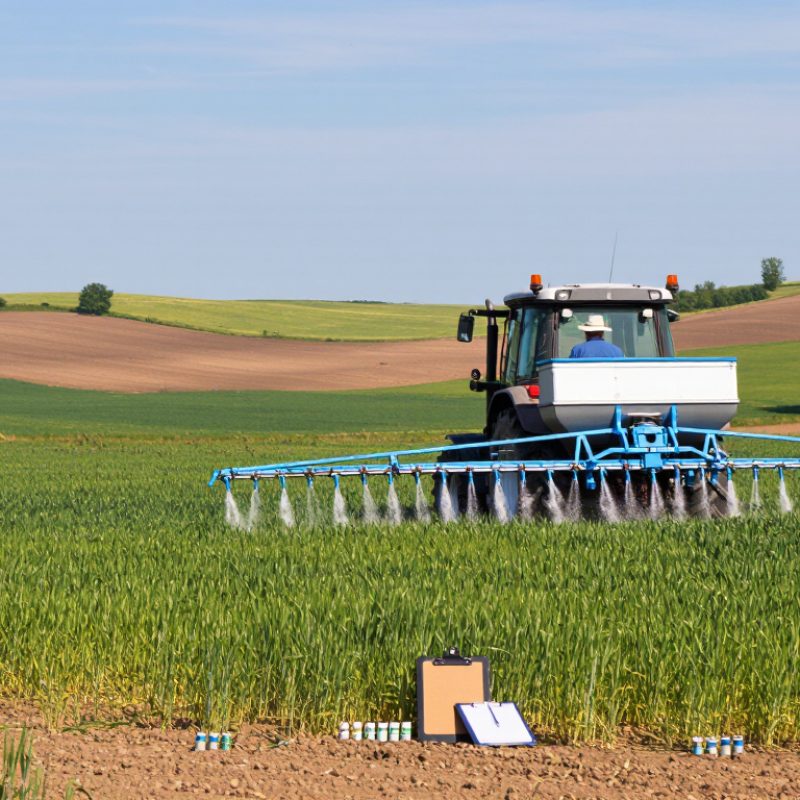
Determine Your Soil’s Need for Ammonium Sulfate
Before buying ammonium sulfate, check whether your soil and crop actually need its nutrients. This fertilizer supplies nitrogen and sulfur, but the right amount depends on crop type, soil conditions, and recent field history. A soil test can reveal pH and sulfur levels; local recommendations can help interpret nitrogen needs. That matters.
Collect samples from several spots in the same field, using the depth and timing recommended by your testing laboratory. Avoid unusual patches, such as a wet ditch edge, unless you are testing that area separately. If a crop is already growing, leaf color alone is not a reliable diagnosis: pale leaves can have several causes. Do not guess.
Compare your results with guidance for the specific crop and region, then account for manure, compost, or fertilizer applied earlier. Ammonium sulfate can lower soil pH over time, so repeated use deserves extra care on already acidic soils. Ask a qualified agronomist or extension specialist when test results conflict or seem unclear. Even a careful test is only a snapshot; weather and crop growth can change nutrient availability. That uncertainty is worth acknowledging before choosing a rate.
Check Fertilizer Grade, Nitrogen Content, and Product Quality
Ammonium sulfate is commonly sold as a 21-0-0 fertilizer, with about 24% sulfur. Check the guaranteed analysis on the actual bag or product sheet rather than relying on a seller’s shorthand. The grade shows nitrogen, phosphate, and potash content; it does not tell the whole story. Confirm that the nitrogen percentage suits your crop and application plan. If sulfur is needed, verify its stated percentage too.
Check the product’s physical condition. Granules should be reasonably uniform, dry, and free from heavy caking; crystals should not arrive damp or fused into hard lumps. These signs do not prove nutrient quality, but they can reveal storage or handling problems. Ask for a current specification sheet or certificate of analysis, and compare it with the label. Check the production date and packaging condition as well. Do not judge quality by color alone. That shortcut is tempting, but weak. A clean-looking product may still have the wrong analysis. Consider your soil test and local recommendations before buying: ammonium sulfate can lower soil pH over time, so repeated use may not suit every field. Pay attention to the details. Even a correct grade can be a poor fit for the soil.
Compare Suppliers, Packaging, and Delivery Options
When buying ammonium sulfate, compare more than the quoted price. Ask each supplier for a recent certificate of analysis showing nitrogen content, moisture, particle size, and sulfur content. Commercial grades commonly contain about 21% nitrogen and 24% sulfur, but specifications can vary. Check whether the product is granular or crystalline; the difference affects spreading and handling. Request the price per delivered tonne, not just per tonne at the loading point.
Tips: Match packaging to your equipment. A 25-kilogram bag may suit small storage areas, while one-tonne bulk bags can reduce handling for larger operations. Confirm pallet details, bag liners, and protection from rain. Damp fertilizer can cake. That costs time.
Delivery deserves equal scrutiny. The UNCTAD Review of Maritime Transport 2024 reports that over 80% of world trade by volume moves by sea, so port delays can affect arrival schedules. Compare the named delivery point, estimated transit time, unloading method, and responsibility for demurrage or storage charges. The International Fertilizer Association’s 2024 medium-term outlook projected global fertilizer consumption at about 205 million tonnes of nutrients in 2024/25, underscoring the scale of supply planning. Still, forecasts are not shipment guarantees. Ask for a dispatch window and written updates if dates change. I would also check local storage capacity before ordering; it is easy to overlook.
Calculate the Required Quantity and Total Cost
How to Buy Ammonium Sulfate Nitrogen Fertilizer?
Calculate the Required Quantity and Total Cost
Start with a soil test and a crop-specific nitrogen recommendation. University of Minnesota Extension’s fertilizer-source table lists ammonium sulfate as 21-0-0, with 24% sulfur. That grade means each 50-pound bag supplies about 10.5 pounds of nitrogen. For a five-acre field needing an illustrative 40 pounds of nitrogen per acre, calculate: 5 × 40 ÷ 0.21 = about 952 pounds of product. The rate is an example, not a recommendation. Sulfur needs vary.
Next, turn the quantity into a purchase estimate. At a hypothetical $25 per 50-pound bag, 952 pounds costs about $476 by weight. Since suppliers sell whole bags, you would buy 20 bags, costing $500 and leaving roughly 48 pounds unused. Add delivery, handling, and application charges to compare quotes fairly. Ask whether the quote is per bag or per ton. A low sticker price can hide expensive freight.
Tips: Check the guaranteed analysis and bag weight before ordering. Keep the soil-test report nearby. A small mismatch matters. I would also confirm local stock and delivery timing; estimates can miss seasonal price changes.
Confirm Purchase Terms and Plan Safe Storage
Before paying, confirm the grade, nutrient analysis, quantity, delivery date, and packaging in writing. The University of Minnesota Extension lists common ammonium sulfate fertilizer as 21% nitrogen and 24% sulfur. Check the product label against the purchase documents; a familiar grade name is not a substitute for a verified analysis. Ask for the lot number and a current certificate of analysis, especially when buying bulk material. Small discrepancies matter.
Confirm who handles unloading, where the truck can safely turn, and whether the delivery area stays dry. The FAO’s International Code of Conduct for the Sustainable Use and Management of Fertilizers recommends clear product information and careful fertilizer handling. Store bags on pallets, away from damp floors, roof leaks, and incompatible materials. Keep labels legible. Keep it dry. For bulk storage, check that the floor and cover suit the expected tonnage, and leave access for inspection. Moisture can cause caking, making later spreading uneven. That is easy to overlook when a delivery arrives late or the store is crowded. Recheck local handling guidance and the supplier’s safety data sheet before unloading.