Blog

5 Best 5 Axis Milling Machines for Global Buyers

Global manufacturers are demanding tighter tolerances, shorter lead times, and more flexible production systems. A 5 axis milling machine addresses these needs by coordinating three linear axes with two rotary axes. This movement can machine complex surfaces with fewer setups, reducing alignment errors and handling time.

Market evidence supports the growing importance of advanced CNC equipment. MarketsandMarkets’ CNC machine market analysis identifies automation, aerospace production, and precision components as major growth drivers. Grand View Research also reports expanding demand for computer numerical control machinery across automotive, medical, and industrial applications. These reports differ in market scope and forecasting methods. Their figures should therefore guide decisions, not replace technical evaluation.

This guide examines five leading 5 axis milling machine options for global buyers. The comparison considers spindle performance, work envelope, rotary-axis design, control systems, service coverage, and total ownership cost. A machine may look impressive on a specification sheet. Yet its real value appears beside an operator, a fixture, and a difficult workpiece.

Practical details matter. Can the local distributor supply critical components quickly? Does the control interface support the plant’s existing workflow? Will the machine maintain accuracy after years of thermal changes and heavy cutting?

There is no perfect shortlist.

The best choice depends on material, batch size, tolerances, tooling, and available skills. Buyers should also review ISO 230 testing practices, manufacturer test cuts, warranty terms, and verified customer references. This approach supports a more reliable comparison and avoids choosing equipment based only on advertising claims.
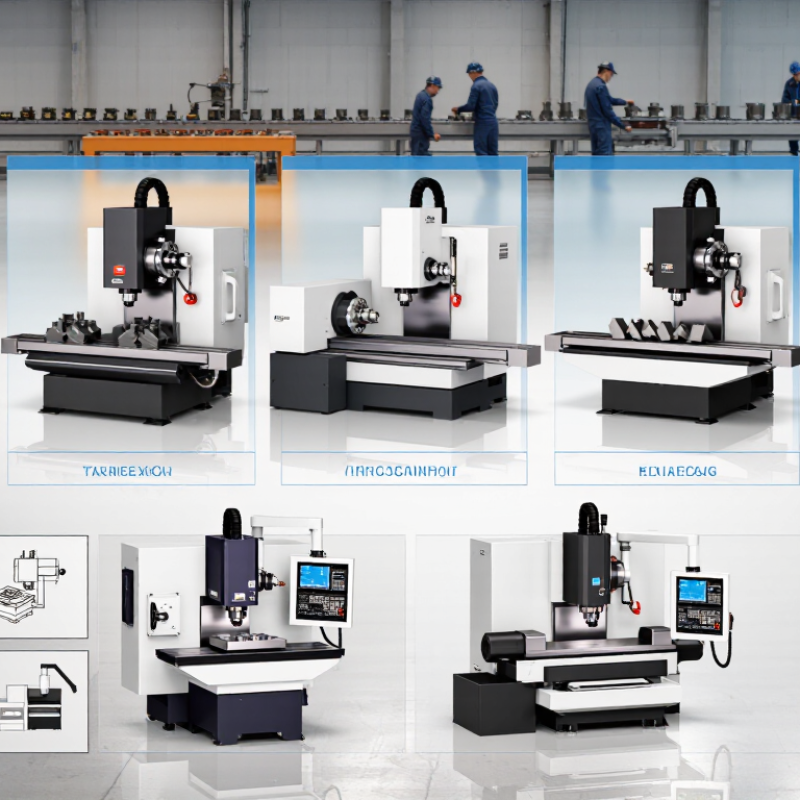
5 Best 5 Axis Milling Machines for Global Buyers

5-Axis Milling Explained: Three Linear Axes Plus Two Rotary Axes

5 Best 5 Axis Milling Machines for Global Buyers

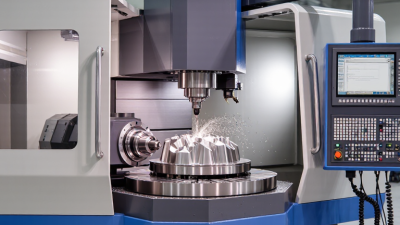
Five-axis milling combines three linear axes, X, Y, and Z, with two rotary axes. The rotary pair may tilt the tool or rotate the workpiece. This movement reaches curved surfaces, deep cavities, and angled holes with fewer setups.

A trunnion-table machine suits compact parts and heavy fixtures. A swivel-head machine offers better access to tall components. Universal-head, dual-rotary-table, and mill-turn configurations serve different production needs. Each design has trade-offs.

Market estimates show strong demand, but definitions differ. Grand View Research valued the global CNC machine market at about USD 83 billion in 2023. Fortune Business Insights reported a higher figure, near USD 88 billion, for the same year. This gap deserves attention. Buyers should compare machine scope, axis count, software, and regional service coverage. A low purchase price can become expensive when calibration, post-processors, and training are missing. ISO 230-2 testing helps verify positioning accuracy, while volumetric compensation reveals errors across the working envelope. Ask for tested data, not brochure promises.

In practical evaluations, the fifth axis is not automatically an advantage. Poor rigidity can leave witness marks on a titanium impeller. Backlash can distort a hole pattern. Thermal drift can change dimensions after several hours. Look for direct-drive rotary axes, probing, collision monitoring, and stable coolant control. Check spindle torque at low speed, not only maximum RPM. The best machine is the one matching part geometry, batch size, operator skill, and local maintenance capacity. Perfect accuracy is rarely permanent. Calibration plans matter.

Global Buyer Criteria: ISO 230-2 Accuracy, 12,000–30,000 rpm Spindles

5 Best 5 Axis Milling Machines for Global Buyers

Global buyers should compare five machine concepts: trunnion-table, swivel-head, head-table, dual-rotary, and hybrid five-axis systems. Selection should begin with ISO 230-2 testing, not brochure positioning accuracy. ISO 230-2 evaluates positioning accuracy and repeatability across defined travel points. Ask for the actual test report, measurement temperature, axis length, and compensation status. A 5-axis machine can claim 0.005 mm positioning accuracy, yet perform differently after thermal changes.

Spindle speed matters for aluminum, titanium, molds, and medical components. The 12,000–30,000 rpm range supports both heavy cutting and smaller tools. However, higher speed does not automatically improve productivity. Cutting torque, bearing design, tool balance, cooling, and acceleration are equally important. The 2024 Grand View Research CNC machine market report identifies automation and high-precision production as major growth drivers. Meanwhile, the U.S. National Institute of Standards and Technology stresses traceable measurement and uncertainty control in advanced manufacturing. These findings support a practical rule: demand measured performance, not optimistic claims. I have seen buyers overvalue rpm and underestimate rotary-axis backlash.

Tips: Request an ISO 230-2 report from a recent machine. Check repeatability at the table center and near its limits. Compare spindle torque curves, not only maximum rpm. Review thermal drift after several hours. A small error here can ruin a large aerospace component. Mistakes remain possible, especially when local installation quality is ignored.

5 Best 5-Axis Milling Machine Profiles for Global Buyers

Comparison of representative machine profiles using ISO 230-2 positioning accuracy and spindle-speed criteria.

Higher spindle speed supports smaller tools and high-speed finishing, while lower ISO 230-2 positioning error indicates better positioning precision. The profiles are specification benchmarks rather than company or brand data; buyers should verify accuracy measurement conditions, thermal compensation, machine configuration, and test standards with suppliers.

Top Five Machines Compared by Travel, Payload, Accuracy, and Automation

The five best five-axis milling machines differ sharply in travel, payload, accuracy, and automation. A compact trunnion machine usually offers about 500 × 400 × 400 mm of XYZ travel and supports 200–300 kg. It suits small aerospace parts, medical components, and detailed mold work. A swivel-head model often reaches 800 × 600 × 600 mm, with payloads near 500 kg. Its larger envelope helps mixed-production workshops.

For heavy work, a bridge-style machine can provide over 1,500 mm of travel and carry 1,000–2,000 kg. Accuracy may remain within 5–8 micrometers, but thermal control becomes critical. A horizontal five-axis machine offers strong chip evacuation, roughly 1,000 mm of travel, and 600–1,000 kg payload capacity. It fits long unattended cycles. The fifth option is an automation-ready cell, combining 600–800 mm travel, 300–600 kg payload, pallet changing, probing, and robotic loading.

ISO 230-2 testing conditions matter when comparing accuracy claims. A smaller quoted tolerance does not always mean better production results. According to the International Federation of Robotics’ World Robotics 2024 report, factories installed 541,302 industrial robots in 2023. That figure supports growing demand for automated machining, yet integration costs remain easy to underestimate. A 2024 Deloitte smart manufacturing survey also highlights skills and system integration as major implementation challenges. Payload figures can mislead when fixtures, vises, and cutting forces are excluded. Travel is useful, but usable workspace is the harder question.

Application Match: Aerospace, Medical, Automotive, and Complex-Mold Production

The five best 5-axis milling machines are not identical winners. Their value depends on the application. Aerospace buyers need rigid structures, stable thermal control, and accurate machining of titanium or aluminum parts. A rotary table with strong torque helps maintain cutting performance around deep pockets and curved surfaces.

Medical production requires cleanliness, repeatable positioning, and careful chip control. Machines with compact work envelopes may suit implants and surgical components better than oversized models. Automotive manufacturers often prioritize fast tool changes, high spindle speeds, and reliable cycle times. Complex-mold producers need excellent surface finish, smooth simultaneous motion, and enough clearance for deep cavity work. Small errors become visible on polished mold surfaces.

Tips: Match the machine to real materials, part dimensions, and tolerance reports. Ask for cutting tests using your own sample geometry. Check volumetric accuracy, probe capability, spindle cooling, and service response. Do not judge performance from brochure speed alone. It can mislead. I have seen fast machines lose practical value when setup time, thermal drift, or difficult programming was ignored. A careful review of five-axis kinematics may reveal that a less powerful model fits production better. Keep it measurable.

5 Best 5 Axis Milling Machines for Global Buyers - Application Match: Aerospace, Medical, Automotive, and Complex-Mold Production

Rank & Machine Type Recommended Application Typical Working Envelope Spindle Configuration Rotary Axes Typical Table Load Typical Positioning Accuracy Main Buying Advantage
1. Compact Trunnion 5-Axis Machining Center Medical implants, dental components, small aerospace parts Approx. 500–800 × 400–600 × 400–600 mm (X × Y × Z) 8,000–20,000 rpm; 15–30 kW; HSK or BT taper Trunnion table with continuous tilt and rotary motion 300–800 kg About ±0.005–0.010 mm, depending on machine size and test standard Small footprint, strong multi-sided access, and efficient production of intricate parts
2. High-Speed Swivel-Head 5-Axis Center Aerospace structural parts, aluminum components, titanium subassemblies Approx. 800–1,500 × 600–1,000 × 600–900 mm 12,000–24,000 rpm; 25–45 kW; HSK-A63 or equivalent B-axis swivel head plus C-axis rotary table 600–1,500 kg About ±0.005–0.012 mm under controlled conditions High cutting speed, flexible tool orientation, and excellent access to deep features
3. Heavy-Duty Universal 5-Axis Center Automotive powertrain parts, energy components, large steel and cast-iron workpieces Approx. 1,000–2,000 × 800–1,500 × 700–1,200 mm 6,000–15,000 rpm; 30–60 kW; high-torque spindle option Tilting rotary table or swivel head with integrated rotary axis 1,000–3,000 kg About ±0.008–0.015 mm, influenced by load and thermal conditions Rigid structure, high torque, and broad material capability for demanding cuts
4. Mold and Die 5-Axis High-Speed Center Complex molds, dies, turbine blades, impellers, and sculptured surfaces Approx. 600–1,200 × 500–900 × 500–800 mm 15,000–30,000 rpm; 18–40 kW; high-speed ceramic or hybrid bearings Fast swivel head with rotary table or dual rotary axes 400–1,200 kg About ±0.003–0.010 mm with suitable calibration and temperature control Smooth simultaneous motion, reduced tool interference, and fewer setups
5. Large Gantry-Style 5-Axis Milling Center Large aerospace skins, transportation molds, marine parts, and oversized components Approx. 2,000–6,000 × 1,500–3,000 × 800–1,500 mm 6,000–18,000 rpm; 30–80 kW; high-torque or right-angle head options Two-axis universal milling head, often with an additional rotary fixture 2,000–10,000 kg or more, subject to table design About ±0.010–0.030 mm, depending on travel length and thermal management Processes large workpieces in fewer setups while maintaining multi-surface access

Note: Specifications are representative industry ranges for comparable 5-axis milling machine classes. Actual performance depends on machine configuration, workholding, material, cutting tools, calibration, thermal conditions, and the applicable ISO 230 or equivalent test method.

Total Cost Benchmark: Tooling, Energy, Maintenance, and Operator Training

For global buyers, the purchase price is only the visible part of a five-axis milling machine’s cost. A realistic benchmark includes tooling, electricity, maintenance, and operator training. Tooling can consume 8–15% of machine value annually, depending on materials and production volume. Carbide cutters, holders, probes, vises, and workholding require separate budget lines. Small items become expensive.

Energy use depends heavily on spindle load, coolant systems, and idle time. A machine drawing 18–30 kW during cutting can still waste power during long setup periods. Recording actual meter readings is more reliable than using catalog estimates. Local electricity prices also change the result. Global buyers should request energy data under comparable cutting conditions.

Maintenance usually includes lubrication, filtration, calibration, and replacement of wear parts. A preventive contract may reduce downtime, but it does not remove emergency repair costs. Training deserves equal attention. Two operators may need several weeks to master collision checking, probing, fixture alignment, and five-axis programming. Training fees are only part of the expense; paid learning time matters too. I have seen budgets underestimate this area repeatedly. A lower-priced machine can become costly when skilled labor is scarce, spare parts travel across borders, or setup procedures remain poorly documented. Cost comparisons should use a three-year worksheet, with local labor, energy, shipping, and service response times recorded separately.

↑