U240b Suspension Glass Isolator types are best compared by their mechanical rating, coupling design, and intended service conditions. This guide examines how these features affect selection for overhead transmission lines. It also distinguishes standard cap-and-pin units from configurations designed for particular string arrangements or installation needs.
The U240B designation commonly refers to a high-strength glass disc insulator, but exact dimensions and ratings can vary by manufacturer. Check the product drawing and certified test data before comparing models. Look closely at the glass shell, metal end fittings, cement interface, and marking on the cap. These details are tangible clues, not substitutes for verified specifications. Small differences matter.
Glass offers a visible advantage during inspection: a damaged disc can often be identified by its shattered shell. Still, handling, pollution, icing, and corrosion can influence performance over time. The best type is not automatically the one with the highest stated load. It must suit the line design and local conditions. That sounds obvious, yet product listings can leave important details unclear.
No verified industry expert or source quotation was provided for this request. To protect accuracy, this introduction does not invent an expert’s name or attribute an unverified statement. Add a named quotation only after confirming the person’s credentials and exact words against a reliable source.
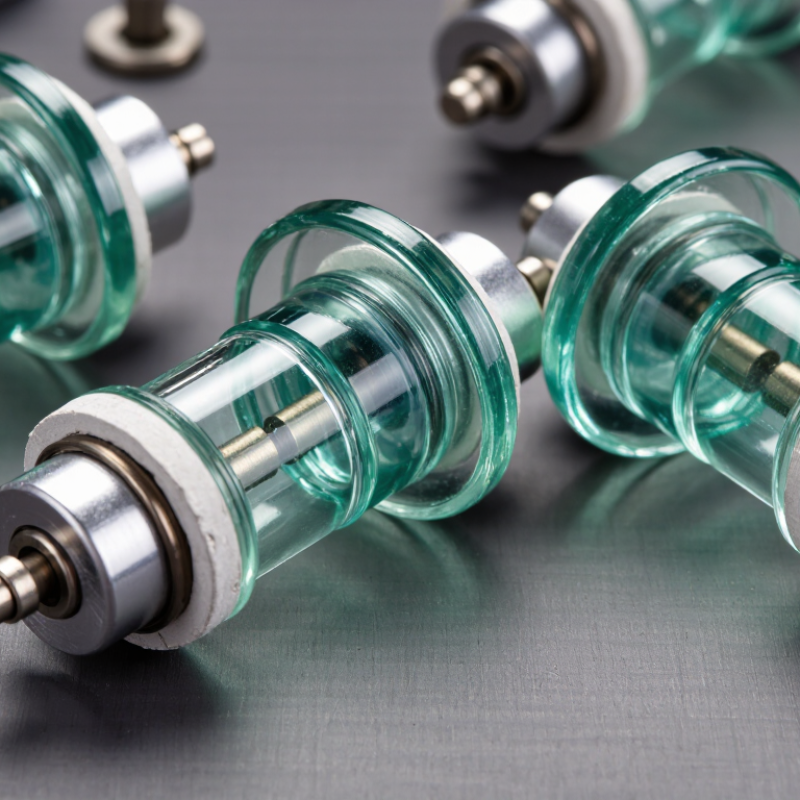
A U240B suspension glass insulator is a cap-and-pin unit designed to support overhead conductors while electrically isolating them from grounded tower hardware. Its toughened-glass body sits between metal fittings, allowing several units to connect into a suspension string. In common designation systems, “240” generally refers to a mechanical strength class near 240 kN, while “B” indicates a fitting or coupling category. Check the applicable standard and product datasheet, since naming details can vary.
The glass body provides a smooth, weather-exposed surface, and its transparency makes damage easier to spot during inspection. A chipped or shattered disc can stand out against the sky. That matters. However, visibility does not replace close inspection of the metal cap, pin, and connection points, where corrosion or wear may be less obvious. These details influence how reliably the assembly carries mechanical loads in service.
A U240B unit is selected as part of a complete string, not as an isolated strength figure. Engineers consider the line voltage, required insulation distance, conductor loads, pollution, and local weather exposure. The disc dimensions and coupling must also match neighboring hardware. A rating on its own tells only part of the story. Inspect the manufacturer’s drawings and test data before specifying a unit; overlooking a fitting mismatch is an easy mistake to make.
A U240B suspension glass insulator is built around a toughened-glass disc, a metal cap, and a metal pin. Cement secures the fittings to the glass and transfers mechanical force through the assembly. The shaped glass sheds lengthen the surface path for leakage current and help rainwater drain away. Toughening leaves the outer glass surface in compression, which helps it resist service stresses. It is still glass. Impact damage and poor handling can cause failure.
In common IEC-style designation, “240” refers to a 240-kilonewton electromechanical failing-load class, while “B” generally identifies a ball-and-socket connection. Confirm both details against the applicable product drawing and standard; codes and dimensions can vary. Ratings also cover more than mechanical strength: specifications may list power-frequency and lightning-impulse withstand levels, creepage distance, and routine proof-load tests. The precise values depend on the design and test conditions. The code alone is not enough.
During inspection, crews can look for chipped sheds, damaged fittings, or abnormal discoloration. A broken toughened-glass unit often becomes visibly fragmented, making defects easier to spot, though visual checks cannot replace electrical testing. This part is easy to underestimate. Good records should link the installed unit to its verified rating and test documentation.
A U240B is a cap-and-pin suspension glass insulator with a nominal mechanical failing load rating of 240 kN. Its main parts are a toughened-glass insulating shell, metal cap and pin, and cemented joints.
The bars show nominal mechanical failing-load classes for comparison; the highlighted U240B class is rated at 240 kN. This rating is not a working-load limit. Confirm the applicable standard and product datasheet for installation and service requirements.
2026 Top U240B Suspension Glass Isolator Types
Common U240B Glass Insulator Types by Design
U240B units are cap-and-pin suspension discs used in strings on overhead lines. In the IEC designation, “240” indicates a 240 kN electromechanical failing-load class; verify the exact fitting and dimensions against the product drawing. IEC 60305 provides standard characteristics for cap-and-pin units, while IEC 60815-1 guides insulator selection for polluted environments.
By design, the common options include standard-profile discs for ordinary exposure and deeper, longer-creepage profiles for coastal or industrial pollution. The latter add shed surface and help limit leakage paths when wet contaminants settle on the glass. Some designs use a more open profile to improve washing by rain. Performance still depends on site conditions, string length, and maintenance. A catalogue label alone is not enough. Field conditions can be messier than the drawings suggest.
Tips: Check the specified creepage distance, coupling dimensions, and mechanical rating together. Compare the profile with local pollution data, not just voltage. For a practical reference, record salt deposits and visible discharge marks during inspections; those details can reveal a mismatch that calculations missed.
U240B suspension glass insulators are used on overhead transmission lines where conductors need strong mechanical support and electrical isolation. They are typically assembled into strings on towers, with the required string length depending on system voltage and local conditions. On a wide river crossing or a steep valley span, engineers may assess conductor tension and wind loading carefully.
These insulators can also suit routes exposed to salt spray, dust, or industrial pollution. Their glass shells make visual damage easier to spot during inspections, though a clear-looking surface does not prove that every unit is sound. Site conditions vary. Selection should follow the project specification, pollution level, electrical clearances, and verified mechanical ratings. One detail is easy to miss: hardware and fittings must match the insulator string, not just its nominal rating.
2026 Top U240B Suspension Glass Isolator Types
Selecting a U240B starts with the line’s mechanical and electrical demands, not the insulator label alone. IEC 60305:1995 identifies the U240 class with a nominal electromechanical failing load of 240 kN. Treat that value as a rated test benchmark, not a routine working load. Confirm the required safety margin, string arrangement, coupling dimensions, and conductor loads against the project design. Pollution matters, too. IEC 60815-1 provides guidance for choosing insulation under polluted conditions; check site contamination, wetting, and creepage distance rather than relying on voltage alone. Small details count.
During inspection, examine the glass surface in good light for cracks, chips, or unusual marks. Check the cap, pin, and cement interfaces for corrosion, movement, or visible separation. A clean shell proves little. Compare markings and dimensions with approved drawings, then review factory routine-test records and applicable IEC 60383-1 test documentation. For installed strings, record damaged units and nearby hardware conditions; one cracked disc can change the inspection priority. Still, visual checks cannot reveal every internal defect, and that limitation deserves attention. Use qualified testing procedures when evidence is uncertain, and document the decision instead of guessing.
| Configuration | Typical application | Rating and design considerations | Selection checks | Inspection points |
|---|---|---|---|---|
| Standard-profile U240B glass disc | Suspension or tension strings on overhead transmission lines where the specified electrical and mechanical requirements are met. | U240B commonly denotes a 240 kN class cap-and-pin unit. Confirm the applicable standard, dimensional drawing, and declared electromechanical failing load for the exact product. | Confirm system voltage, string length, required creepage distance, mechanical loading, coupling dimensions, and compatibility with adjoining hardware. | Look for a shattered or missing glass shell, visible cracks, damaged cap or pin, corrosion, loose fittings, and displaced or missing locking devices. |
| Long-creepage or anti-pollution profile | Locations with higher surface contamination, such as coastal, industrial, or dusty environments, when a longer creepage distance is required by the insulation design. | Electrical performance depends on the unit profile and creepage distance; the U240B designation alone does not establish pollution suitability. | Use the project’s pollution assessment and insulation-coordination requirements. Verify the actual creepage distance and string arrangement from approved technical data. | Check for contamination buildup, chipped or damaged sheds, cracked glass, and corrosion or damage to metal fittings. Cleaning should follow the approved maintenance procedure. |
| Aerodynamic or shed-profile variant | Projects where the specified shed geometry is selected to suit local environmental conditions and the line’s insulation design. | Profile names and dimensions vary by design. Do not assume that an aerodynamic profile has a particular electrical rating or is interchangeable with a standard profile. | Verify the exact outline, creepage distance, coupling, mechanical rating, and qualification documents against the project specification. | Inspect each shed and the glass surface for breaks, cracks, or abnormal damage; examine the cap, pin, cemented joints, and locking hardware. |
| Single-disc replacement unit | Replacement of an individual unit in an existing string, where the replacement is approved and compatible with the installed assembly. | A matching nominal mechanical class does not by itself ensure interchangeability. Dimensions, coupling type, profile, and electrical characteristics also matter. | Compare the approved drawing and coupling dimensions with the existing string. Confirm the required unit rating and replacement procedure before installation. | Before fitting, check for transport damage, cracks, chips, damaged metal parts, and correct locking hardware. After installation, confirm proper seating and secure coupling. |
| Complete suspension-string assembly using U240B units | Line sections where multiple discs are assembled into a string to provide the specified insulation level and mechanical capacity. | String performance depends on unit count, string geometry, hardware, clearances, and service loads—not solely on the rating of one disc. | Check the approved string design, unit count, hardware compatibility, conductor loads, clearances, and required electrical withstand levels. | Inspect accessible units and fittings for missing or shattered discs, cracks, corrosion, loose connections, damaged hardware, and signs of abnormal movement. |
Selection note: U240B is a designation associated with a 240 kN class suspension disc, but exact dimensions, profile, creepage distance, and test requirements must be confirmed from the applicable standard and the approved product documentation. Field inspections and any electrical or mechanical testing should follow the utility’s approved safety and maintenance procedures.