Blog
2026 Best Stainless Steel Hollow Bar for Global Buyers?
Global buyers choosing a Stainless Steel Hollow Bar need more than a competitive price. Fit, traceability, and dependable supply matter. The right choice depends on the part’s design, operating environment, and machining requirements. A bar for a pump shaft may face different demands from one used in food-processing equipment or marine hardware.
Start by confirming the stainless steel grade, outside diameter, bore size, length, and dimensional tolerances. Then check whether the supplier can provide material test certificates and clearly identify the applicable product specification. These details help buyers compare quotations on equal terms. They also reduce surprises during inspection or machining. Details matter.
Corrosion resistance should be assessed against the actual exposure, including moisture, chemicals, temperature, and cleaning methods. A familiar grade is not automatically the best grade for every service. Ask about stock availability, cutting options, packaging, lead times, and export documentation before placing an order. Requesting a sample or reviewing inspection records may also help, especially for repeat purchases.
This guide will explain how buyers can compare grades, manufacturing quality, supplier capability, and total landed cost. It will also highlight questions worth asking before approval. Price still matters, of course. But a low quotation is less useful if tolerances are unclear or delivery dates keep shifting. No supplier is perfect, and specifications can leave room for interpretation; careful verification remains essential.
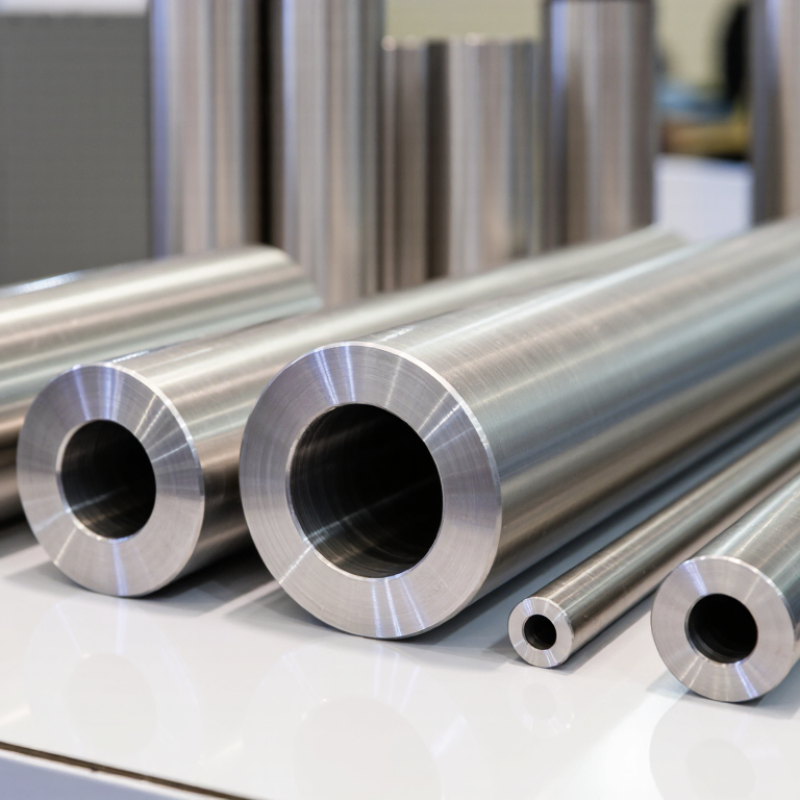
What Stainless Steel Hollow Bar Is and How It Is Made
Stainless steel hollow bar is a solid-length product with a central bore, made for machining components such as valve bodies, pump parts, and shafts. Unlike standard pipe, it is typically supplied as machining stock, so buyers should check its outside diameter, bore size, straightness, and machining allowance. The International Stainless Steel Forum reported 58.4 million tonnes of global stainless steel production in 2023, up 4.6% from 2022. That market scale makes clear product specifications important.
Manufacturing usually starts with a stainless billet. In rotary piercing, heated billet passes over a piercing point to form a hollow shell; rolling or pilgering then reduces its diameter and wall thickness. Some producers use hot extrusion instead. The bar is heat-treated, straightened, cut, and inspected for surface and dimensional defects. Methods vary by grade and size. A clean-looking surface alone does not confirm internal quality; ultrasonic testing may help identify flaws that visual checks miss. The process is precise, but not perfect, so inspection records matter.
Tips: Ask for the grade, manufacturing route, tolerances, and inspection results. Measure a cut sample when practical. Small bore variations can mean extra machining—and wasted material. (Source: International Stainless Steel Forum, Stainless Steel in Figures 2024.)
| Topic | Data and Practical Guidance |
|---|---|
| What stainless steel hollow bar is | A stainless steel product with a continuous central bore and a solid, bar-like outer section. It is commonly supplied as stock for machining components such as bushings, sleeves, rings, and valve parts. |
| How it differs from ordinary pipe | Hollow bar is generally selected as machining stock, often with a thicker wall relative to its outside diameter than a fluid-conveying pipe. The product name alone does not define a universal wall-thickness range or dimensional tolerance. |
| Common production route: piercing and rolling | A heated steel billet may be pierced to create a bore, then rolled or otherwise sized to reach the required outside diameter and wall thickness. The exact route depends on the mill, alloy, and product specification. |
| Alternative production route: machining | A bore can be drilled or machined into solid stainless steel bar or billet. This route can suit particular sizes or quantities, but material removal and machining time can affect cost and yield. |
| Typical finishing and inspection | Depending on the product and specification, processing may include heat treatment, descaling or pickling, straightening, cutting, dimensional checks, and nondestructive testing. Confirm which operations and inspection records are included in the purchase order. |
| 304 / 304L stainless steel | A widely used austenitic stainless steel family for general corrosion resistance in many indoor, architectural, food-handling, and industrial environments. It is not immune to corrosion in every service condition. |
| 316 / 316L stainless steel | An austenitic family containing molybdenum, commonly chosen for improved resistance to chloride-related corrosion compared with 304 in many environments. Actual suitability depends on chloride concentration, temperature, surface condition, and exposure. |
| Duplex 2205 | A duplex stainless steel with a mixed austenitic-ferritic structure. It generally offers higher strength than common 300-series austenitic grades and is used in selected demanding industrial and marine applications. Welding and service limits should be checked against the applicable specification. |
| How to select a grade | Match the alloy to the service environment, operating temperature, required corrosion resistance, machining needs, joining method, and applicable design requirements. Request engineering review when failure could affect safety or equipment integrity. |
| Dimensions to specify | State the outside diameter, inside diameter or wall thickness, length, dimensional tolerances, straightness, end condition, and whether dimensions are before or after machining. Availability varies by producer and grade; there is no single global size range. |
| Standards and documentation | Specify the required product form and governing standard explicitly. Standards for stainless pipe or tube do not automatically apply to hollow-bar stock. Request a material test certificate identifying the grade, heat or lot number, chemical analysis, mechanical test results, and applicable specification. |
| Buyer checks before ordering | Confirm grade and product form, manufacturing route where relevant, tolerances, testing scope, traceability, surface condition, packaging, destination-market requirements, and inspection documents. Compare quotations only when these requirements are aligned. |